This is a another beautiful sample problem from ISI MStat PSB 2014 Problem 9. It is based on testing simple hypothesis, but reveals and uses a very cute property of Geometric distribution, which I prefer calling sister to Loss of memory . Give it a try !
Let \( X_i \sim Geo(p_1)\) and \( X_2 \sim Geo(p_2)\) be independent random variables, where Geo(p) refers to Geometric distribution whose p.m.f. f is given by,
\(f(k)=p(1-p)^k, k=0,1,.....\)
We are interested in testing the null hypothesis \(H_o : p_1=p_2\) against the alternative \( H_1: p_1<p_2\). Intuitively it is clear that we should reject if \(X_1\) is large, but unfortunately, we cannot compute the cut-off because the distribution of \(X_1\) under \(H_o\) depends on the unknown (common) value \(p_1\) and \(p_2\).
(a) Let \(Y= X_1 +X_2\). Find the conditional distribution of \( X_1|Y=y\) when \(p_1=p_2\).
(b) Based on the result obtained in (a), derive a level 0.05 test for \(H_o\) against \(H_1\) when \(X_1\) is large.
Geometric Distribution.
Negative binomial distribution.
Discrete Uniform distribution .
Conditional Distribution . .
Simple Hypothesis Testing.
Well, Part (a), is quite easy, but interesting and elegant, so I'm leaving it as an exercise, for you to have the fun. Hint: verify whether the required distribution is Discrete uniform or not ! If you are done, proceed .
Now, part (b), is further interesting, because here we will not use the conventional way of analyzing the distribution of \(X_1\) and \( X_2\), whereas we will be concentrating ourselves on the conditional distribution of \( X_1 | Y=y\) ! But why ?
The reason behind this adaptation of strategy is required, one of the reason is already given in the question itself, but the other reason is more interesting to observe , i.e. if you are done with (a), then by now you found that , the conditional distribution of \(X_1|Y=y\) is independent of any parameter ( i.e. ithe distribution of \(X_1\) looses all the information about the parameter \(p_1\) , when conditioned by Y=y , \(p_1=p_2\) is a necessary condition), and the parameter independent conditional distribution is nothing but a Discrete Uniform {0,1,....,y}, where y is the sum of \(X_1 \) and \(X_2\) .
so, under \(H_o: p_1=p_2\) , the distribution of \(X_1|Y=y\) is independent of the both common parameter \(p_1 \) and \(p_2\) . And clearly as stated in the problem itself, its intuitively understandable , large value of \(X_1\) exhibits evidences against \(H_o\). Since large value of \(X_1\) is realized, means the success doesn't come very often .i.e. \(p_1\) is smaller.
So, there will be strong evidence against \(H_o\) if \(X_1 > c\) , where , for some constant \(c \ge y\), where y is given the sum of \(X_1+X_2\).
So, for a level 0.05 test , the test will reject \(H_o\) for large value of k , such that,
\( P_{H_o}( X_1 > c| Y=y)=0.05 \Rightarrow \frac{y-c}{y+1} = 0.05 \Rightarrow c= 0.95 y - 0.05 .\)
So, we reject \(H_o\) at level 0.05, when we observe \( X_1 > 0.95y - 0.05 \) , where it is given that \(X_1+X_2\) =y . That's it!
Can you show that for this same \(X_1 \) and \( X_2\) ,
\(P(X_1 \le n)- P( X_1+X_2 \le n)= \frac{1-p}{p}P(X_1+X_2= n) \)
considering \(p_1=p_2=p\) , where n=0,1,.... What about the converse? Does it hold? Find out!
But avoid loosing memory, it's beauty is exclusively for Geometric ( and exponential) !!


Publishing original scientific research in a peer-reviewed journal is an achievement many scholars work toward for years. Achieving this feat early in one's academic journey requires exceptional intellectual rigor, creativity, and persistence. Aaditya Punatar and Muskan Sadana have reached this remarkable milestone, successfully publishing their collaborative research paper in the prestigious Journal of Emerging Investigators […]
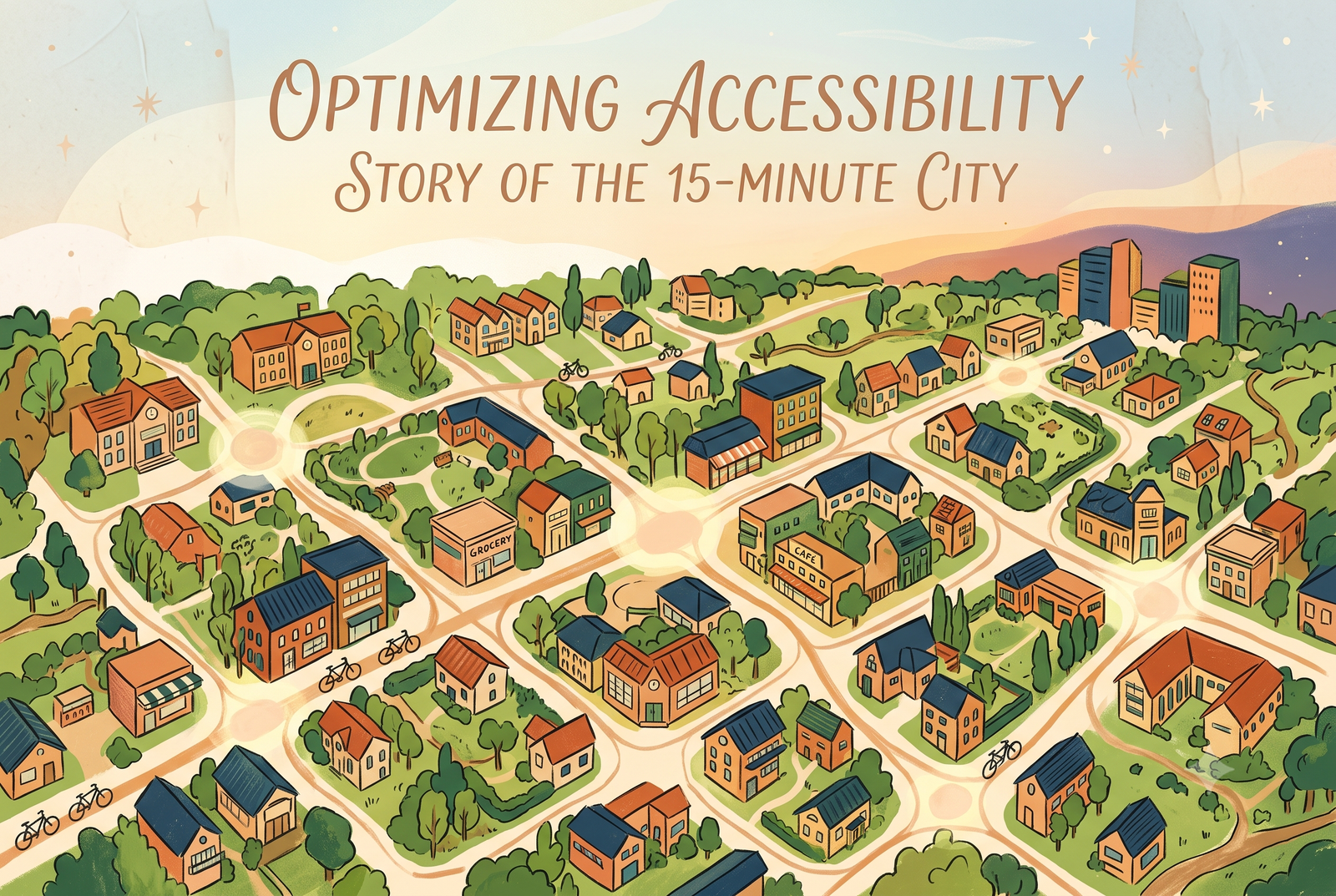
Her project on quantum-accelerated Steiner trees for 15-minute cities earned a place among the finalists at the world's largest pre-college STEM competition. Prishaa Shrimali of Marymount School of New York, was selected as a Grand Finalist at the 2026 Regeneron International Science and Engineering Fair (ISEF) in Phoenix, Arizona. Her project was Optimizing Urban Accessibility: […]

In 2026, the following Cheenta students have been successful for Indian Statistical Institute's M.Stat Entrance. They ranked within the first 50 in the entire country in these entrances. I.S.I. M.Stat Entrance
In 2026, the following Cheenta students have been successful for Indian Statistical Institute's B.Stat Entrance and Chennai Mathematical Institute's B.Sc. Math Entrance. They ranked within the first 200 in the entire country in these entrances. Most of these students attended the problem solving workshops regularly, which happen 5 days every week. CMI B.Sc. Math Entrance […]
