This is a simple and elegant sample problem from ISI MStat PSB 2005 Problem 5. It's based the mixture of Discrete and Continuous Uniform Distribution, the simplicity in the problem actually fools us, and we miss subtle happenings. Be careful while thinking !
Suppose \(X\) and \(U\) are independent random variables with
\(P(X=k)=\frac{1}{N+1} \) , \( k=0,1,2,......,N\) ,
and \(U\) having a uniform distribution on [0,1]. Let \(Y=X+U\).
(a) For \( y \in \mathbb{R} \), find \( P(Y \le y)\).
(b) Find the correlation coefficient between \(X\) and \(Y\).
Uniform Distribution
Law of Total Probability
Conditional Distribution
This ptroblem is quite straight forward enough, and we do what we are told to.
Here, we need to find the Cdf of \(Y\) , where , \(Y=X+U \), and \(X\) and \(Y\) are defined as above.
So, \(P(Y\le y)= P(X+U \le y)=\sum_{k=0}^N P(U \le y-k|X=k)P(X=k) = \frac{1}{N+1} \sum_{i=1}^NP(U \le y-k) \), [ since \(U\) and \(X\) are indepemdent ],
Now, here is where we get fooled often by the simplicity of the problem. The beauty is to observe in the above expression, if \(y-k <0\) then \(P(U\le y-k)=0\), and if \(y-k>1\) then \(P(U\le y-k)=1\), ( why??)
So, for \( k* \le y \le k*+1 \) the \(P(U \le y-k*)=y-k*\), so when \(k* \le y \le k*+1\), \(P(U\le y-k)=0\) for \(k>k*\), and \(P(U \le y-k)=1\) for \(k<k*\).
So, the required Cdf will depend on the interval , y belongs to, for the above illustrated case, i.e. \(k* \le y\le k*+1\) there will be \(k*\) number of 1's, and \(N-k*-1\) number of 0's in the above summation, derived, so, \(P(Y\le y)\) reduces to,
\(P(Y\le y)= \frac{1}{N+1} ( k*+y-k*)=\frac{y}{N+1}\), \(0<y<N+1\), [ since here \(k*\) may vary from 0,1,...., N, hence union of all the nested sub-intervals give the mentioned interval]
Hence the required Cdf. But can you find this Cdf argumentatively, without this algebraic labor ?? What distribution is it ?? Does the Uniform retains its Uniformity ?
I leave the part (b) as an exercise, its quite trivial.
How to deal with some random triangles ??
Suppose, You are given a stick of length \(N+1\) units, Now you are to break the stick into 3 pieces, and the breaking points are chosen randomly , What is the chance of constructing a triangle with those 3 broken part as the sides of the constructed triangle ??
Now if you first break the stick into two pieces randomly, and further break the longer piece again into two parts (randomly), How the chance of making a triangle changes ?? Do the chance increases what do you think ??
Lastly, does the length of the stick matters at all , Give it a thought !!


Publishing original scientific research in a peer-reviewed journal is an achievement many scholars work toward for years. Achieving this feat early in one's academic journey requires exceptional intellectual rigor, creativity, and persistence. Aaditya Punatar and Muskan Sadana have reached this remarkable milestone, successfully publishing their collaborative research paper in the prestigious Journal of Emerging Investigators […]
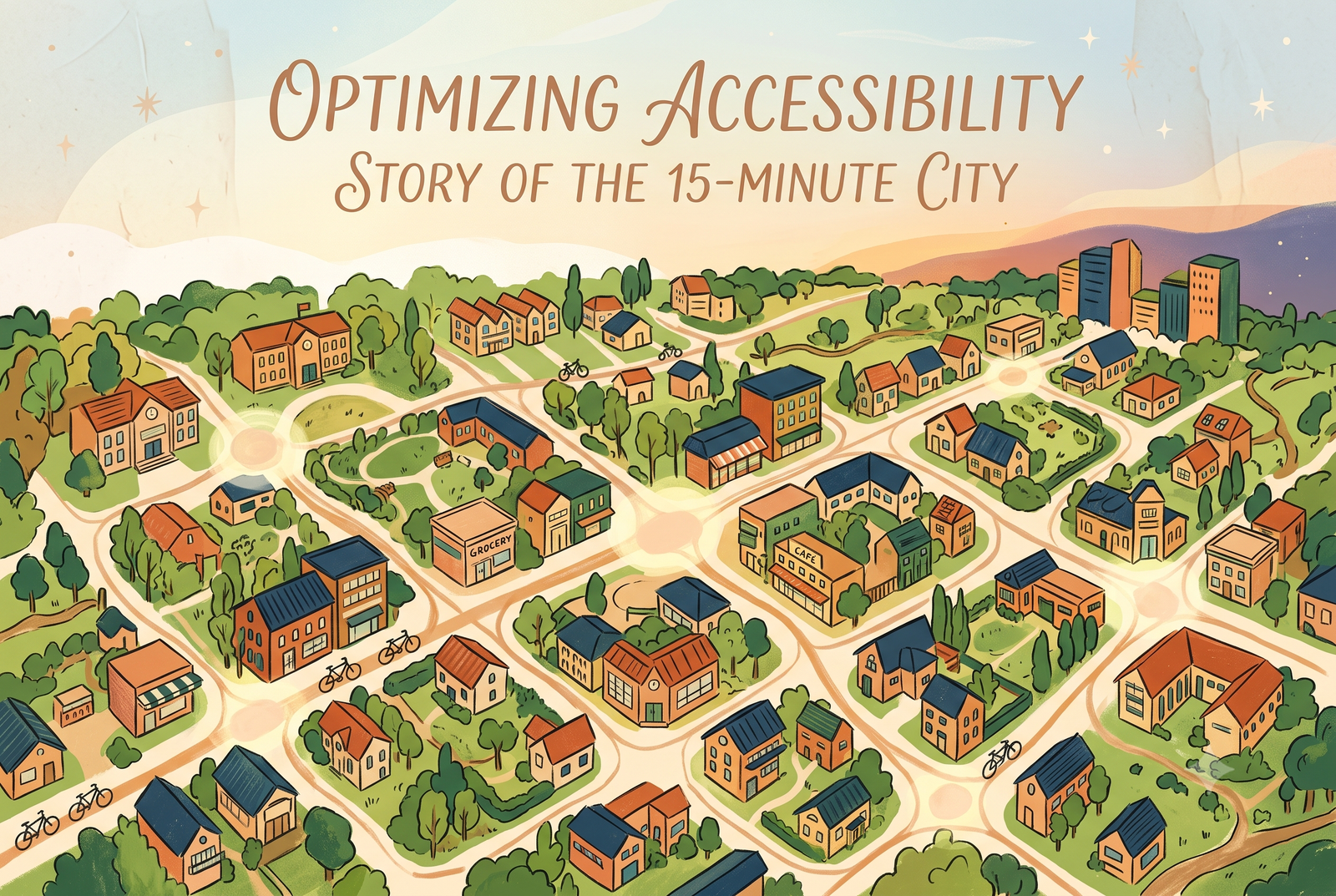
Her project on quantum-accelerated Steiner trees for 15-minute cities earned a place among the finalists at the world's largest pre-college STEM competition. Prishaa Shrimali of Marymount School of New York, was selected as a Grand Finalist at the 2026 Regeneron International Science and Engineering Fair (ISEF) in Phoenix, Arizona. Her project was Optimizing Urban Accessibility: […]

In 2026, the following Cheenta students have been successful for Indian Statistical Institute's M.Stat Entrance. They ranked within the first 50 in the entire country in these entrances. I.S.I. M.Stat Entrance
In 2026, the following Cheenta students have been successful for Indian Statistical Institute's B.Stat Entrance and Chennai Mathematical Institute's B.Sc. Math Entrance. They ranked within the first 200 in the entire country in these entrances. Most of these students attended the problem solving workshops regularly, which happen 5 days every week. CMI B.Sc. Math Entrance […]
