Preserving angle and orientation, new programs

Join Trial or Access Free Resources
Notes in Mathematics
A Cheenta Newsletter
I hope you are doing well. 
 
First, let me congratulate all students from India and abroad who did exceptionally well in contests like I.S.I. and C.M.I. Entrance, Math Olympiads, and other science olympiads. Among our students, Aniruddha, Sambudda, and Mary deserve a special mention. 
 
Today I wish to discuss a small and simple idea: preserving angle and orientation. This notion, apart from being an interesting mathematical topic, is also an exceptionally useful tool for physicists and chemists. 
 
Preserving Angle and Orientation
Imagine a map from F: \mathbb{R}^2 \to \mathbb{R}^2 (that is mapping x-y plane to x-y plane). There are a couple of ways of visualizing this. You may think about points moving on the same plane. Alternatively, you may also think of three-dimensional space, where input (x, y) is mapped to (z, w) with w suppressed. 

 
No matter how you visualize it, some information will be lost in the picture, as ideally to imagine such a map we will need four dimensions. 
 
Now think about two curves intersecting in the domain plane.
We wish to know what happens to these two curves after the x-y plane (domain plane) is acted upon by the function F. 
 
One interesting question is this: what happens to the angle between the two curves? (How to measure the angle between two curves? Draw tangents at the point of intersection, if possible, and then measure the angle between them. Of course, this necessitates the curves to be smooth).
 
What if we want the angle to be preserved even after the map F acts on the x-y plane. That is no matter how the two curves are crumpled after the transformation, the angle at which they intersect each other is preserved under the map F.
 
Also what if we wish to 'preserve' orientation (that is the order of the tangent lines at the point of intersection).
 
Turns out F has to be very very special in order to preserve both the angle and orientation. One way to study these type of functions is to understand how complex numbers work. Turns out these special functions are precisely those which are complex differentiable at every point in the domain (in more formal terms, at least locally analytic. Caution: the notions of complex differentiability at every point is a bit more stringent than locally analyticity).
 
This beautiful idea will be tackled partially in the complex analysis course conducted at Cheenta College Program. Even high school and middle school students may enjoy the beauty of this topic.
 
New Programs
 
Cheenta has recently launched a few new programs. We remain focused at our core principle: outstanding problem-oriented courses for brilliant students. Visit https://cheenta.com/academy/ for more information. 
  • The Thousand Flower program for class 1 through 6 students is a futuristic program that makes students ready for rigorous Olympiad programs later. We emphasize on creativity and imagination instead of memorizing and parroting. 
  • Physics and Informatics Olympiad are new additions to our Olympiad Programs. The key idea is to develop problem-solving skills so that brilliant students may reach far beyond regular school curriculum
 
Regards,
 
Dr. Ashani Dasgupta
Cheenta
 
vidya dadati vinayam
 
More Posts
A Major Milestone in Young Research: Aaditya Punatar and Muskan Sadana Publish in JEI

A Major Milestone in Young Research: Aaditya Punatar and Muskan Sadana Publish in JEI

October 11, 2026

Publishing original scientific research in a peer-reviewed journal is an achievement many scholars work toward for years. Achieving this feat early in one's academic journey requires exceptional intellectual rigor, creativity, and persistence. Aaditya Punatar and Muskan Sadana have reached this remarkable milestone, successfully publishing their collaborative research paper in the prestigious Journal of Emerging Investigators […]
Read More
Prishaa Shrimali Named Grand Finalist at Regeneron ISEF 2026 for Quantum-Powered Urban Planning Research

Prishaa Shrimali Named Grand Finalist at Regeneron ISEF 2026 for Quantum-Powered Urban Planning Research

October 6, 2026

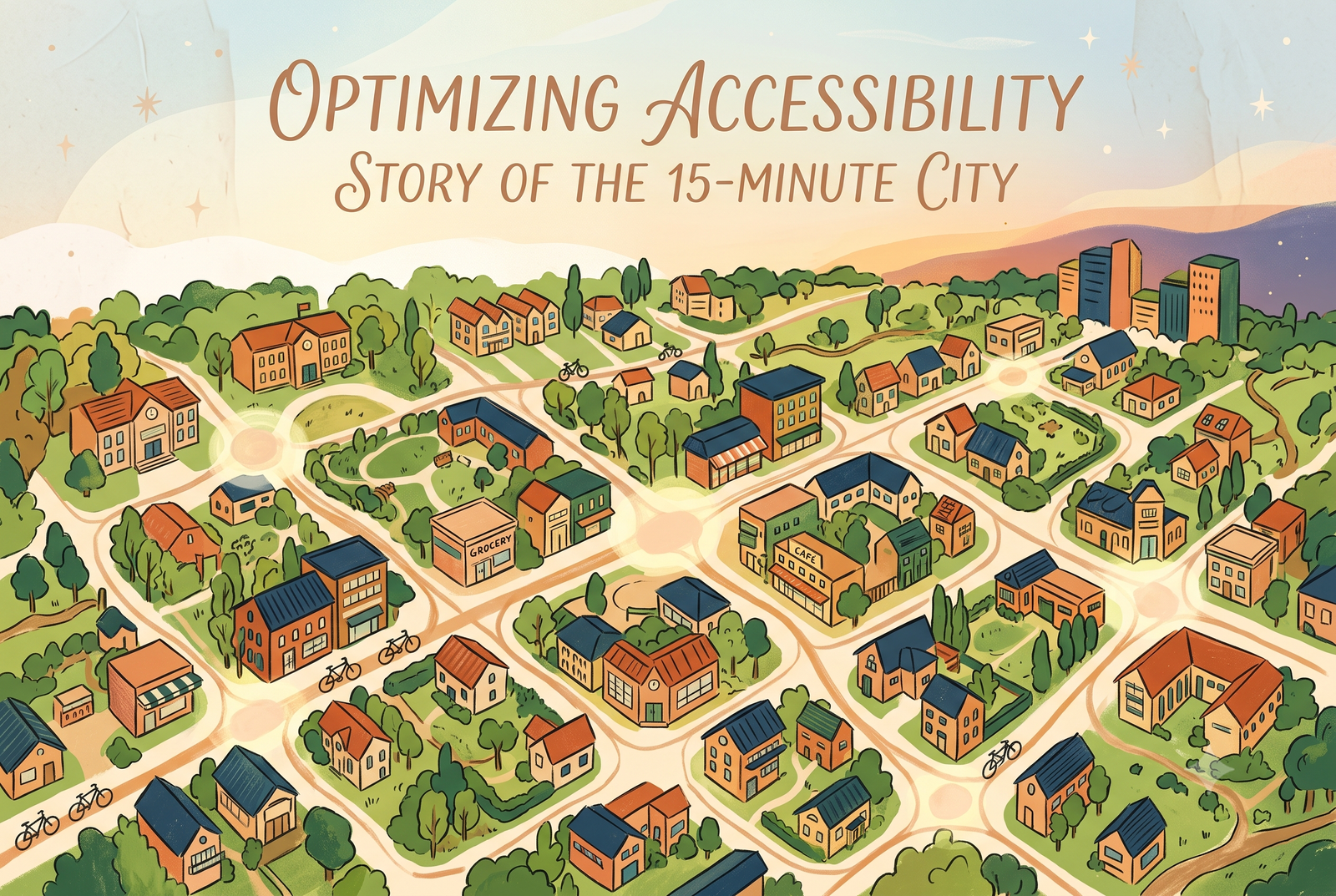
Her project on quantum-accelerated Steiner trees for 15-minute cities earned a place among the finalists at the world's largest pre-college STEM competition. Prishaa Shrimali of Marymount School of New York, was selected as a Grand Finalist at the 2026 Regeneron International Science and Engineering Fair (ISEF) in Phoenix, Arizona. Her project was Optimizing Urban Accessibility: […]
Read More
ISI M.Stat Entrance Success Story 2026

ISI M.Stat Entrance Success Story 2026

June 27, 2026

In 2026, the following Cheenta students have been successful for Indian Statistical Institute's M.Stat Entrance. They ranked within the first 50 in the entire country in these entrances. I.S.I. M.Stat Entrance
Read More
ISI B.Stat-B.Math and CMI BSc. Math Entrance Success Story 2026

ISI B.Stat-B.Math and CMI BSc. Math Entrance Success Story 2026

In 2026, the following Cheenta students have been successful for Indian Statistical Institute's B.Stat Entrance and Chennai Mathematical Institute's B.Sc. Math Entrance. They ranked within the first 200 in the entire country in these entrances. Most of these students attended the problem solving workshops regularly, which happen 5 days every week. CMI B.Sc. Math Entrance […]
Read More

Leave a Reply

Your email address will not be published. Required fields are marked *

This site uses Akismet to reduce spam. Learn how your comment data is processed.

2 comments on “Preserving angle and orientation, new programs”

© 2010 - 2025, Cheenta Academy. All rights reserved.
linkedin facebook pinterest youtube rss twitter instagram facebook-blank rss-blank linkedin-blank pinterest youtube twitter instagram