Mathematics lets us enjoy deep insights about the world around us. These insights may otherwise remain hidden from the eyes of a casual observer. The joy of this deeper understanding is comparable to literature or music. One may also build practical things using these insights. That engages the creative side of human nature.
Kids in elementary school can also enjoy this process of discovery and creation through mathematics. Designing lessons around this impetus can transform a child into a thinker and doer at a very early age. At this stage, the math should deliberately be easy. In particular, it should rarely involve complex formulae. Instead, math should be a vehicle of pattern discovery and elementary abstraction.
In this note we share a few open-ended questions that can be transformed into lesson plans in a non-routine mathematics program at the elementary school level (grades 1 to 6). These are not stand-alone lessons. In Cheenta, we combine non-routine problem solving sessions with math in non-routine spaces to produce a holistic experience for the children. Let us clarify this point before proceeding to the questions.
Non-routine problems in mathematics are found in books like Mathematics Can Be Fun by Yakov Perelman or Math Circles for Elementary School Students by Natasha Rozhkovskaya. There are several other books of this flavor. They contain problems that are deliberately non-repetitive. The motive is to help the child think rather than remember.
Mathematics in non-routine spaces, on the other hand, involves external objects such as gardens, road traffic, paintings, and the sky. These begin in spaces that are apparently non-mathematical in nature. A student and a mentor use elementary skills such as counting and pattern recognition to gain deeper insight about the space. That is part of the exercise. Additionally, they may want to create something with that insight. This layer may need more mathematical tools. The motive is to lead the child to think about mathematics in the context of the world around them, and to derive happiness and creativity in the process.
A word on method. Every problem below generates data: growth logs, sky maps, thread counts. The child maintains an observation journal throughout. The journal is the central tool of these activities. It gives the open-endedness a structure. It also shows parents what the child is actually doing, and over months it becomes a record of how the child's thinking matures.
Each of these problems is open-ended in nature. Kids may have different answers. Each problem has two key levers: discovery and creation. Discovery asks the child to observe, measure, and find patterns. Creation asks the child to build something with what was found. Both levers require some element of mathematical science. Each problem ends with an invitation to invent a definition, because definition-making is the deepest mathematical habit a young child can form.
Space: In-house or terrace garden.
Find a few saplings in a nearby nursery. Plant them in your home garden (this can be just one plant at the corner of a table). A plant may need soil, water, fertilizer, pesticide, and sunlight. Not every plant needs everything.
Discover.
Measure the growth of the plant over time and its relation to the inputs that you provide. Record both in your journal. Do you see any relation between the input and the growth? Observe the measurable aspects of the leaves of the plant (for example, the number of veins). Do you see any pattern? Is there a number such that most leaves have that many veins?
Create.
Can you design a more efficient input system next time to improve the growth of your plants? Can you draw a chart that predicts how tall your plant will be next week?
Invent a definition.
What does it mean for a plant to be "growing well"? Height alone? Number of leaves? Something else? Write down your own definition and test it against your plant.
Note for mentors and parents: the mathematical undercurrent here is data collection, tabulation, and elementary correlation. At higher levels the same problem supports rate of change and prediction.
Space: Sky
Look up. Do you see any bright objects in the night sky? Use a compass to understand directions and create a sky map in your journal.
Discover.
Observe the motion of your marked objects over a period of time. Is there a pattern? Is the moon close to certain other objects in the sky? Does it stay close over time?
Create.
Leave the compass at home. Just by looking at the night sky, can you identify north, south, east, and west? Are you able to make a map of your locality using that?
Invent a definition.
Can you find a way to define how far apart two celestial objects in your map are? You cannot use a measuring tape on the sky. What will you use instead?
Note for mentors and parents: the mathematical undercurrent here is coordinate systems, direction, and angular measure. The distance question quietly introduces the idea that a metric must be chosen, not assumed.
Space: Embroidery
Pick up a few embroidered clothes at your home. How many colors does a typical piece use?
Discover.
How many times does one color go beneath another color? Do you see any pattern? Do the patterns repeat? Does the design look the same if you turn the cloth around or view it in a mirror?
Create.
Can you design an embroidery style of your own that others find beautiful? Use graph paper to plan it before touching thread.
Invent a definition.
What makes two embroidery styles "different"? The colors? The repeating unit? The symmetry? Write down your own rule for telling styles apart, and test it on the pieces at home.
Note for mentors and parents: the mathematical undercurrent here is counting, repetition, and symmetry. At higher levels the same problem supports tessellations and transformation.

Publishing original scientific research in a peer-reviewed journal is an achievement many scholars work toward for years. Achieving this feat early in one's academic journey requires exceptional intellectual rigor, creativity, and persistence. Aaditya Punatar and Muskan Sadana have reached this remarkable milestone, successfully publishing their collaborative research paper in the prestigious Journal of Emerging Investigators […]
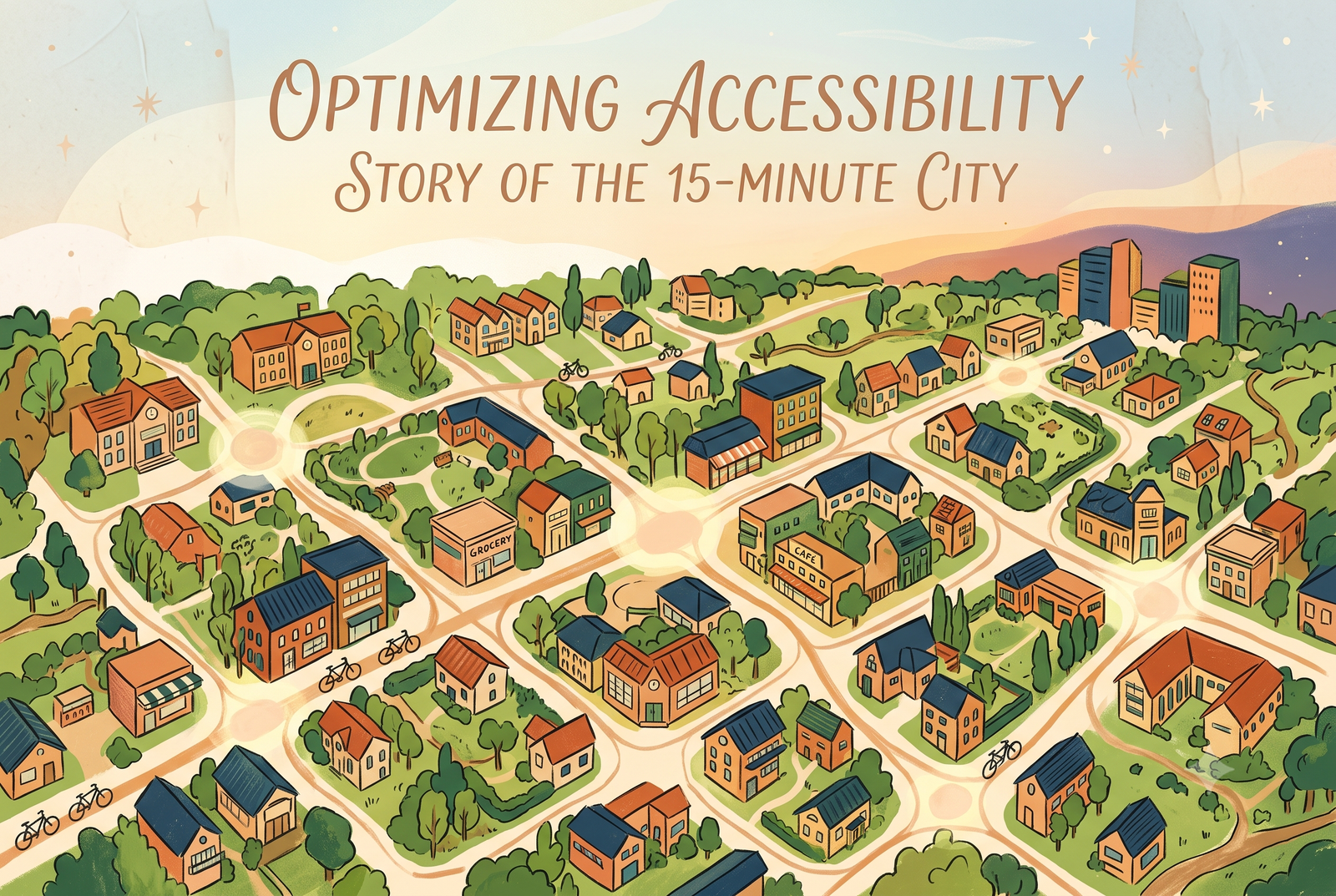
Her project on quantum-accelerated Steiner trees for 15-minute cities earned a place among the finalists at the world's largest pre-college STEM competition. Prishaa Shrimali of Marymount School of New York, was selected as a Grand Finalist at the 2026 Regeneron International Science and Engineering Fair (ISEF) in Phoenix, Arizona. Her project was Optimizing Urban Accessibility: […]
In 2026, the following Cheenta students have been successful for Indian Statistical Institute's M.Stat Entrance. They ranked within the first 50 in the entire country in these entrances. I.S.I. M.Stat Entrance
In 2026, the following Cheenta students have been successful for Indian Statistical Institute's B.Stat Entrance and Chennai Mathematical Institute's B.Sc. Math Entrance. They ranked within the first 200 in the entire country in these entrances. Most of these students attended the problem solving workshops regularly, which happen 5 days every week. CMI B.Sc. Math Entrance […]