Here, you will find all the questions of ISI Entrance Paper 2005 from Indian Statistical Institute's B.Stat Entrance. You will also get the solutions soon of all the previous year problems.
Problem 1:
Let \( a,b \) and \( c \) be the sides of a right angled triangle. Let \( \displaystyle{\theta } \) be the smallest angle of this triangle. If \( \displaystyle{ \frac{1}{a}, \frac{1}{b} } \) and \( \displaystyle{ \frac{1}{c} } \) are also the sides of a right angled triangle then show that \( \displaystyle{ \sin\theta=\frac{\sqrt{5}-1}{2}} \)
Problem 2:
Let \( \displaystyle{f(x)=\int_0^1 |t-x|t , dt } \) for all real \(x \). Sketch the graph of \( f(x) \). What is the minimum value of \( f(x) \)?
Problem 3:
Let \( f \) be a function defined on \( \displaystyle{ {(i,j): i,j \in \mathbb{N}} } \) satisfying \( \displaystyle{ f(i,i+1)=\frac{1}{3} } \) for all i \( f(i, j) \) = \( f(i, k) \)+ \( f(k, j) \) - \( 2 f(i, k) f(k, j) \) for all \( k \) such that \( i <k \). Find all real solutions of the equation \( \displaystyle{ \sin^{5}x+\cos^{3}x=1 } \).
Problem 4:
Consider an acute-angled triangle \( PQR \) such that \( C,I \) and \( O \) are the circumcentre, incentre and orthocentre respectively. Suppose \( \displaystyle{ \angle QCR, \angle QIR } \) and \( \displaystyle{ \angle QOR } \), measured in degrees, are \( \displaystyle{ \alpha, \beta and \gamma } \) respectively. Show that \( \displaystyle{ \frac{1}{\alpha}+\frac{1}{\beta}+\frac{1}{\gamma} } \) > \( \displaystyle{ \frac{1}{45} } \)
Problem 5:
Let \( f \) be a function defined on \( \displaystyle{ (0, \infty ) } \) as follows: \( \displaystyle{ f(x)=x+\frac1x } \) . Let \( h \) be a function defined for all \( \displaystyle{ x \in (0,1) } \) as \( \displaystyle{h(x)=\frac{x^4}{(1-x)^6} } \). Suppose that \( g(x)=f(h(x)) \) for all \( \displaystyle{x \in (0,1)} \). Show that \( h \) is a strictly increasing function. Show that there exists a real number \( \displaystyle{x_0 \in (0,1)} \) such that \( g \) is strictly decreasing in the interval \( \displaystyle{ (0,x_0] } \) and strictly increasing in the interval \( \displaystyle{[x_0,1)} \).
Problem 6:
For integers \( \displaystyle{ m,n\geq 1 } \), Let \( \displaystyle{ A_{m,n} , B_{m,n} } \) and \( \displaystyle{ C_{m,n}} \) denote the following sets:
a) \( A_{m, n} \)=\( \left(\alpha_{1}, \alpha_{2}, \ldots, \alpha_{m}\right) \) : \( 1 \leq \alpha_{1} \leq \alpha_{2} \leq \ldots \leq \alpha_{m} \leq n \) given that \( \alpha_{i} \in \mathbb{Z} \) for all \( i \)
b) \( B_{m, n} \)=\( \left(\alpha_{1}, \alpha_{2}, \ldots, \alpha_{m}\right) \) : \( \alpha_{1}+\alpha_{2}+\ldots+\alpha_{m} \)=\( n \) given that \( \alpha_{i} \geq 0 \) and \( \alpha_{i} \in \mathbb{Z} \) for all \( i \)
c) \( C_{m, n} \)=\( \left(\alpha_{1}, \alpha_{2}, \ldots, \alpha_{m}\right) \) : \( 1 \leq \alpha_{1} \alpha_{2} \ldots ; \alpha_{m} \leq n \) given that \( \alpha_{i} \in \mathbb{Z} \) for all \( i \)
d) Define a one-one onto map from \( \displaystyle{A_{m,n}} \) onto \( \displaystyle{B_{m+1,n-1}} \).
e) Find the number of elements of the sets \( \displaystyle{A_{m,n}} \) and \( \displaystyle{B_{m,n}} \)
Problem 7:
A function \( f(n) \) is defined on the set of positive integers is said to be multiplicative if \( f(mn)=f(m)f(n) \) whenever \( m \) and \( n \) have no common factors greater than \( 1 \). Are the following functions multiplicative? Justify your answer.
Problem 8:
\( \displaystyle{ g(n)=5^k } \) where k is the number of distinct primes which divide \( n \). \( \displaystyle{ h(n)= 0} \) if \( n \) is divisible by \( k^2 \) for some integer \( k>1 \) ...., 1 otherwise.
Problem 9:
Suppose that to every point of the plane a colour, either red or blue, is associated. Show that if there is no equilateral triangle with all vertices of the same colour then there must exist three points \( A,B \) and \( C \) of the same colour such that \( B \) is the midpoint of \( AC \). Show that there must be an equilateral triangle with all vertices of the same colour.
Problem 10:
Let \( ABC \) be a triangle. Take n point lying on the side \( AB \) (different from \( A \) and \( B \)) and connect all of them by straight lines to the vertex \( C \). Similarly, take n points on the side \( AC \) and connect them to \( B \). Into how many regions is the triangle \( ABC \) partitioned by these lines? Further, take \( n \) points on the side \( BC \) also and join them with \( A \). Assume that no three straight lines meet at a point other than \( A,B \) and \( C \). Into how many regions is the triangle \( ABC \) partitioned now?
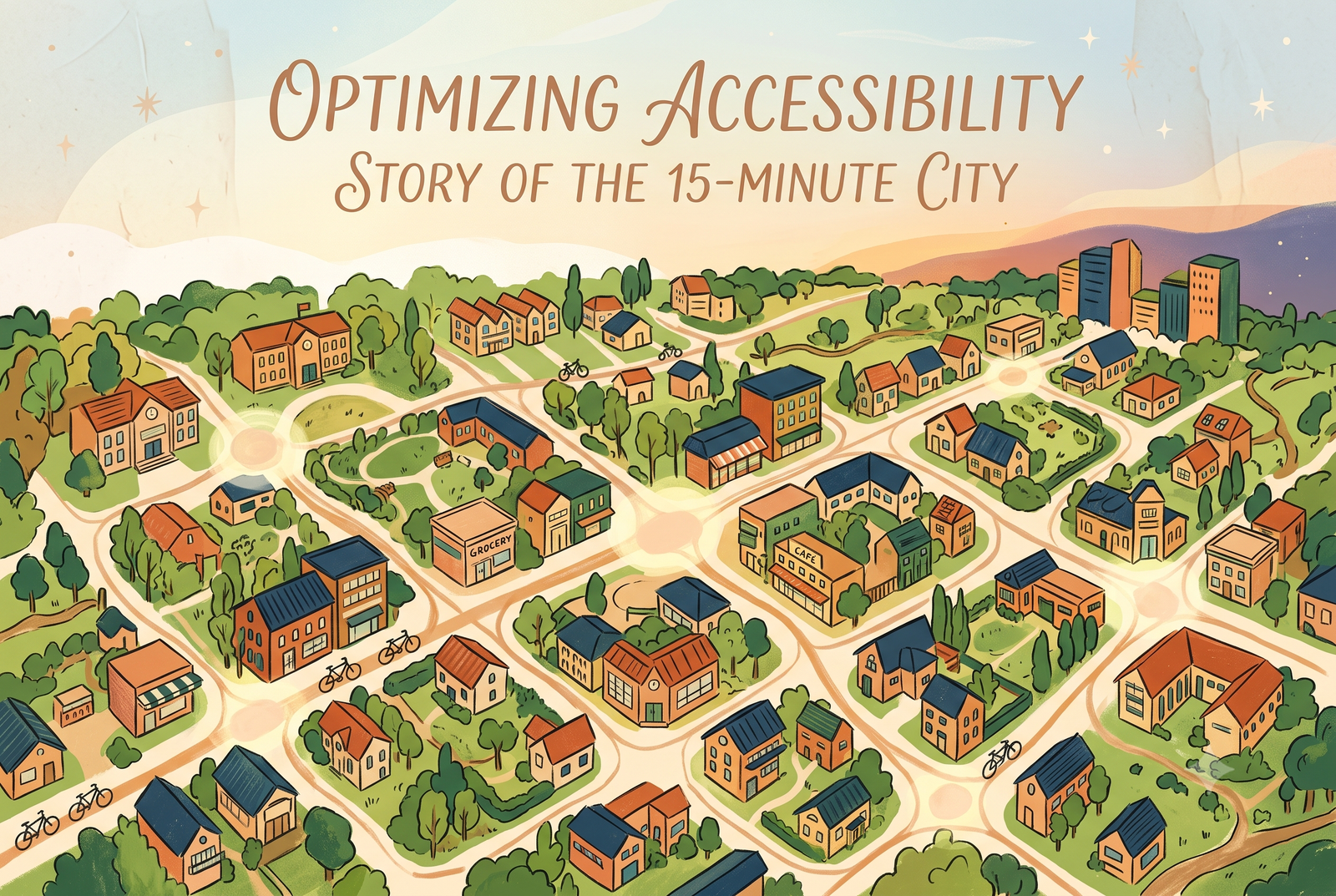
Her project on quantum-accelerated Steiner trees for 15-minute cities earned a place among the finalists at the world's largest pre-college STEM competition. Prishaa Shrimali of Marymount School of New York, was selected as a Grand Finalist at the 2026 Regeneron International Science and Engineering Fair (ISEF) in Phoenix, Arizona. Her project was Optimizing Urban Accessibility: […]
In 2026, the following Cheenta students have been successful for Indian Statistical Institute's M.Stat Entrance. They ranked within the first 50 in the entire country in these entrances. I.S.I. M.Stat Entrance
In 2026, the following Cheenta students have been successful for Indian Statistical Institute's B.Stat Entrance and Chennai Mathematical Institute's B.Sc. Math Entrance. They ranked within the first 200 in the entire country in these entrances. Most of these students attended the problem solving workshops regularly, which happen 5 days every week. CMI B.Sc. Math Entrance […]

In 2025, 8 students from Cheenta Academy cracked the prestigious Regional Math Olympiad. In this post, we will share some of their success stories and learning strategies. The Regional Mathematics Olympiad (RMO) and the Indian National Mathematics Olympiad (INMO) are two most important mathematics contests in India.These two contests are for the students who are […]

doubt question no. 4and 5
We have posted the requested discussions. Find them here: http://cheenta.com/2015/05/07/solutions-to-an-equation-b-stat-2005-subjective-problem-4-solution/
http://cheenta.com/2015/05/07/geometric-inequality-i-s-i-b-stat-2005-problem-5-solution/
I want to all the solutions of above questions
Do you please help me giving solutions of I.S.I. B.STAT ENTRANCE SUBJECTIVE PAPERS of 2
005, 2006,2007,2008,2009,2010,2011,2012
i need the solutions of past year questions