Here, you will find all the questions of ISI Entrance Paper 2009 from Indian Statistical Institute's B.Stat Entrance. You will also get the solutions soon of all the previous year problems.
Problem 1:
If $k$ times the sum of the first $n$ natural numbers is equal to the sum of the squares of the first $n$ natural numbers, then $\cos ^{-1}\left(\frac{2 n-3 k}{2}\right)$ is
(A) $\frac{5 \pi}{6}$;
(B) $\frac{2 \pi}{3}$;
(C) $\frac{\pi}{3}$;
(D) $\frac{\pi}{6}$.
Problem 2:
Two circles touch each other at $P$. The two common tangents to the circles, none of which pass through $P$ meet at $E$. They touch the larger circle at $C$ and $D$ The larger circle has radius $3$ units and $C E$ has length $4$ units. Then the radius of the smaller circle is
(A) $1$ ;
(B) $\frac{5}{7}$;
(C) $\frac{3}{4}$;
(D) $\frac{1}{2}$.
Problem 3:
Suppose $ABCDEFGHIJ$ is a ten-digit number, where the digits are all distinct. Moreover, $A>B>C$ satisfy $A+B+C=9, D>E>F$ are consecutive even digits and $G>H>I>J$ are consecutive odd digits. Then $A$ is
(A) $8$ ;
(B) $7$;
(C) $6$;
(D) $5$ .
Problem 4:
Let $A B C$ be a right angled triangle with $A B>B C>C A$. Construct three equilateral triangles $B C P, C Q A$ and $A R B,$ so that $A$ and $P$ are on opposite sides of $B C: B$ and $Q$ are on opposite sides of $C A ; C$ and $R$ are on opposite sides of $A B$. Then
(A) $C R>A P>B Q$
(B) $C R<A P<B Q$
(C) $C R=A P=B Q$
(D) $C R^{2}=A P^{2}+B Q^{2}.$
Problem 5:
The value of $(1+\tan 1^{\circ})(1+\tan 2^{\circ}) \cdots(1+\tan 44^{\circ})$ is
(A) $2$ ;
(B) a multiple of $22 ;$
(C) not an integer;
(D) a multiple of $4$ .
Problem 6:
Let $y=x /(1+x),$ where
$$
x=\omega^{2009^{2009} \cdots \text { upto } 2009 \text { times }}
$$
and $\omega$ is a complex cube root of $1 .$ Then $y$ is
(A) $\omega$
(B) $-\omega$
(C) $\omega^{2}$
(D) $-\omega^{2}$
Problem 7:
The number of solutions of $\theta$ in the interval $[0,2 \pi]$ satisfying
$$\left(\log _{\sqrt{3}} \tan \theta\right) \sqrt{\log _{\tan \theta} 3+\log _{\sqrt{3}} 3 \sqrt{3}}=-1$$ is
(A) $0$;
(B) $2$;
(C) $4$;
(D) $6$.
Problem 8:
A building with ten storeys, each storey of height $3$ metres, stands on one side of a wide street. From a point on the other side of the street directly opposite to the building, it is observed that the three uppermost storeys together subtend an angle equal to that subtended by the two lowest storeys. The width of the street is
(A) $6 \sqrt{35}$ metres;
(B) $6 \sqrt{70}$ metres;
(C) $6$ metres;
(D) $6 \sqrt{3}$ metres.
Problem 9:
A collection of black and white balls are to be arranged on a straight line, such that each ball has at least one neighbour of different colour. If there are $100$ black balls, then the maximum number of white balls that allows such an arrangement is
(A) $100$ ;
(B) $101$ ;
(C) $202$;
(D) $200$ .
Problem 10:
Let $f(x)$ be a real-valued function satisfying $a f(x)+b f(-x)=p x^{2}+q x+r$ where $a$ and $b$ are distinct real numbers and $p, q$ and $r$ are non-zero real numbers. Then $f(x)=0$ will have real solution when
(A)$\left(\frac{a+b}{a-b}\right)^{2} \leq \frac{q^{2}}{4 p r}$ ;
(B) $\left(\frac{a+b}{a-b}\right)^{2} \leq \frac{4 p r}{q^{2}}$;
(C) $\left(\frac{a+b}{a-b}\right)^{2} \geq \frac{q^{2}}{4 p r}$ ;
(D) $\left(\frac{a+b}{a-b}\right)^{2} \geq \frac{4 p r}{q^{2}}.$
Problem 11:
A circle is inscribed in a square of side $x$, then a square is inscribed in that circle, a circle is inscribed in the latter square, and so on. If $S_{n}$ is the sum of the areas of the first $n$ circles so inscribed, then, $\lim_{n \to \infty} S_n$ is
(A) $\frac{\pi x^{2}}{4}$;
(B) $\frac{\pi x^{2}}{3}$;
(C) $\frac{\pi x^{2}}{2}$;
(D) $\pi x^{2}$.
Problem 12:
Let $1,4, \ldots$ and $9,14, \ldots$ be two arithmetic progressions. Then the number of distinct integers in the collection of first $500$ terms of each of the progressions is
(A) $833$ ;
(B) $835$;
(C) $837$;
(D) $901$ .
Problem 13:
Consider all the $8$-letter words that can be formed by arranging the letters in $BACHELOR$ in all possible ways. Any two such words are called equivalent if those two words maintain the same relative order of the letters $A, E$ and $O .$ For example, $BACOHELR$ and $CABLROEH$ are equivalent. How many words are there which are equivalent to $BACHELOR$?
(A) $\left(\begin{array}{c}8 \\ 3\end{array}\right) \times 3 !$
(B) $\left(\begin{array}{c}8 \\ 3\end{array}\right) \times 5 !$
(C) $2 \times\left(\begin{array}{c}8 \\ 3\end{array}\right)^{2}$
(D) $5 ! \times 3 ! \times 2 !$
Problem 14:
The limit
$$
\lim _{n \rightarrow \infty}\left(\frac{1}{6}+\frac{1}{24}+\frac{1}{60}+\frac{1}{120}+\cdots+\frac{1}{n^{3}-n}\right)
$$ equals
(A) $1$ ;
(B) $\frac{1}{2}$;
(C) $\frac{1}{4}$;
(D) $\frac{1}{8}$.
Problem 15:
Let $a$ and $b$ be real numbers satisfying $a^{2}+b^{2} \neq 0 .$ Then the set of real numbers $c,$ such that the equations $a l+b m=c$ and $l^{2}+m^{2}=1$ have real solutions for $l$ and $m$ is
(A) $\left[-\sqrt{a^{2}+b^{2}}, \sqrt{a^{2}+b^{2}}\right]$;
(B) $[-|a+b|,|a+b|]$
(C) $\left[0, a^{2}+b^{2}\right]$
(D) $(-\infty, \infty)$.
Problem 16:
Let $f$ be an onto and differentiable function defined on $[0,1]$ to $[0, T],$ such that $f(0)=0 .$ Which of the following statements is necessarily true?
(A) $f^{\prime}(x)$ is greater than or equal to $T$ for all $x$;
(B) $f^{\prime}(x)$ is smaller than $T$ for all $x$;
(C) $f^{\prime}(x)$ is greater than or equal to $T$ for some $x$;
(D) $f^{\prime}(x)$ is smaller than $T$ for some $x$.
Problem 17:
The area of the region bounded by $|x|+|y|+|x+y| \leq 2$ is
(A) $2$;
(B) $3$;
(C) $4$;
(D) $6$ .
Problem 18:
Let $f$ and $g$ be two positive valued functions defined on $[-1,1],$ such that $f(-x)=1 / f(x)$ and $g$ is an even function with $\int_{-1}^{1} g(x) d x=1$. Then $I=$ $\int_{-1}^{1} f(x) g(x) d x$ satisfies
(A) $I \geq 1$;
(B) $I \leq 1$;
(C) $\frac{1}{3}<I<3$
(D) $I=1$.
Problem 19:
How many possible values of $(a, b, c, d),$ with $a, b, c, d$ real, are there such that $a b c=d, b c d=a, c d a=b$ and $d a b=c ?$
(A) $1$ ;
(B) $6$ ;
(C) $9$ ;
(D) $17$.
Problem 20:
What is the maximum possible value of a positive integer $n$, such that for any choice of seven distinct elements from ${1,2, \ldots, n},$ there will exist two numbers $x$ and $y$ satisfying $1<x / y \leq 2 ?$
(A) $2 \times 7$
(B) $2^{7}-2$
(C) $7^{2}-2$
(D) $7^{7}-2$.
Problem 21:
Which of the following are roots of the equation $x^{7}+27 x=0 ?$
(A) $-\sqrt{3} i$;
(B) $\frac{\sqrt{3}}{2}(-1+\sqrt{3} i)$;
(C) $-\frac{\sqrt{3}}{2}(1+i)$;
(D) $\frac{\sqrt{3}}{2}(\sqrt{3}-i)$.
Problem 22:
The equation $\left|x^{2}-x-6\right|=x+2$ has
(A) two positive roots;
(B) two real roots;
(C) three real roots;
(D) none of the above.
Problem 23:
If $0 < x < \frac{\pi}{2}$ then
(A) $\cos (\cos x)>\sin x$
(B) $\sin (\sin x)>\sin x$
(C) $\sin (\cos x)>\cos x$
(D) $\cos (\sin x)>\sin x$.
Problem 24:
Suppose $A B C D$ is a quadrilateral such that the coordinates of $A, B$ and $C$ are $(1,3),(-2,6)$ and $(5,-8)$ respectively. For which choices of coordinates of $D$ will $A B C D$ be a trapezium?
(A) $(3,-6)$;
(B) $(6,-9)$;
(C) $(0,5)$;
(D) $(3,-1)$.
Problem 25:
Let $x$ and $y$ be two real numbers such that $2 \log (x-2 y)=\log x+\log y$ holds. Which of the following are possible values of $x / y ?$
(A) $4$;
(B) $3$;
(C) $2$ ;
(D) $1$.
Problem 26:
Let $f$ be a differentiable function satisfying $f^{\prime}(x)=f^{\prime}(-x)$ for all $x$. Then
(A) $f$ is an odd function;
(B) $f(x)+f(-x)=2 f(0)$ for all $x$;
(C) $\frac{1}{2} f(x)+\frac{1}{2} f(y)=f\left(\frac{1}{2}(x+y)\right)$ for all $x, y$
(D) If $f(1)=f(2),$ then $f(-1)=f(-2)$.
Problem 27:
Consider the function
$$ f(x)=\begin{cases}\frac{\max \{x, \frac{1}{x}\}}{\min \{x, \frac{1}{x}\}}, & \text { when } x \neq 0 \\ 1, & \text { when } x=0\end{cases}.$$
Then
(A) $\lim_{x \rightarrow 0+} f(x)=0$;
(B) $\lim_{x \rightarrow 0-} f(x)=0$;
(C) $f(x)$ is continuous for all $x \neq 0$;
(B) $f(x)$ is differentiable for all $x \neq 0$.
Problem 28:
Which of the following graphs represent functions whose derivatives have a maximum in the interval $(0,1)$?

Problem 29:
A collection of geometric figures is said to satisfy Helly property if the following condition holds:
for any choice of three figures $A, B, C$ from the collection satisfying $A \cap B \neq \emptyset, B \cap C \neq \emptyset$ and $C \cap A \neq \emptyset,$ one must have $A \cap B \cap C \neq \emptyset$
Which of the following collections satisfy Helly property?
(A) A set of circles;
(B) A set of hexagons;
(C) A set of squares with sides parallel to the axes;
(D) A set of horizontal line segments.
Problem 30:
Consider an arrav of $m$ rows and $n$ columns obtained by arranging the first $m n$ integers in some order. Let $b_{i}$ be the maximum of the numbers in the i-th row and $c_{j}$ be the minimum of the numbers in the $j$ -th column. If
$$
b=\min_{1 \leq i \leq m} b_{i} \quad \text { and } \quad c=\max_ {1 \leq j \leq n} c{j}
$$,
then which of the following statements are necessarily true?
(A) $m \leq c$
(B) $n \geq b$;
(C) $c \geq b$;
(D) $c \leq b$.

Publishing original scientific research in a peer-reviewed journal is an achievement many scholars work toward for years. Achieving this feat early in one's academic journey requires exceptional intellectual rigor, creativity, and persistence. Aaditya Punatar and Muskan Sadana have reached this remarkable milestone, successfully publishing their collaborative research paper in the prestigious Journal of Emerging Investigators […]
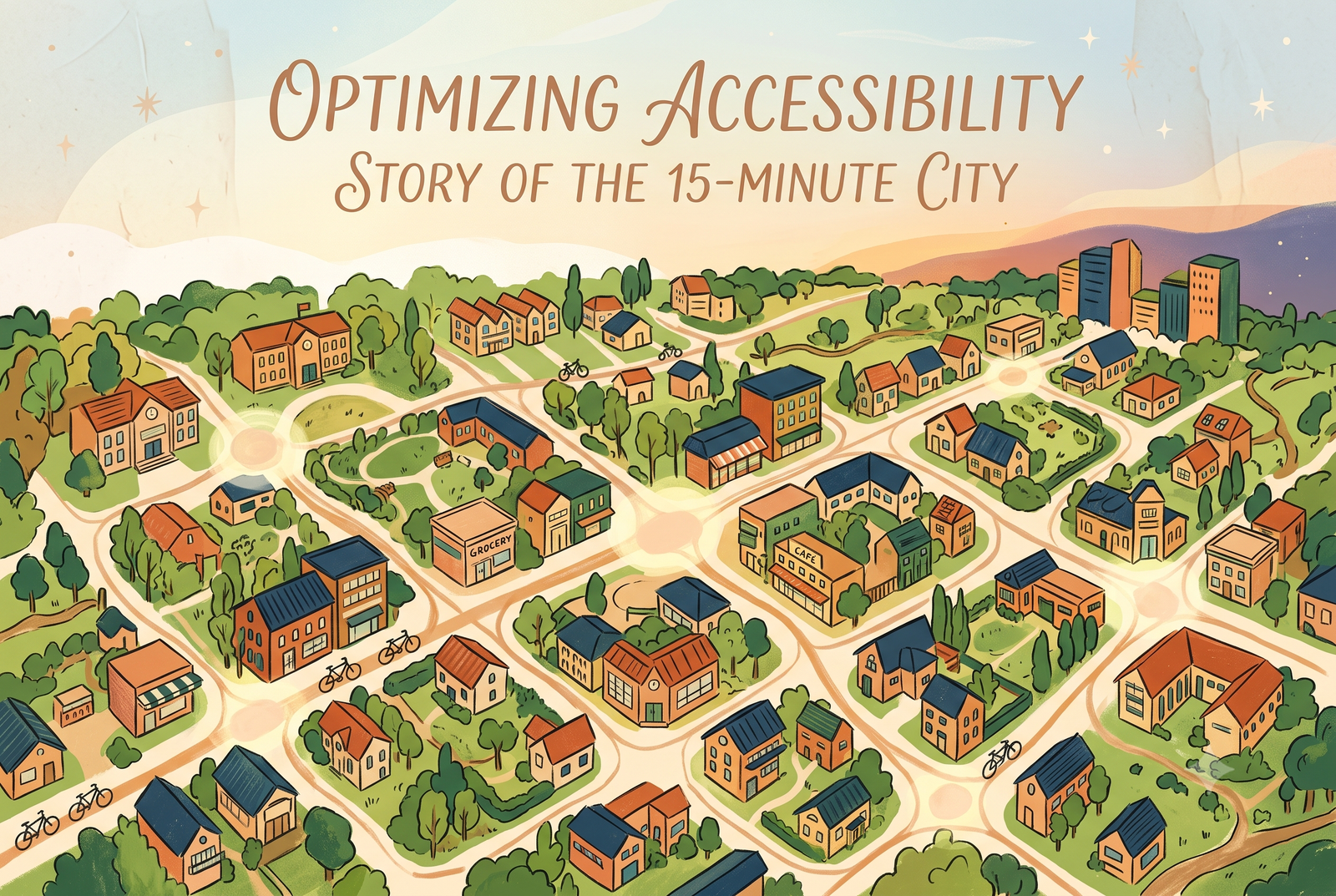
Her project on quantum-accelerated Steiner trees for 15-minute cities earned a place among the finalists at the world's largest pre-college STEM competition. Prishaa Shrimali of Marymount School of New York, was selected as a Grand Finalist at the 2026 Regeneron International Science and Engineering Fair (ISEF) in Phoenix, Arizona. Her project was Optimizing Urban Accessibility: […]
In 2026, the following Cheenta students have been successful for Indian Statistical Institute's M.Stat Entrance. They ranked within the first 50 in the entire country in these entrances. I.S.I. M.Stat Entrance
In 2026, the following Cheenta students have been successful for Indian Statistical Institute's B.Stat Entrance and Chennai Mathematical Institute's B.Sc. Math Entrance. They ranked within the first 200 in the entire country in these entrances. Most of these students attended the problem solving workshops regularly, which happen 5 days every week. CMI B.Sc. Math Entrance […]
Nice