At the college (and university), on each topic, there are simply too many good books to choose from. It is easy to get overwhelmed.
Then there are the tests. For semester exams, there are simply no substitute for class notes. But what about the entrance tests like GRE Math Subject Test or TIFR, M.Math and IIT JAM? What books will be most efficient for the preparation for these tests?
There is also a conflict between beauty and efficiency. Our heart desires to read beautiful expositions, but our mind seeks technical sophistication.
This book list can be regarded as the First Layer or Common Minimum Requirement. They provide both beautiful exposition and efficient problem solving skills. They are 'easier' than some of the cult classics.
It is important to completely solve atleast one book per topic before going into the harder ones. You do not need to solve hard books for all topics. It is mostly likely that you will doing research in a particular subtopic in future. Hence it is intelligent to choose a harder book in one subject of your liking in the second round while gaining moderate vocabulary and idea on broad set of subjects in the first layer.
With the above points in consideration, here goes the book list:
Chapter 0 of Serge Lang's Introduction Linear Algebra
and then
Introduction to Linear Algebra by Gilbert Strang
Contemporary Abstract Algebra by Gallian
and
SAGE Math (computation software)
Introduction to Real Analysis by Bartle Sherbet
Problems in Real Analysis by Kaczor
Topology of Metric Spaces by Kumaresan
Calculus, Early Transcendentals by James Stewart
OR
Math 18.02C course in MIT OCW (contains notes and problem sets)
(also for Vector Calculus, use notes from mathinsights.org and software like Geogebra)
Test of Mathematics in 10+2 Level (to keep high school topics familiar; especially skills in elementary number theory and high school calculus are inportant for Tests like GRE Math Subject Test and M.Math objective test)
Cult classics that we deliberately omitted from this list includes Rudin, Herstein, Artin, Hoffman Kunz, Munkres etc. We also omitted modern jewels like Christenson, Tao, Dummit Foote.
The bottom line is: make sure you completely work on at least one book per topic before hunting for another book on the same topic. No book will have everything that you seek.
Visit Also: College Mathematics Program
Publishing original scientific research in a peer-reviewed journal is an achievement many scholars work toward for years. Achieving this feat early in one's academic journey requires exceptional intellectual rigor, creativity, and persistence. Aaditya Punatar and Muskan Sadana have reached this remarkable milestone, successfully publishing their collaborative research paper in the prestigious Journal of Emerging Investigators […]
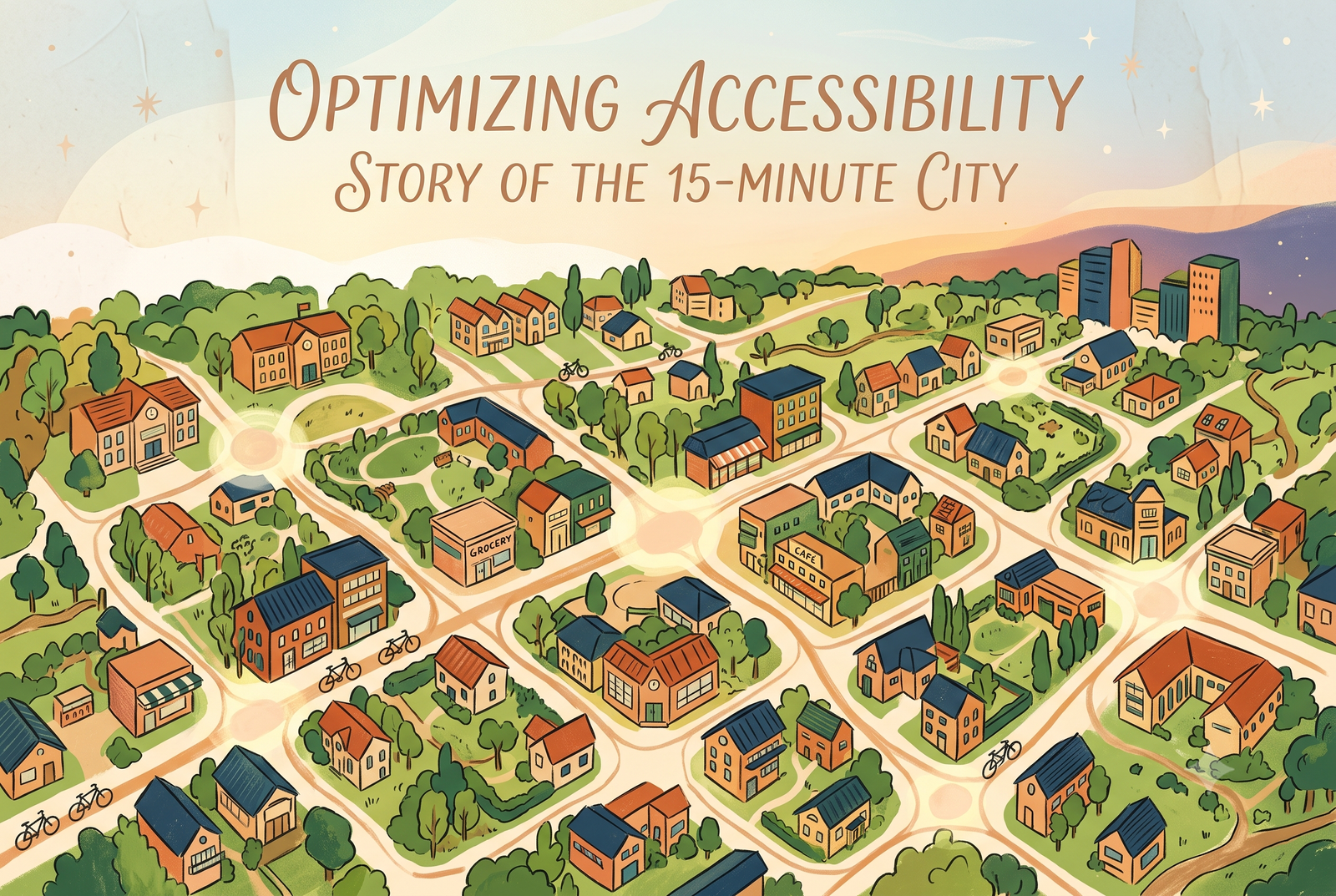
Her project on quantum-accelerated Steiner trees for 15-minute cities earned a place among the finalists at the world's largest pre-college STEM competition. Prishaa Shrimali of Marymount School of New York, was selected as a Grand Finalist at the 2026 Regeneron International Science and Engineering Fair (ISEF) in Phoenix, Arizona. Her project was Optimizing Urban Accessibility: […]
In 2026, the following Cheenta students have been successful for Indian Statistical Institute's M.Stat Entrance. They ranked within the first 50 in the entire country in these entrances. I.S.I. M.Stat Entrance
In 2026, the following Cheenta students have been successful for Indian Statistical Institute's B.Stat Entrance and Chennai Mathematical Institute's B.Sc. Math Entrance. They ranked within the first 200 in the entire country in these entrances. Most of these students attended the problem solving workshops regularly, which happen 5 days every week. CMI B.Sc. Math Entrance […]
