Cheenta Hosts the Australian Mathematics Competition 2026 in Kolkata, Mumbai
 Join Trial or Access Free ResourcesJoin Trial or Access Free Resources
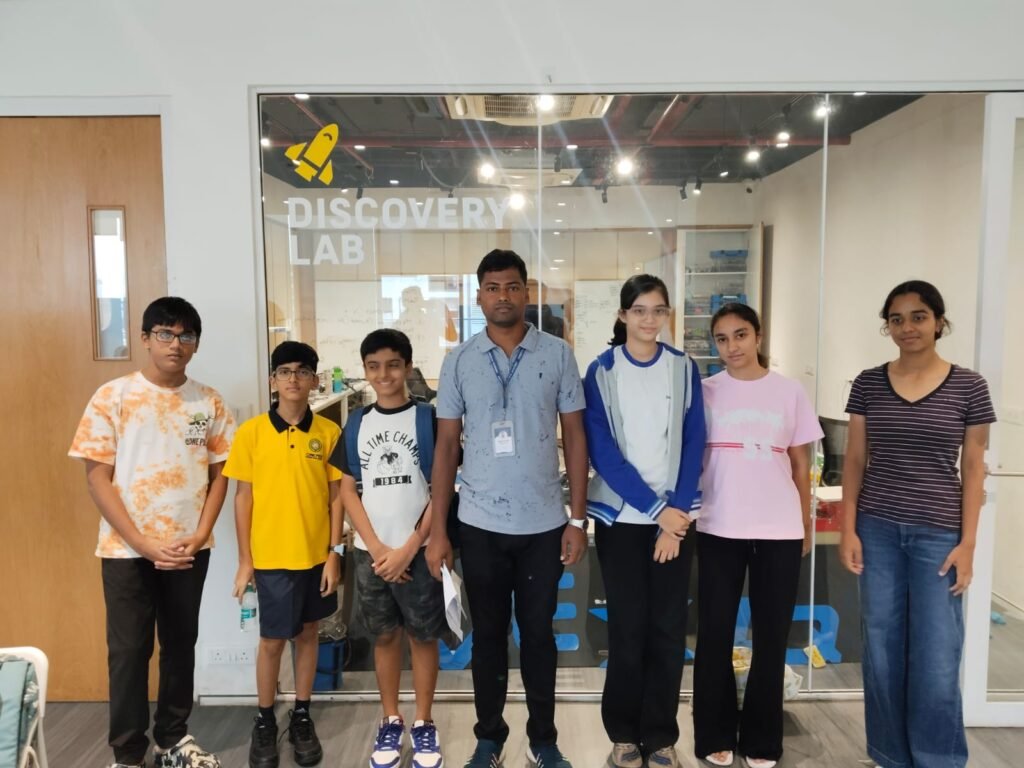
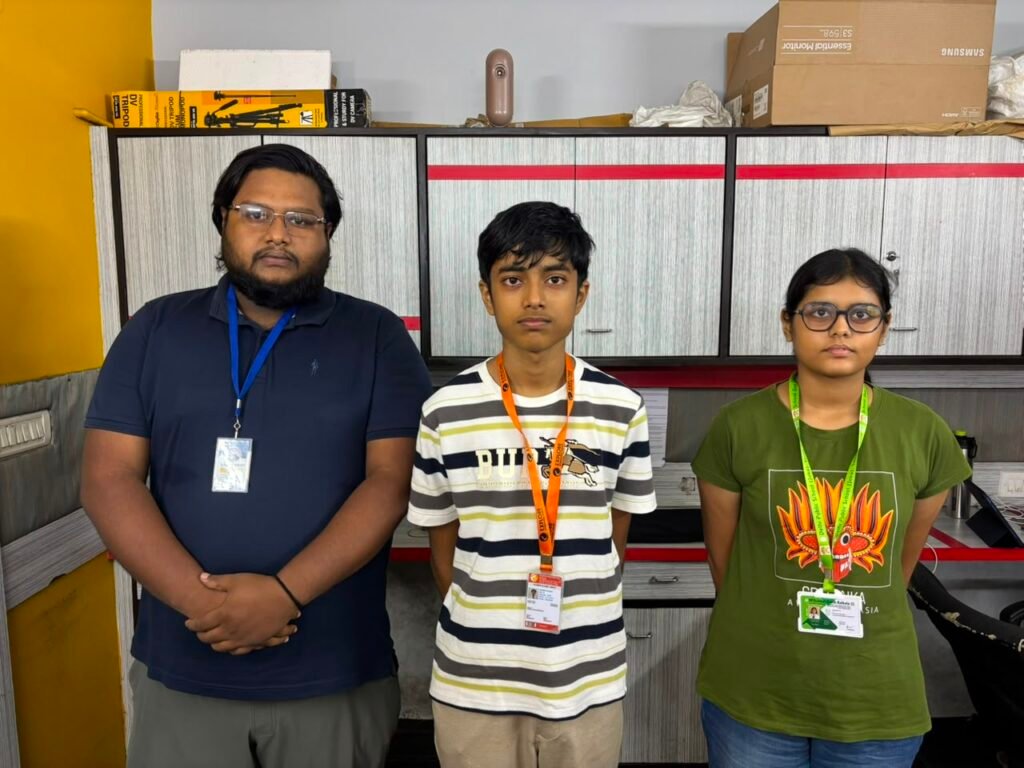
Cheenta recently hosted the Australian Mathematics Competition (AMC) 2026 on 4th, 5th, and 6th August, starting at 2:30 PM, at its Kolkata center, and simultaneously at Innovation Story in Mumbai. Students from both cities sat for one of the world's most respected school-level mathematics contests, marking another year of Cheenta's continued involvement in bringing international olympiad opportunities to Indian students.
Here's a closer look at the competition's history, what the contest actually involves, and how Cheenta supported students through the process.
The story of the AMC begins in 1976, in a much smaller and more local form. What later became the AMC started as a competition open only to students in the Australian Capital Territory, drawing around 1,200 entries, with the top performers awarded the Burroughs Medal. Two years later, in 1978, the contest went national — rebranded as the Australian Mathematics Competition for the Wales Awards — and roughly 60,000 students from Australia and New Zealand took part.
From there, the competition simply kept growing. It spread to Singapore, Fiji, Tonga, Taiwan, China, and Malaysia, with translated papers (including French and Chinese versions) making it accessible to non-English-speaking participants, and large-print and braille editions ensuring inclusivity for all students. Today, the AMC is sat by roughly 600,000 students a year, around 100,000 of them from outside Australia, across more than 30 countries — making it the largest mathematics competition in the world.
The Australian Maths Trust, the organisation behind the AMC, has its own interesting origin story. It was formed in 1992 through the merger of two older bodies: the Mathematics Olympiad (founded 1979) and the Australian Mathematics Foundation (founded 1987). Since then, AMT has grown into the umbrella organisation for a whole ecosystem of Australian maths and informatics competitions — including the Australian Mathematical Olympiad (run through the Australian Mathematical Olympiad Committee), which feeds talented students toward the International Mathematical Olympiad and the European Girls' Mathematical Olympiad. AMT also honours volunteer educators each year through the BH Neumann Award, named after one of Australian mathematics' most celebrated figures, and its flagship AMC itself is named in spirit after founding Executive Director Peter O'Halloran, whose legacy lives on through the competition's top individual honour, the Peter O'Halloran Award.
This year's competition ran from Tuesday 4th to Thursday 6th August 2026, with the official AMT paper offered in both online and printed formats depending on the host center — Cheenta's Kolkata center conducted it as an in-person, paper-based sitting starting at 2:30 PM across the three days.
A few key details of this year's edition:
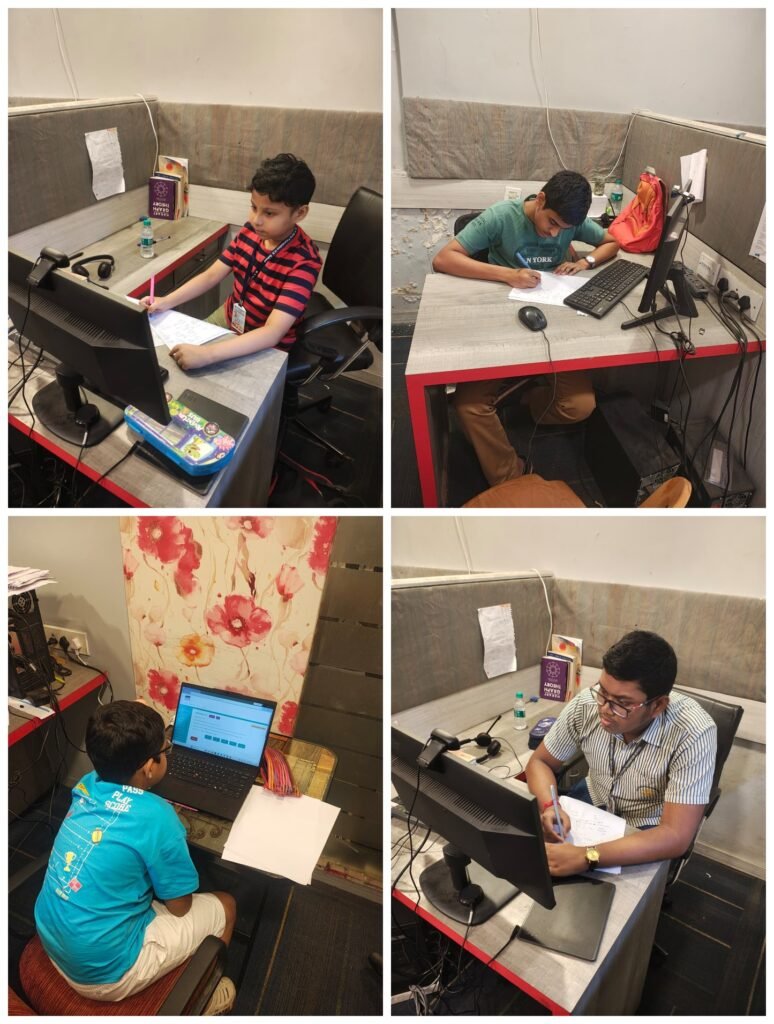
For students in Kolkata, taking the AMC usually means either going through it via their school or finding an approved center that can register them and administer the paper under proper conditions. Cheenta Academy stepped into that role, organising registration and hosting the exam itself at its Kolkata center so that eligible students — whether or not their own school offered the AMC — had a straightforward way to participate.
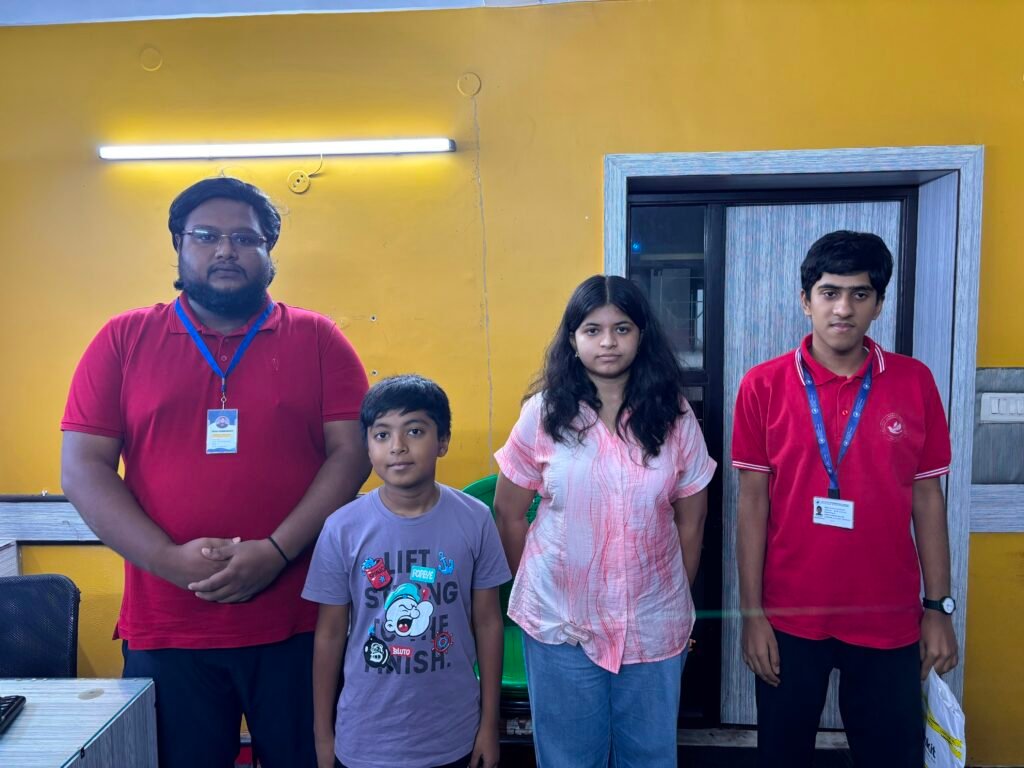
This isn't new territory for Cheenta. The academy has a long-standing habit of opening its doors as a host and support center for international olympiads that Indian students might otherwise struggle to access locally — from conducting NMTC (National Mathematics Talent Contest) exams, to hosting the final round of the Sharygin Geometry Olympiad for Indian students in 2025, alongside its own mentorship programs that have helped students qualify for RMO, INMO, IOQM. Hosting the AMC fits squarely into that mission: lowering the logistical barrier between a motivated student and a world-class problem set, while giving them a taste of the kind of rigorous, non-routine problem-solving that Cheenta's own olympiad training emphasises.
Unlike syllabus-driven school exams, the AMC doesn't publish a fixed curriculum — its problems are designed fresh each year by a committee of educators and academics, deliberately built to reward clever thinking over rote formula recall. That said, the broad territory the questions are drawn from typically includes:
No question on the paper requires calculus, and the difficulty is carefully graded — the early questions are meant to be accessible to nearly every student sitting the paper, while the last few are genuinely challenging even for strong mathematics students, which is part of why the AMC works equally well as a confidence-builder for beginners and a stretch target for advanced students preparing for further olympiad mathematics.
For Cheenta's students, the AMC often serves as exactly that: an early rung on a much longer ladder that, for some, eventually leads toward RMO, INMO, and beyond. Hosting it locally in Kolkata keeps that first rung within easy reach.

Publishing original scientific research in a peer-reviewed journal is an achievement many scholars work toward for years. Achieving this feat early in one's academic journey requires exceptional intellectual rigor, creativity, and persistence. Aaditya Punatar and Muskan Sadana have reached this remarkable milestone, successfully publishing their collaborative research paper in the prestigious Journal of Emerging Investigators […]
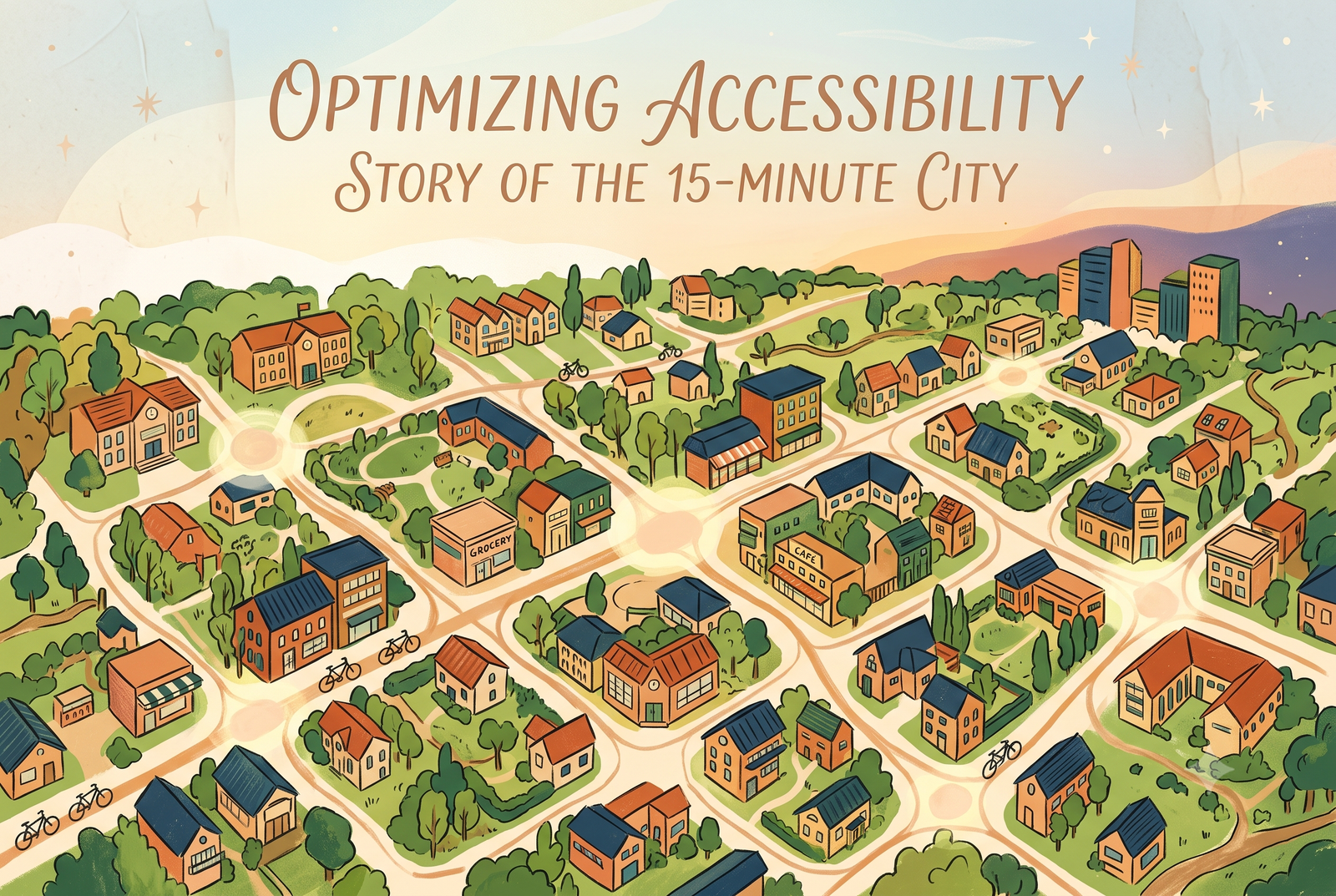
Her project on quantum-accelerated Steiner trees for 15-minute cities earned a place among the finalists at the world's largest pre-college STEM competition. Prishaa Shrimali of Marymount School of New York, was selected as a Grand Finalist at the 2026 Regeneron International Science and Engineering Fair (ISEF) in Phoenix, Arizona. Her project was Optimizing Urban Accessibility: […]
In 2026, the following Cheenta students have been successful for Indian Statistical Institute's M.Stat Entrance. They ranked within the first 50 in the entire country in these entrances. I.S.I. M.Stat Entrance
In 2026, the following Cheenta students have been successful for Indian Statistical Institute's B.Stat Entrance and Chennai Mathematical Institute's B.Sc. Math Entrance. They ranked within the first 200 in the entire country in these entrances. Most of these students attended the problem solving workshops regularly, which happen 5 days every week. CMI B.Sc. Math Entrance […]