How many positive integers smaller than 400 can you get as a sum of eleven consecutive positive integers?
Number are
$1+2+3+\ldots \ldots +11=66 $
$2+3+4+\ldots \ldots \ldots +12=77 $
$3+4+5+\ldots \ldots \ldots +13=88$
So number are $66,77,88 \ldots \ldots$
These number are multiple of 11 from 6th multiple.
So largest number which is multiple of $11$ & less than $400$ is $396$ .
$396$ is 36th multiple of $11 .$
So required no's are $36-5=31$
( $5$ for first $5$ multiples)
Let $x, y$ and $z$ be positive real numbers and let $x \geq y \geq z$ so that $x+y+z=20.1$. Which of the following statements is true ?
(A) Always xy < 99
(B) Always $x y>1$
(C) Always $x y \neq 75$
(D) Always yz $\neq 49$
$x+y+z=20.1$
In option (A)
If we take $x=y=10 \& z=.1$
$x y=100>99$
So option (A) is wrong
In option $(B)$ if we take, $x=20.050, y=00.049, z=.001$
$x y=0.98245<1$
So option (B) is also wrong
In option (C) If we take $x=15, y=5, \& z=.1$
$x y=75$
Option (C) is also wrong
In option (D)
Minimum value of $x=\frac{20.1}{3}=6 \cdot 7$ maximum value of $z=\frac{20.1}{3}=6 \cdot 7$
If $x=6.7 \& z=6.7 \quad y$ is also $6.7$
So maximum product of $y z=6.7 \times 6.7=44.89$
So $\mathrm{yz}$ is never equal to 49 .
Option (D) is correct.
A sequence $a_{n}$ is generated by the rule, $a_{n}$=$a_{n-1}-a_{n-2}$ for $n \geq 3$. Given $a_{1}=2$ and $a_{2}$=$4$, then sum of the first 2019 terms of the sequence is given by
$a_{1}$=$2, \quad a_{2}$=$4$
$a_{3}$=$a_{2}-a_{1}=4-2$=$2$
$a_{4}$=$a_{3}-a_{2}=2-4$=$-2 $
$a_{5}$=$a_{4}-a_{3}=-2-(2)$=$-4 $
$a_{6}$=$a_{5}-a_{4}=-4-(-2)$=$-2 $
$a_{7}$=$a_{6}-a_{5}=-2-(-4)$=$2 $
$a_{8}$=$a_{7}-a_{6}=2-(-2)$=$4$
So pattern of no's are $2, 4, 2, -2,-4$, $-2, 2, 4, 2 ,-2, -4, -2$ repeated after 6 numbers
Sum of 6 number=$2+4+2+(-2)$+$(-4)+(-2)$=$0$
$2019= 2016+3 $
$(336 \times 6)$
So sum of first 2016 terms $=0$
Sum of first 2019 terms $=2+4+2$=$8$
If $y^{10}=2019$, then
(A) $2<y<3$
(B) $1<y<2$
(C) $4<y<5$
(D) $3<y<4$
$2^{10}=1024 $ & $3^{10}=59049 $
$2^{10}<2019<3^{10}$
So $\mathrm{y}$ is lie between $2 \& 3$
$2<y<3$
A sequence of all natural numbers whose second digit (from left to right) is 1 , is written in strictly increasing order without repetition as follows: $11$, $21$, $31$, $41$, $51$, $61$, $71$, $81$, $91$, $110$, $111$, $\ldots$ Note that the first term of the sequence is 11 . The third term is 31 , eighth term is 81 and tenth term is 110. The 100th term of the sequence will be
Keep in mind that in this question it is mentioned that the second digit is 1, so just count the numbers contain 1 as second digit in strictly increasing order.
Total $99$ no's upto $919$
So next $100$ no is $1100$.
Given $a, b, c$ are real numbers such that $9 a+b+8 c$=$12$ and $8 a+12 b+9 c$=$1$. Then $a^{2}-b^{2}+c^{2}=$
From the 2 equation, we can take one variable to R.H.S to simplify the equations.
$9 a+8 c=12-b \cdots (i)$
$8 a-9 c=1+12 b \cdots (ii)$
add both equation after squaring
$(9 a+8 c)^{2}$+$(8 a-9 c)^{2}$=$(12-b)^{2}$+$(1+12 b)^{2} $
$145\left(a^{2}+c^{2}\right)$=$145\left(b^{2}+1\right) $
$a^{2}-b^{2}+c^{2}=1$
If $a, b, c, d$ are positive integers such that $a+\frac{1}{b+\frac{1}{c+\frac{1}{d}}}$=$\frac{43}{30}$, then $d$ is
Convert the fraction into a mixed fraction and then break it step by step.
$\frac{43}{30}$
$=1+\frac{13}{30}$
$=1+\frac{1}{\frac{30}{13}}$
$=1+\frac{1}{2+\frac{4}{13}}$
Therefore,
$1+\frac{1}{2+\frac{1}{\frac{13}{4}}}$
$=1+\frac{1}{2+\frac{1}{3+\frac{1}{4}}}$
So, $a=1 , b=2, c=3 , d=4$
Let $A={1,2,3, \ldots .17}$ For every nonempty subset B of A find the product of the reciprocals of the members of B. The sum of all such product is
$\left(\frac{1}{1}+\frac{1}{2} \ldots \ldots \frac{1}{17}\right)$+$\left(\frac{1}{1 \times 2}+\frac{1}{1 \times 3}\right)$+$\ldots \ldots\left(\frac{1}{1 \times 2 \times 3 \ldots \ldots 17}\right)$
=
$\frac{(1+2 \ldots 17)+(1 \times 2+1 \times 3+\ldots) \ldots +(1 \times 2 \ldots 16)+1}{1 \times 2 \times 3 \ldots 17}$
Therefore we can get,
$=\frac{\Sigma 1+\Sigma 1.2+\Sigma 1.2 .3+\ldots +\Sigma 1.2 \ldots 16+1}{1 \times 2 \times 3 \ldots .17}$
$=\frac{(1+1)(1+2)(1+3) \ldots (1+17)-(1 \times 2 \ldots 17)}{1 \times 2 \times 3 \ldots .17}$
$=\frac{1.2 .3 \ldots .18-1.2 .3 \ldots .17}{1 \times 2 \times 3 \ldots 17}$
=$\frac{17 !(18-1)}{17 !}$=$17$.
The remainder of $f(x)=x^{100}+x^{50}+x^{10}+x^{2}-6$ when divided by $x^{2}-1$ is
Let $R(x)=A x+B$
$x^{100}+x^{50}+x^{10}+x^{2}-6$
=$q(x)\left(x^{2}-1\right)+A x+B $
$x=1 $
$1+1+1+1-6=A+B $
$-2=A+B \quad (i) $
$x=-1 $
$1+1+1+1-6=-A+B $
$-2=-A+B \quad (ii)$
$\text { from equation (i) and (ii) } $
$-4=2 B $
$B=-2 $
$A=0 $
$R(x)=-2$
If $m$ and $n$ are positive integers such that $\frac{m+n}{m^{2}+m n+n^{2}}=\frac{4}{49}$, then $m+n$ is equal to
$\frac{m+n}{m^{2}+m n+n^{2}}$=$\frac{4}{49} \frac{m+n}{(m+n)^{2}-m n}$=$\frac{4}{49}$
$\mathrm{m}$ and $\mathrm{n}$ are positive integer $\mathrm{mn}>0$ from option $a, b, c$ $m n<0$
therefore $m+n=16$.
$\mathrm{A}, \mathrm{M}, \mathrm{T}, \mathrm{I}$ are positive integers such that $\mathrm{A}+\mathrm{M}+\mathrm{T}+\mathrm{I}$=$10$. The maximum possible value of $A \times M \times T \times 1$ + $A \times M \times T$ + $A \times M \times I$ + $A \times T \times I$ + $M \times T \times I$ + $A \times M$ + $A \times T$ + $A \times 1$ + $M \times T$ + $M \times I$ + $T \times I$ is
$A \times M \times T \times I+A \times M \times T+A \times M \times I+A \times T \times I+M \times T \times I+A \times M+A \times T+A \times I+M \times T+M \times I$
$+T \times I$ this expression is maximum if we take A=M $=3, T=I=2 .$
$A \times M \times T \times I$ + $A \times M \times T$ + $A \times M \times I$ + $A \times T \times I$ + $M \times T \times I$ + $A \times M$ + $A \times T$ + $A \times I$ + $M \times T$ + $M \times I$ + $T \times I$ =$(1+A)(1+M)(1+T)(1+I)$-$1$-$(A+M+T+I)$
$=(1+3)(1+3)(1+2)(1+2)-1-10$
$=144-11=133 .$
The number of different integers $x$ that satisfy the equation $\left(x^{2}-5 x+5\right)^{\left(x^{2}-11 x+30\right)}=1$ is
$\left(x^{2}-5 x+5\right)^{\left(x^{2}+11 x+30\right)}=1$
Case-I
$x^{2}-11 x+30=0$
$x^{2}-6 x-5 x+30=0$
$x(x-6)-5(x-6)=0$
$(x-6)(x-5)=0$
$x=5,6$
Case-II
$1=x^{2}-5 x+5 $
$x^{2}-5 x+4=0 $
$x^{2}-4 x-x+4=0 $
$x(x-4)-1(x-4)=0 $
$(x-4)(x-1)=0 $
$x=1, x=4$
Case - III
$x^{2}-5 x+5=-1$ and $x^{2}-11 x+30=$ even
$x^{2}-5 x+6=0$
$x^{2}-3 x-2 x+6=0$
$x(x-3)-2(x-3)=0$
$(x-3)(x-2)=0$
$x=2,3$ at $x=2$ and 3
$x^{2}-11 x+30=$ even therefore $x=2,3$ are solutions. 6 answer.
Let $x$ and $y$ be real numbers satisfying $x^{4} y^{5}$+$y^{4} x^{5}=810$ and $x^{3} y^{6}$+$y^{3} x^{6}$=$945$. Then the value of $2 x^{3}+$ $x^{3} y^{3}$+$2 y^{3}$ is
$\frac{x^{4} y^{2}(x+y)}{x^{3} y^{3}\left(x^{3}+y^{3}\right)}=\frac{810}{945}$
$\frac{x y(x+y)}{x^{3}+y^{3}}=\frac{6}{7}$
$\frac{x y}{x^{2}+y^{2}-x y}=\frac{6}{7} $
Therefore:
$ 6 x^{2}+6 y^{2}-13 x y=0$
$\Rightarrow \quad(3 x-2 y)(2 x-3 y)=0$
$\frac{x}{y}=\frac{2}{3}$ or $\frac{y}{x}=\frac{2}{3}$
Let $x=\frac{2}{3} y$
$x^{4} y^{5}+y^{4} x^{5}=810$
$\left(\frac{2}{3} y\right)^{4} y^{5}+y^{4}\left(\frac{2}{3} y\right)^{5}=810$
$y^{9}=\frac{3^{9}}{2^{3}} \quad$
$\Rightarrow \quad y$=$\frac{3}{2^{1 / 3}} \quad$
$\Rightarrow \quad y^{3}$=$\frac{27}{2}$
$x=2^{2 / 3} \quad \Rightarrow \quad x^{3}$=$4$
$\quad 2 x^{3}+2 y^{2}+x^{3} y^{3}$
=$2.4+2 \cdot \frac{27}{2} \quad 4 \cdot \frac{27}{2}$
=$8+27+54$=$89 $
$\{a_{k}\}$ is a sequence of integers, with $a_{1}=-2$ and $a_{m+n}=a_{m}+a_{n}+m n$, for all positive integers $m$, $n$. Then the value of $\mathrm{a}_{8}=$
$a_{1}=-2$
$a_{2}=a_{1+1}=a_{1}+a_{1}+1 \cdot 1$
$=-2-2+1=-3$
$a_{4}=a_{2}+2=a_{1}+a_{2}+2 \cdot 2$
$=-3-3+4$
$a_{4}=-2$
$a_{8}=a_{4+4}=a_{4}+a_{4}+4 \times 4$
$=-2-2+16=12$
The coefficient of $x^{90}$ in $\left(1+x+x^{2}+x^{3}+\ldots . .+x^{60}\right)$ $\left(1+x+x^{2}+\ldots \ldots+x^{120}\right)$ is equal to
$\left(1+x+x^{2}+x \ldots \ldots \ldots+x^{60}\right)$ $\left(1+x+x^{2}+\ldots \ldots+x^{120}\right)$
$=\left(\frac{1-x^{61}}{1-x}\right)$ $\left(\frac{1-x^{121}}{1-x}\right)$
Coefficient of $x^{90}$ in $\left(\frac{1-x^{61}}{1-x}\right)\left(\frac{1-x^{121}}{1-x}\right)$
$=\left(1-x^{61}\right)\left(1-x^{121}\right)(1-x)^{-2}$
Now, coefficient of $x^{90}$ in $(1-x)^{-2}-$ coefficient of $x^{29}$ in $(1-x)^{-2}$
$={ }^{90+2-1} C_{2-1}-{ }^{29+2-1} C_{2-1}$
$={ }^{91} C_{1}-{ }^{30} C_{1}=91-30=61$
The number of values of a for which the function $f(x)=\cos 2 x+2 a(1+\cos x)$ has a minimum value $\frac{1}{2}$ is :
$f(x)=2 \cos ^{2} x-1+2 a+2 a \cos x$
$=2 \cos ^{2} x+2 a \cos x+2 a-1$
$\min f(x)=\frac{1}{2} \quad$
$\Rightarrow \min \left(2 \cos ^{2} x+2 a \cos x+2 a-1\right)$=$\frac{1}{2}$
$\Rightarrow \min \left(2 t^{2}+2 a t+2 a-1\right)$=$\frac{1}{2}$ where $t \in[-1,1]$
Case-I $-1 \leq \frac{-2 a}{4} \leq 1 \quad$ then min value $=-\frac{\left(4 a^{2}-4 \times 2(2 a-1)\right)}{4 \times 2}=\frac{1}{2}$
$\Rightarrow a=1,3$ (rejected)
Case-II $\frac{-2 a}{4}>1 \quad$
then min value is $2+2 a+2 a-1$=$\frac{1}{2}$
$\Rightarrow 4 a=-\frac{1}{2} \quad$
$\Rightarrow \quad a=-\frac{1}{8}($ rejected $)$
Case-III $\frac{-2 a}{4}<-1 \quad$ then min value is $2-2 a+2 a-1=\frac{1}{2}$
$$
\begin{aligned}
&\Rightarrow \quad a \in \phi \
&\Rightarrow \quad a \in{1}
\end{aligned}
$$
Let $f(x)=\frac{x}{\sqrt{x^{2}-1}} \cdot$.
If $f^{2}(x)$=$f(f(x)), f^{3}(x)$=$f\left(f^{2}(x)\right), \ldots \ldots, f^{n+1}(x)$=$f\left(f^{n}(x)\right)$, then $f^{2019}(\sqrt{2})$ is :
$f(x)$=$\frac{x}{\sqrt{x^{2}-1}}$
If we replace 'x' with f(x), we will get:
$f(f(x))$=$\frac{f(x)}{\sqrt{\left(f(x)^{2}-1\right.}}$=$\frac{\frac{x}{\sqrt{x^{2}-1}}}{\sqrt{\frac{x^{2}}{x^{2}-1}-1}}$=$x$
Repeating same process, we get:
$$f^{3}(x)=f(f(f(x))=f(x) $$
$$f^{4}(x)=f^{2}(x)=x$$
Similarly $f^{2019}(x)=f(x)=\frac{x}{\sqrt{x^{2}-1}}$
$$
f^{2019}(\sqrt{2})=\frac{\sqrt{2}}{\sqrt{2-1}}=\sqrt{2} \text { Ans. }
$$
Let $a, b$ and $c$ be real numbers such that $2 a^{2}-b c-9 a+10$=$0$ and $4 b^{2}+c^{2}+b c-7 a-8$=$0$. Then the set of real values that a can take is given by
[1,4.2]
$(2 b-c)^{2}+5 b c-7 a-8=0\quad \ldots (i) $
$2 a^{2}-b c-9 a+10=0 \quad \ldots (ii)$
$5($ ii $)+(i)=10 a^{2}+(2 b-c)^{2}-52 a+42=0$
$10 a^{2}-52 a+42 \leq 0$
$(a-1)(10 a-42) \leq 0$
$a \in[1,4.2]$

Publishing original scientific research in a peer-reviewed journal is an achievement many scholars work toward for years. Achieving this feat early in one's academic journey requires exceptional intellectual rigor, creativity, and persistence. Aaditya Punatar and Muskan Sadana have reached this remarkable milestone, successfully publishing their collaborative research paper in the prestigious Journal of Emerging Investigators […]
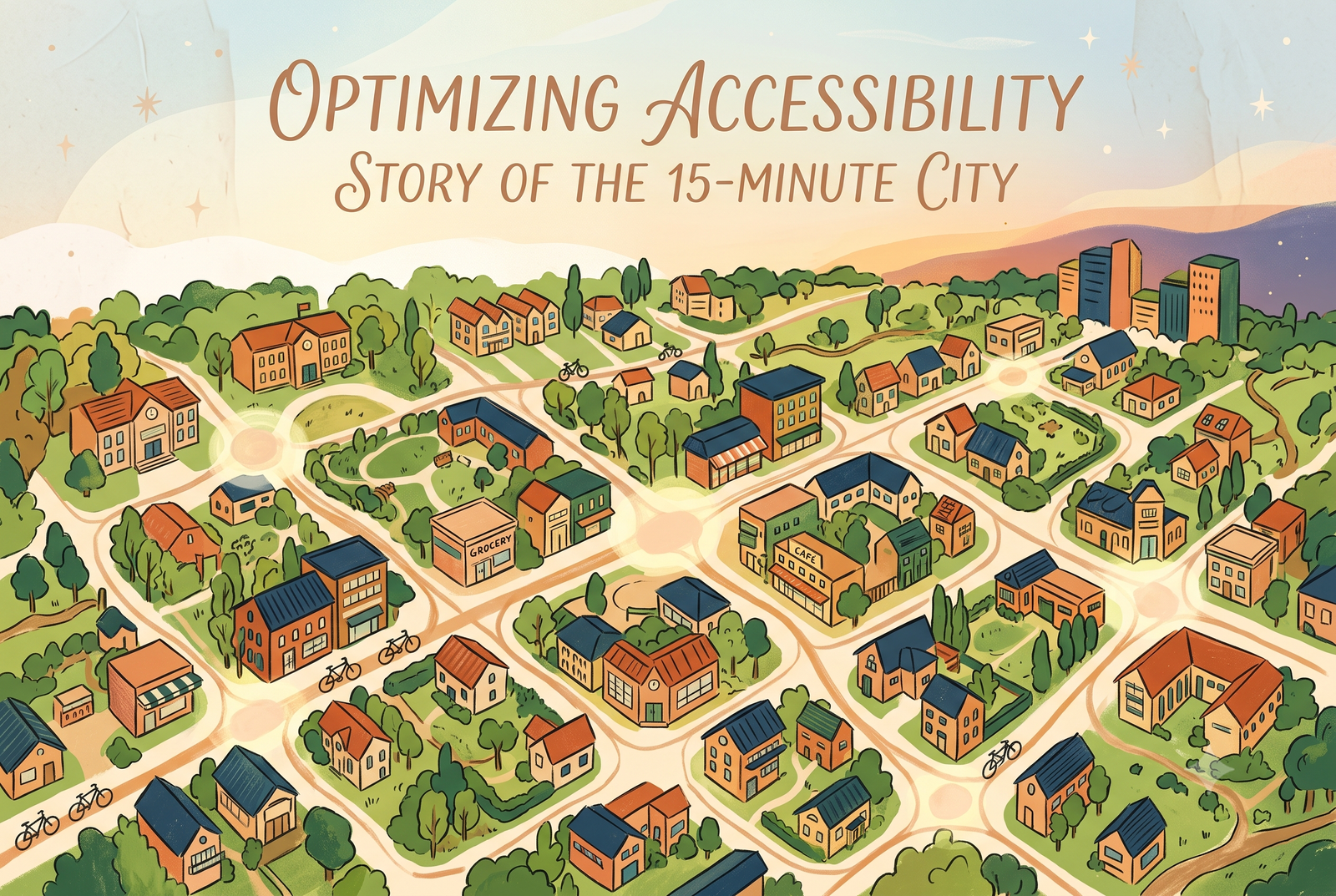
Her project on quantum-accelerated Steiner trees for 15-minute cities earned a place among the finalists at the world's largest pre-college STEM competition. Prishaa Shrimali of Marymount School of New York, was selected as a Grand Finalist at the 2026 Regeneron International Science and Engineering Fair (ISEF) in Phoenix, Arizona. Her project was Optimizing Urban Accessibility: […]

In 2026, the following Cheenta students have been successful for Indian Statistical Institute's M.Stat Entrance. They ranked within the first 50 in the entire country in these entrances. I.S.I. M.Stat Entrance
In 2026, the following Cheenta students have been successful for Indian Statistical Institute's B.Stat Entrance and Chennai Mathematical Institute's B.Sc. Math Entrance. They ranked within the first 200 in the entire country in these entrances. Most of these students attended the problem solving workshops regularly, which happen 5 days every week. CMI B.Sc. Math Entrance […]