The month begins with a new cohort of students joining the program and meeting a clear reality: in many villages, a cataract check can cost an entire day’s travel and lost wages. The team frames the business problem in plain terms—early screening must happen close to home, be simple to use, and lead to timely referrals. With that north star, students map stakeholders (community health workers, ophthalmologists, patients) and agree on a single promise: reduce the distance between concern and care.
To build a shared foundation, the cohort studies what a cataract is, how it forms in the lens, and why early detection matters. Short primers and doctor-reviewed notes translate medical terms into field-ready language. This clinical grounding shapes product choices: every screen, every label, and every instruction must be understandable to a volunteer using a basic Android phone outdoors.
Students then open the first datasets. They scan filenames, labels, and image quality, noticing common issues—glare, partial eyelids, and off-center eyes. They also spot a risk: generic models can drift toward skin background rather than the pupil. In response, the team proposes a “pupil-first” pipeline: capture with a guidance ring, confirm alignment, crop the pupil, then predict. The approach keeps the model focused on the right signal and makes training and evaluation more consistent.
Organization follows quickly. A simple directory convention is drafted; a lightweight script is planned to standardize names and flag unusable images. A “golden set” of clean samples is earmarked for repeat checks as the pipeline improves. The students keep the app experience minimal: large cues, short text, and an offline-friendly flow that can sync later.
Create a small “golden set” for regression testing across devices and lighting.
Finalize a consistent folder/filename schema; implement a one-click “clean & sort” script.
Prototype the pupil guidance ring and crop confirmation screen.
Draft field SOPs (distance, angle, glare reduction) and a “usable image” checklist.
Define pilot metrics: time per screen, unusable-image rate, agreement with clinician review.

Publishing original scientific research in a peer-reviewed journal is an achievement many scholars work toward for years. Achieving this feat early in one's academic journey requires exceptional intellectual rigor, creativity, and persistence. Aaditya Punatar and Muskan Sadana have reached this remarkable milestone, successfully publishing their collaborative research paper in the prestigious Journal of Emerging Investigators […]
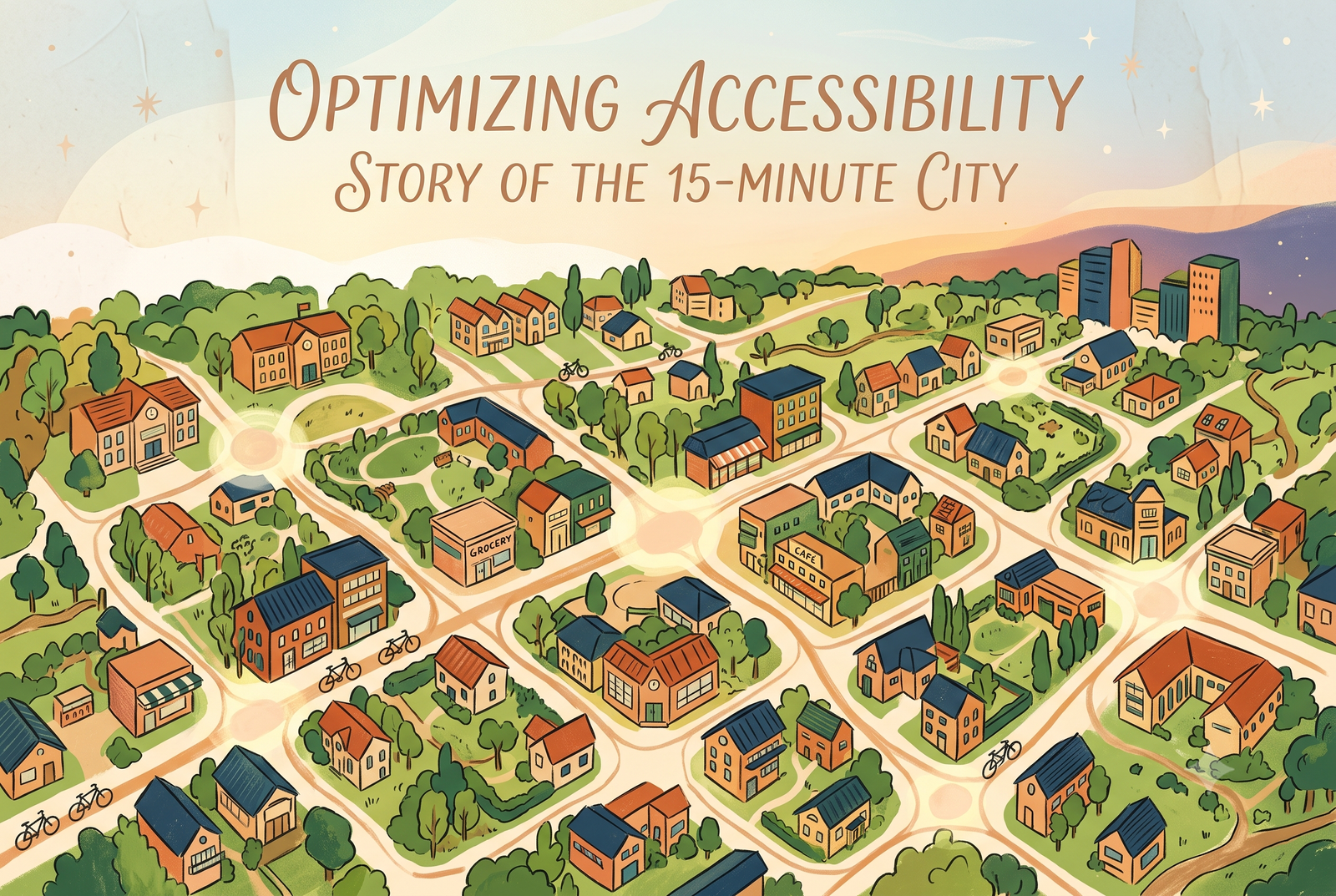
Her project on quantum-accelerated Steiner trees for 15-minute cities earned a place among the finalists at the world's largest pre-college STEM competition. Prishaa Shrimali of Marymount School of New York, was selected as a Grand Finalist at the 2026 Regeneron International Science and Engineering Fair (ISEF) in Phoenix, Arizona. Her project was Optimizing Urban Accessibility: […]
In 2026, the following Cheenta students have been successful for Indian Statistical Institute's M.Stat Entrance. They ranked within the first 50 in the entire country in these entrances. I.S.I. M.Stat Entrance
In 2026, the following Cheenta students have been successful for Indian Statistical Institute's B.Stat Entrance and Chennai Mathematical Institute's B.Sc. Math Entrance. They ranked within the first 200 in the entire country in these entrances. Most of these students attended the problem solving workshops regularly, which happen 5 days every week. CMI B.Sc. Math Entrance […]
