[et_pb_section fb_built="1" _builder_version="4.3.1" hover_enabled="0"][et_pb_row _builder_version="4.2.2" width="100%"][et_pb_column type="4_4" _builder_version="3.25" custom_padding="|||" custom_padding__hover="|||"][et_pb_text _builder_version="4.2.2" text_font="Raleway|300|||||||" text_text_color="#ffffff" header_font="Raleway|300|||||||" header_text_color="#e2e2e2" background_color="#0c71c3" custom_padding="10px|10px|10px|10px|false|false" border_radii="on|5px|5px|5px|5px" box_shadow_style="preset3" inline_fonts="Aclonica"]What are we learning ?
[/et_pb_text][et_pb_text _builder_version="4.2.2" text_font="Raleway||||||||" text_font_size="20px" text_letter_spacing="1px" text_line_height="1.5em" background_color="#f4f4f4" custom_margin="10px||20px||false|false" custom_padding="10px|20px|10px|20px" box_shadow_style="preset2"]Competency in Focus: combinatorics
This problem from B.Stat. (Hons.) Admission Test 2005 – Objective Problem 1 is based on arranging integers to get particular results.
[/et_pb_text][et_pb_text _builder_version="4.2.2" text_font="Raleway|300|||||||" text_text_color="#ffffff" header_font="Raleway|300|||||||" header_text_color="#e2e2e2" background_color="#0c71c3" custom_margin="10px||10px||false|false" custom_padding="10px|10px|10px|10px|false|false" border_radii="on|5px|5px|5px|5px" box_shadow_style="preset3" inline_fonts="Aclonica"]First look at the knowledge graph:-
[/et_pb_text][et_pb_image src="https://cheenta.com/wp-content/uploads/2020/02/p1.png" alt="calculation of mean and median- AMC 8 2013 Problem" title_text=" mean and median- AMC 8 2013 Problem" align="center" force_fullwidth="on" _builder_version="4.2.2" min_height="429px" height="189px" max_height="198px" custom_padding="10px|10px|10px|10px|false|false"][/et_pb_image][et_pb_text _builder_version="3.27.4" text_font="Raleway|300|||||||" text_text_color="#ffffff" header_font="Raleway|300|||||||" header_text_color="#e2e2e2" background_color="#0c71c3" custom_padding="20px|20px|20px|20px" border_radii="on|5px|5px|5px|5px" box_shadow_style="preset3" inline_fonts="Aclonica"]Next understand the problem
[/et_pb_text][et_pb_text _builder_version="4.2.2" text_font="Raleway||||||||" text_font_size="20px" text_letter_spacing="1px" text_line_height="1.5em" background_color="#f4f4f4" custom_margin="10px||10px" custom_padding="10px|20px|10px|20px" box_shadow_style="preset2"]1. How many three-digit numbers of distinct digits can be formed by using the digits 1, 2, 3, 4, 5, 9 such that the sum of the digits is at least 12?(A) 61 (B) 66 (C) 60 (D) 11[/et_pb_text][/et_pb_column][/et_pb_row][et_pb_row _builder_version="4.0"][et_pb_column type="4_4" _builder_version="3.25" custom_padding="|||" custom_padding__hover="|||"][et_pb_accordion open_toggle_text_color="#0c71c3" _builder_version="4.3.1" toggle_font="||||||||" body_font="Raleway||||||||" text_orientation="center" custom_margin="10px||10px"][et_pb_accordion_item title="Source of the problem" open="off" _builder_version="4.3.1"]B.Stat. (Hons.) Admission Test 2005 – Objective problem 1[/et_pb_accordion_item][et_pb_accordion_item title="Key Competency" _builder_version="4.3.1" inline_fonts="Abhaya Libre" open="on"][/et_pb_accordion_item][et_pb_accordion_item title="Difficulty Level" _builder_version="4.1" open="off"]4/10[/et_pb_accordion_item][et_pb_accordion_item title="Suggested Book" _builder_version="4.0.9" open="off"]Challenges and Thrills in Pre College MathematicsExcursion Of Mathematics [/et_pb_accordion_item][/et_pb_accordion][et_pb_text _builder_version="4.0.9" text_font="Raleway|300|||||||" text_text_color="#ffffff" header_font="Raleway|300|||||||" header_text_color="#e2e2e2" background_color="#0c71c3" custom_margin="48px||48px" custom_padding="20px|20px|0px|20px||" border_radii="on|5px|5px|5px|5px" box_shadow_style="preset3" inline_fonts="Aclonica"]Start with hints
[/et_pb_text][et_pb_tabs _builder_version="4.2.2"][et_pb_tab title="HINT 0" _builder_version="4.0.9"]Do you really need a hint? Try it first![/et_pb_tab][et_pb_tab title="HINT 1" _builder_version="4.2.2"]Out of \(n\) things we can select \(r\) thing ins in \left( \begin{array}{c} n \\ r \end{array} \right) ways.Similarly we can select \(3\) integers out of \(6\) in \left( \begin{array}{c} 6 \\ 3 \end{array} \right) ways.[/et_pb_tab][et_pb_tab title="HINT 2" _builder_version="4.2.2"]We want to count the cases that do not work (That means sum becomes less than 12).Note that if 9 is one of the three digits then the sum of the digits will be 12 or more (least case is 9+1+2 =12). an similarly you can thing next posibiily. [/et_pb_tab][et_pb_tab title="HINT 3" _builder_version="4.2.2"]Note that if we want get the numbers whose sum is equal to or greater than 12 then from the digits 1,2,3,4 and 5 (but not 9), then there is only one posibility and that is \(5+4+3\).[/et_pb_tab][et_pb_tab title="HINT 4" _builder_version="4.2.2"]Therefore we select 3 distinct digits from the five digits and delete the one selection of {5, 4, 3}. This gives us the total number of bad cases.\(\left( \begin{array}{c} n \\ r \end{array} \right)–1=9\).[/et_pb_tab][et_pb_tab title="HINT 5" _builder_version="4.2.2"]Now we have total 20 posibilities out of which 9 are non-working solutions for our question. So total orking solutions is \(20-9=11\). Further we can arrange this 3 letters in \(3! =6\) ways. Hence the total number of required ways = \( 11 * 6=66 \).[/et_pb_tab][/et_pb_tabs][/et_pb_column][/et_pb_row][/et_pb_section][et_pb_section fb_built="1" fullwidth="on" _builder_version="4.2.2" custom_margin="20px||20px||false|false" global_module="50753" saved_tabs="all" locked="off"][et_pb_fullwidth_header title="I.S.I. & C.M.I. Program" button_one_text="Learn more" button_one_url="https://cheenta.com/isicmientrance/" header_image_url="https://cheenta.com/wp-content/uploads/2018/03/ISI.png" _builder_version="4.2.2" title_level="h2" title_font="Acme||||||||" background_color="#220e58" custom_button_one="on" button_one_text_color="#1a0052" button_one_bg_color="#ffffff" button_one_border_color="#ffffff" button_one_border_radius="5px"]Indian Statistical Institute and Chennai Mathematical Institute offer challenging bachelor’s program for gifted students. These courses are: B.Stat and B.Math program in I.S.I., B.Sc. Math in C.M.I.
The entrances to these programs are far more challenging than usual engineering entrances. Cheenta offers an intense, problem-driven program for these two entrances.
[/et_pb_fullwidth_header][/et_pb_section][et_pb_section fb_built="1" fullwidth="on" _builder_version="4.2.2" custom_margin="||||false|false" custom_padding="||||false|false" global_module="50860" saved_tabs="all"][et_pb_fullwidth_post_slider include_categories="10,870" show_meta="off" image_placement="left" _builder_version="4.2.2" custom_margin="20px||20px||false|false" custom_padding="||||false|false"][/et_pb_fullwidth_post_slider][/et_pb_section] 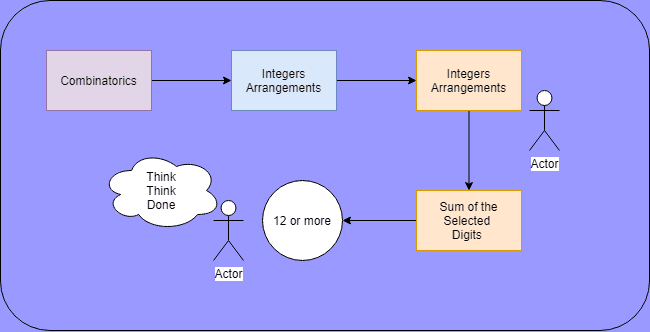 Join Trial or Access Free Resources