Let \( \Omega_1 \) be a circle with center O and let AB be a diameter of \( \Omega_1 \). Let P be a point on the segment OB different from O. Suppose another circle \( \Omega_2 \) with center P lies in the interior of \( \Omega_1 \). Tangents are drawn from A and B to the circle \( \Omega_2 \) intersecting \( \Omega_1 \) again at \(A_1\) and \(B_1\) respectively such that \(A_1 \) and \(B_1\) are on the opposite sides of AB. Given that \(A_1B = 5, AB_1 = 15 \) and \( OP = 10\), find the radius of \( \Omega_1 \).
Do you really need a hint? Try it first!
Hint 1
Draw a diagram carefully.

Hint 2
Suppose the point of tangencies are at C and D. Join PC and PD.
Can you find two pairs of similar triangles?

Hint 3
\( \Delta APC \sim \Delta AA_1B \)
Why?
Notice that AC is perpendicular to \( AA_1 \) as the radius is perpendicular to the tangent.
Also \( \angle A \) is common to both triangles. Hence the two triangles are similar (equiangular implies similar).
Similarly \( \Delta BPD \sim \Delta BAB_1 \).
Use the ratio of sides to find OA.
Hint 4
Suppose OA = R (radius of the big circle).
OC = r (radius of the small circle).
We already know OP = 10, \( A_1 B = 5, AB_1 = 15\)
Since \( \Delta AA_1B \) and \( ACP \) are similar we have \( \frac{AP}{AB} = \frac{PC}{A_1B}\). This implies \( \frac{R+10}{2R} = \frac{r}{5}\) (1)
Similarlly since \( \Delta BPD \) and \( BAB_1 \) are similar we have \( \frac{BP}{BA} = \frac{PD}{AB_1}\). This implies \( \frac{R-10}{2R} = \frac{r}{15}\) (2)
Multiply the reciprocal of (2) with (1) to get R = 20.
Math Olympiad is the greatest and most challenging academic contest for school students. Brilliant school students from over 100 countries participate in it every year.
Cheenta works with small groups of gifted students through an intense training program. It is a deeply personalized journey toward intellectual prowess and technical sophistication.

Publishing original scientific research in a peer-reviewed journal is an achievement many scholars work toward for years. Achieving this feat early in one's academic journey requires exceptional intellectual rigor, creativity, and persistence. Aaditya Punatar and Muskan Sadana have reached this remarkable milestone, successfully publishing their collaborative research paper in the prestigious Journal of Emerging Investigators […]
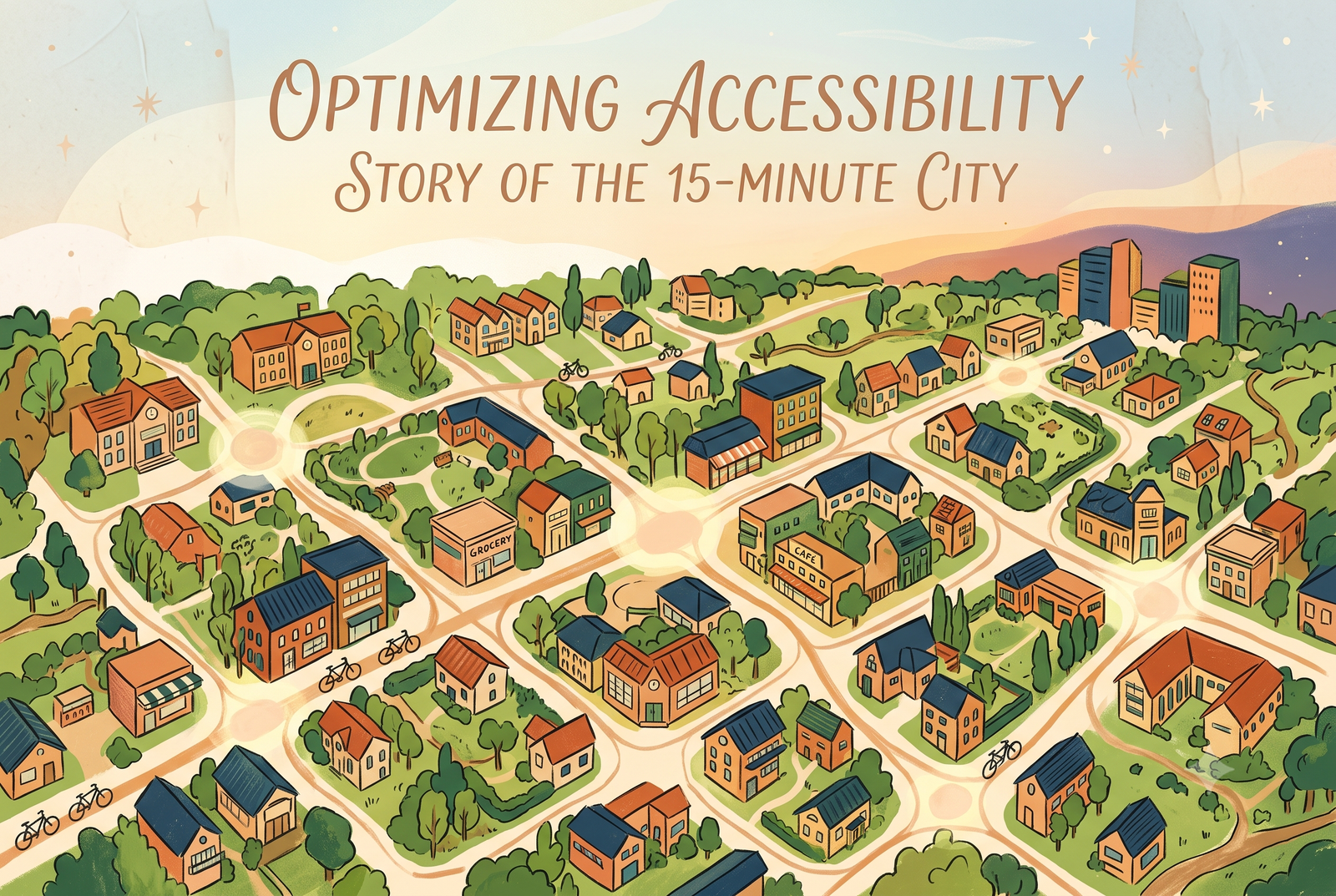
Her project on quantum-accelerated Steiner trees for 15-minute cities earned a place among the finalists at the world's largest pre-college STEM competition. Prishaa Shrimali of Marymount School of New York, was selected as a Grand Finalist at the 2026 Regeneron International Science and Engineering Fair (ISEF) in Phoenix, Arizona. Her project was Optimizing Urban Accessibility: […]

In 2026, the following Cheenta students have been successful for Indian Statistical Institute's M.Stat Entrance. They ranked within the first 50 in the entire country in these entrances. I.S.I. M.Stat Entrance
In 2026, the following Cheenta students have been successful for Indian Statistical Institute's B.Stat Entrance and Chennai Mathematical Institute's B.Sc. Math Entrance. They ranked within the first 200 in the entire country in these entrances. Most of these students attended the problem solving workshops regularly, which happen 5 days every week. CMI B.Sc. Math Entrance […]
radius of omega1 is 30 units. The problem is good but send me some elementary and difficult number theory, algebra,combinatorics problems and some good study material lecture vidoes or books for PRE- RMO, RMO, INMO and also for ISI and CMI PREPARATION. Send me as early as possible.
Our computations show it is 20. We double checked with HBCSE. Can you check your calculations? If after reviewing if you think your calculations are correct, then do share it with us.
send more varieties of problems.
Sure.
Nicely Illustrated & Hinted in stages.I like it,It is valuable for all concerned with it.I wish a grand success for thiss endeavour.
Thank you! Keep solving.
Triangle APC and Triangle ABA1 are similar. If r is the radius of smaller circle and R is the radius of bigger circle then,we obtain the equation:
(r/5)=(R+10)/2R.
Similarly, Triangle BPD and Triangle BAB1 are also similar. Hence we get another equation as:
(r/15)=(R-10)/2R.
Hence on solving for R we get 2R=10+30, or, R=20... That's the answer. It's easy but a good problem. THANKYOU. I would like to request you to provide few problems for CMI and IOMA preparation as ISI is knocking the door!