Golden Ratio and Right Triangles - when geometry meets number theory
 Join Trial or Access Free ResourcesJoin Trial or Access Free Resources
The golden ratio is arguably the third most interesting number in mathematics. The first two slots are of course reserved for ( \pi ) and ( e ). Among other things, golden ratio has the uncanny habit of appearing unexpectedly in nature and geometry.
There is a number which is exactly one more than its reciprocal. (It helps to recall this ‘worded’ definiton of golden ratio). Formally speaking, let ( x ) be a positive real number such that ( x = 1 + \frac {1}{x} ).
Simplifying we get the quadrartic equation ( x^2 - x -1 =0 ). Solving it we have (a positive solution) $$ x = \frac {1+\sqrt{5}}{2} $$.
The quadratic equation has another solution: ( \frac {1 - \sqrt {5} }{2} ). This is approximately -0.618. It is not considered to be the right golden ratio for several reasons (and possibly we will discuss them in another post).
Also See
Given a right triangle ABC with <ACB =90. Let CH, H lying on AB, be the altitude to AB and P and Q be the tangent points of the incircle of triangle ABC to AC and BC. If AQ is perpendicular to HP, find the ratio of AH to BH.
Golden Ratio mysteriously appears in this problem. In fact, that is the answer. $$ \frac {AH}{BH} = \frac {1+\sqrt{5}}{2} $$
How to go about this solution? As usual, we will indicate a sequence of hints. The reader is advised to try on his / her own.

A little investigation reveals PDIQC is a cyclic pentagon where I is the incenter. This won’t be used in the ‘solution’ but is a fun fact to explore. In fact there are a bunch of cyclic quadrilaterals in this picture.
Try to explore the radical center and the radical axis. Lazily invert lines across some circle. Waste some more time in performing your favorite geometric transformations.
The bottom line is remember to have some serious fun.
Suppose C = (0,0), A = (0, a) and B = (b, 0). Then the equation of the line AB is ( y = \frac{-a}{b} x + a ). Since slopes of perpendicular lines are negative reciprocals of each other, hence slope of CH is (\frac{b}{a}).
Its y-intercept is 0.
Hence equation of CH is ( y = \frac {b}{a}x ).
Solve the equation of AB and CH to get the coordinate of H.
$$ x = \frac{a^2 b }{a^2 + b^2} \ y = \frac {ab^2}{a^2 + b^2} $$
Finally compute AH and BH using distance formula to find (after a lot of algebraic jugglery) $$ \frac {AH}{BH} = \frac{a^2}{b^2} $$
Notice that ( \Delta ACH \tilde \Delta BCH) . If you do not know why this is true, try to prove this before proceeding. It is a super important geometric fact.
This immediately tells you the following: $$ \frac{AC}{BC} = \frac {AH}{CH} \ \frac {AC}{BC} = \frac {CH}{BH} $$
Multiplying these two equations we have $$ \frac {AC^2}{BC^2} = \frac {AH}{BH} = \frac{a^2}{b^2} $$
Voila!
Note that if I is the incenter, then IP and IQ are both equal to the inradius r. The coordinate of Q is (r, 0) and coordinate of P is (0, r).
How to compute the inradius? There are multiple ways. One way is to use the following formula: $$ \Delta = s \times r $$
Here ( \Delta ) = area of triangle, s= semiperimeter, r = inradius. (If you do not know this formula, look into any standard Geometry book such as Challenges and Thrills of Pre-College Mathematics. The proof is simple.)
Area of the right triangle is ( \frac{ab}{2} ). Semiperimeter = ( \frac {a+b+ \sqrt{a^2 + b^2} }{2} )
We know the coordinates of P, H, A and Q. They are: $$ P = \left ( 0, \frac{ab}{a+b +\sqrt{a^2 + b^2 }} \right ) \ H = \left ( \frac{a^2b}{a^2+b^2} , \frac{ab^2}{a^2 + b^2} \right ) \ A = (a, 0) \ Q = \left ( 0, \frac{ab}{a+b +\sqrt{a^2 + b^2 }} \right ) $$
Compute the slopes of HP and AQ: $$ Slope_{HP} = \frac {ab + b \sqrt{a^2+b^2} - a^2 }{a(a+b+ \sqrt{a^2 + b^2})} \ Slope_{AQ} = - \frac {a+b + \sqrt {a^2 +b^2}} {b} $$.
The problem stipulates that these two lines are perpendicular. Hence product of their slope is -1. Deduce from this that $$ 1 + \frac{b^2}{a^2} = \frac {a^2}{b^2} $$
In the equation of the last hint, substitute ( \frac {a^2} {b^2} = t ). This leads to the quadratic equation $$ t^2 - t - 1 = 0 $$
Solving (using quadratic formula) we have (ignoring the negative solution) $$ t = \frac {a^2}{b^2} = \frac {1 + \sqrt{5}}{2} $$
For the geometry, you may look into Challenges and Thrills of Pre College Mathematics by Venkatchala.

Publishing original scientific research in a peer-reviewed journal is an achievement many scholars work toward for years. Achieving this feat early in one's academic journey requires exceptional intellectual rigor, creativity, and persistence. Aaditya Punatar and Muskan Sadana have reached this remarkable milestone, successfully publishing their collaborative research paper in the prestigious Journal of Emerging Investigators […]
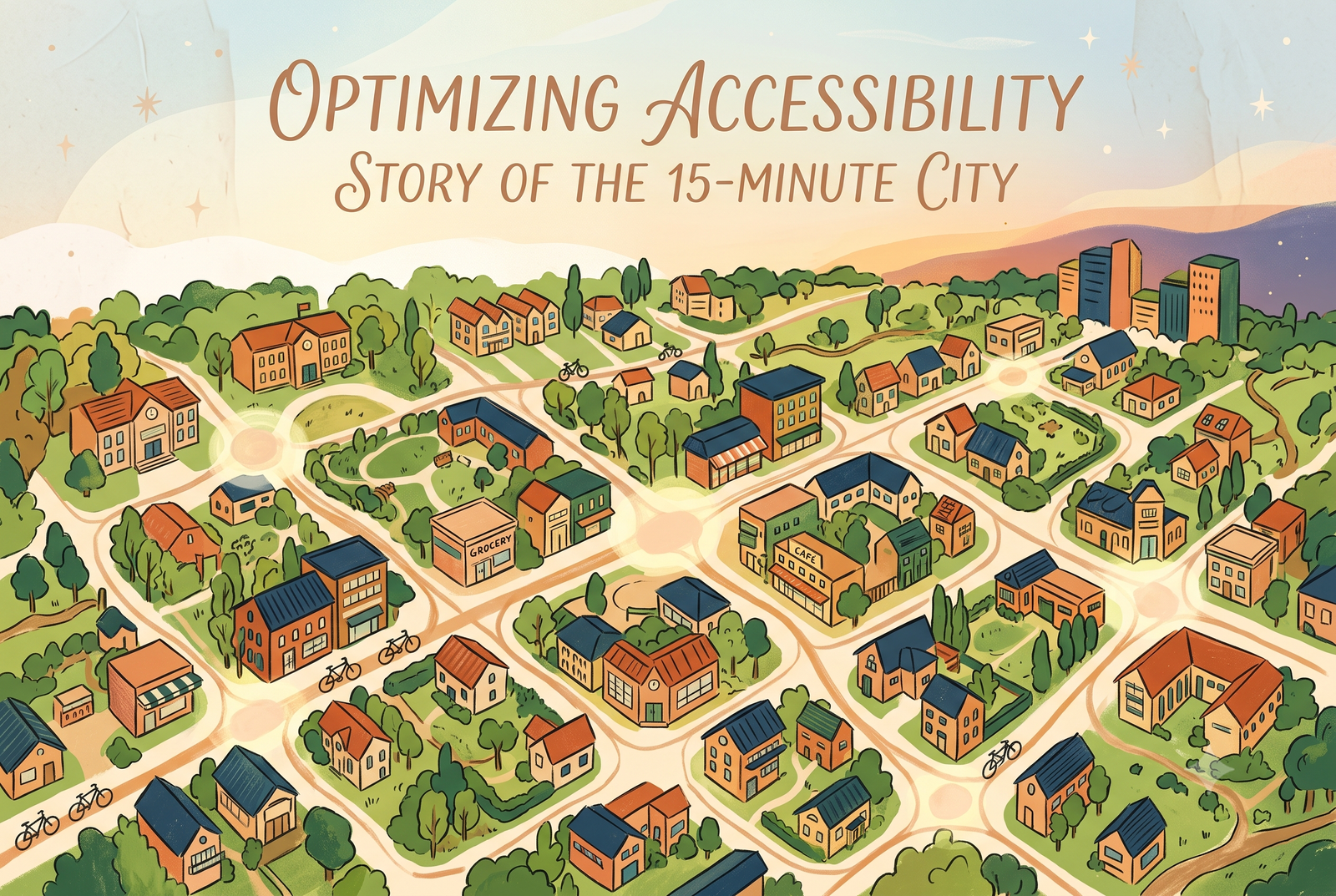
Her project on quantum-accelerated Steiner trees for 15-minute cities earned a place among the finalists at the world's largest pre-college STEM competition. Prishaa Shrimali of Marymount School of New York, was selected as a Grand Finalist at the 2026 Regeneron International Science and Engineering Fair (ISEF) in Phoenix, Arizona. Her project was Optimizing Urban Accessibility: […]

In 2026, the following Cheenta students have been successful for Indian Statistical Institute's M.Stat Entrance. They ranked within the first 50 in the entire country in these entrances. I.S.I. M.Stat Entrance
In 2026, the following Cheenta students have been successful for Indian Statistical Institute's B.Stat Entrance and Chennai Mathematical Institute's B.Sc. Math Entrance. They ranked within the first 200 in the entire country in these entrances. Most of these students attended the problem solving workshops regularly, which happen 5 days every week. CMI B.Sc. Math Entrance […]