Research in School: Epidemiological Modelling and Outbreak Prediction using Hyperbolic Geometry | by Raghav Pai and Shreyas Vivek
 Join Trial or Access Free ResourcesJoin Trial or Access Free Resources
Schedule: 26th October 2024 (Saturday)
Time: 5:00PM IST
About the Presenters:
Raghav Pai: He is a Grade 11 student based in Maharastra, Mumbai. He is part of Cheenta since 8 months
Shreyas Vivek: He is a Grade 11 student based in Dubai, UAE.
This paper introduces a novel approach to modeling disease transmission using hyperbolic geometry, specifically the Poincaré disk model. Traditional models like Susceptible-Infected-Recovered (SIR) assume homogeneous populations, which oversimplifies real-world interactions. By incorporating hyperbolic distance, the Poincaré disk model captures spatial clustering and irregular social interactions, offering a more realistic framework for studying epidemics. Simulations of the first wave of COVID-19 in India were performed using both the Poincaré disk and SIR models. Results show that the Poincaré disk model better captures localized transmission patterns and spatial dynamics, providing deeper insights into how diseases spread through structured populations. This approach highlights the importance of accounting for social network structures in epidemic modeling, offering valuable guidance for targeted public health interventions such as localized lockdowns and vaccination strategies.Our findings demonstrate the advantages of hyperbolic geometry in epidemiological modeling, with potential applications for improving future outbreak predictions and interventions.
This session highlighted how mathematical concepts can be applied to understand and predict the spread of infectious diseases more accurately.
Traditional epidemiological models use Euclidean geometry, which may not capture the complex structure of real-world social networks. Hyperbolic geometry, with its curved spaces, better represents these networks by accounting for high clustering and varying levels of social interactions. The model presented maps social interactions onto a hyperbolic plane, visualizing the spread of disease as expanding waves through a network.
The hyperbolic approach allows for the identification of critical clusters where outbreaks may intensify. Compared to traditional methods, these predictions can be more precise, helping to target interventions like vaccinations or lockdowns in specific high-risk zones.
While the primary focus was on epidemic modeling, the use of hyperbolic geometry extends to other areas, such as analyzing information spread in social media, enhancing cybersecurity, and understanding financial network risks.

Publishing original scientific research in a peer-reviewed journal is an achievement many scholars work toward for years. Achieving this feat early in one's academic journey requires exceptional intellectual rigor, creativity, and persistence. Aaditya Punatar and Muskan Sadana have reached this remarkable milestone, successfully publishing their collaborative research paper in the prestigious Journal of Emerging Investigators […]
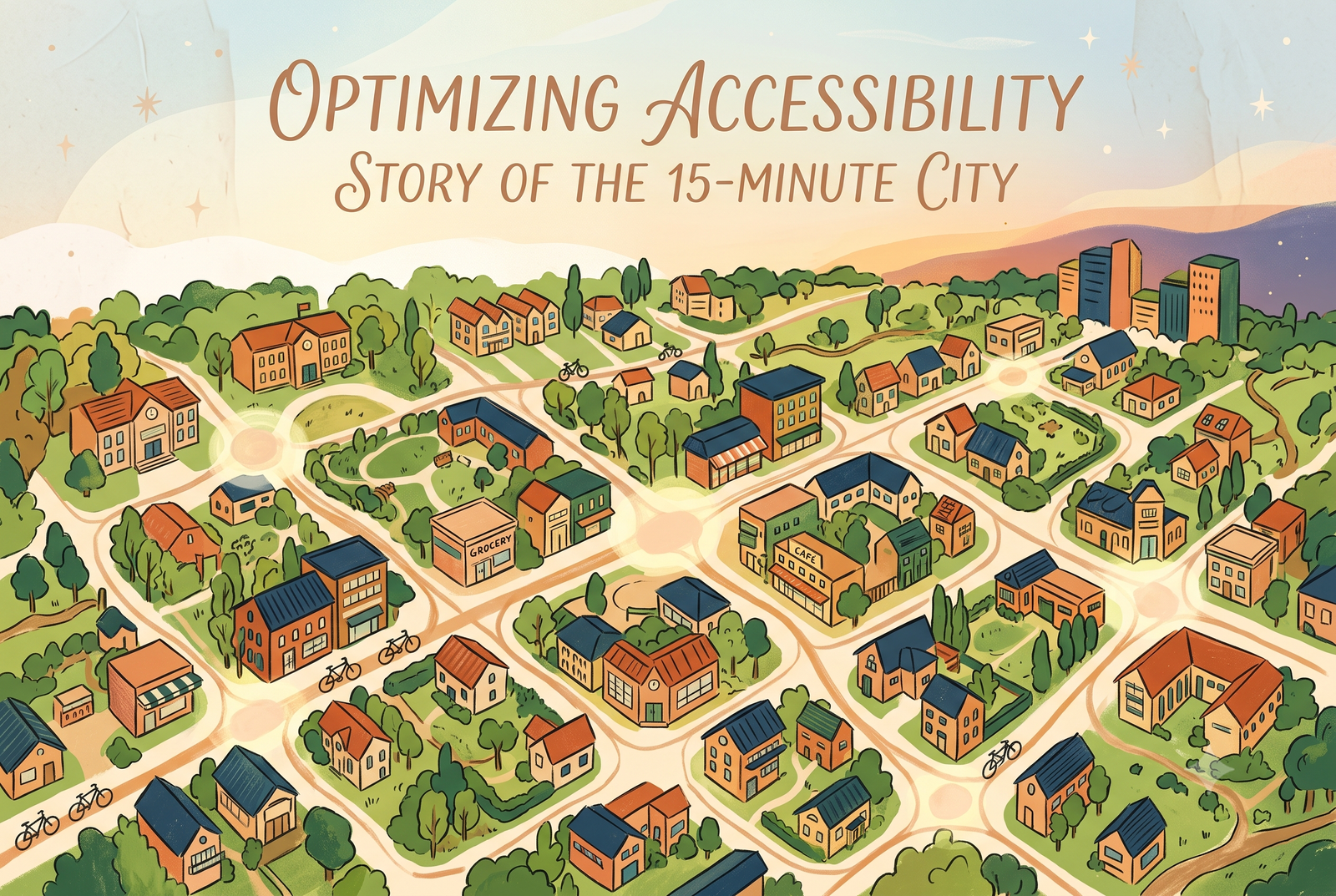
Her project on quantum-accelerated Steiner trees for 15-minute cities earned a place among the finalists at the world's largest pre-college STEM competition. Prishaa Shrimali of Marymount School of New York, was selected as a Grand Finalist at the 2026 Regeneron International Science and Engineering Fair (ISEF) in Phoenix, Arizona. Her project was Optimizing Urban Accessibility: […]
In 2026, the following Cheenta students have been successful for Indian Statistical Institute's M.Stat Entrance. They ranked within the first 50 in the entire country in these entrances. I.S.I. M.Stat Entrance
In 2026, the following Cheenta students have been successful for Indian Statistical Institute's B.Stat Entrance and Chennai Mathematical Institute's B.Sc. Math Entrance. They ranked within the first 200 in the entire country in these entrances. Most of these students attended the problem solving workshops regularly, which happen 5 days every week. CMI B.Sc. Math Entrance […]