TIFR 2014 Problem 29 Solution is a part of TIFR entrance preparation series. The Tata Institute of Fundamental Research is India's premier institution for advanced research in Mathematics. The Institute runs a graduate programme leading to the award of Ph.D., Integrated M.Sc.-Ph.D. as well as M.Sc. degree in certain subjects.
The image is a front cover of a book named Introduction to Real Analysis by R.G. Bartle, D.R. Sherbert. This book is very useful for the preparation of TIFR Entrance.
Also Visit: College Mathematics Program of Cheenta
Let $f: X\to Y$ be a continuous map between metric spaces. Then $f(X)$ is a complete subset of $Y$ if
A. X is compact
B. Y is compact
C. X is complete
D. Y is complete
Discussion:
Let $X$ be compact. Then $f(X)$ is compact. (continuous image of compact space is compact)
Now, compact subset of any Hausdorff space is closed. So in particular, compact subset of any metric space is closed.
Let $y_n$ be a Cauchy sequence in $f(X)$. Then since $f(X)$ is compact, $y_n$ has a convergent subsequence (converging to a point in that compact set i.e, in $f(X)$.
Suppose $y_{n_k} \to y \in f(X)$.
Then by triangle inequality, we have $d(y_n,y) \le d(y_n,y_{n_k}) + d(y_{n_k},y) \to 0+0=0$ as $n\to \infty$
Here we have used that $y_n$ is cauchy to conclude $d(y_n,y_{n_k}) \to 0$.
So this implies $y_n \to y$. Since $y\in f(X)$ we conclude that $f(X)$ is complete.
This proves A.
Let $Y=[0,2]$ and $X=(0,1)$. Take the inclusion map $i(x)=x$ for all $x\in X$. This example shows that even if we take $Y$ to be compact, or complete, $f(X)$ need not be complete. So this disproves B and D.
Now take $X=\mathbb{R}$ and take $Y=(0,1)$. We know there is a homeomorphism between these two sets where the metric is usual topology. So, in this case, the image of a complete set is not complete. This disproves option C.

Publishing original scientific research in a peer-reviewed journal is an achievement many scholars work toward for years. Achieving this feat early in one's academic journey requires exceptional intellectual rigor, creativity, and persistence. Aaditya Punatar and Muskan Sadana have reached this remarkable milestone, successfully publishing their collaborative research paper in the prestigious Journal of Emerging Investigators […]
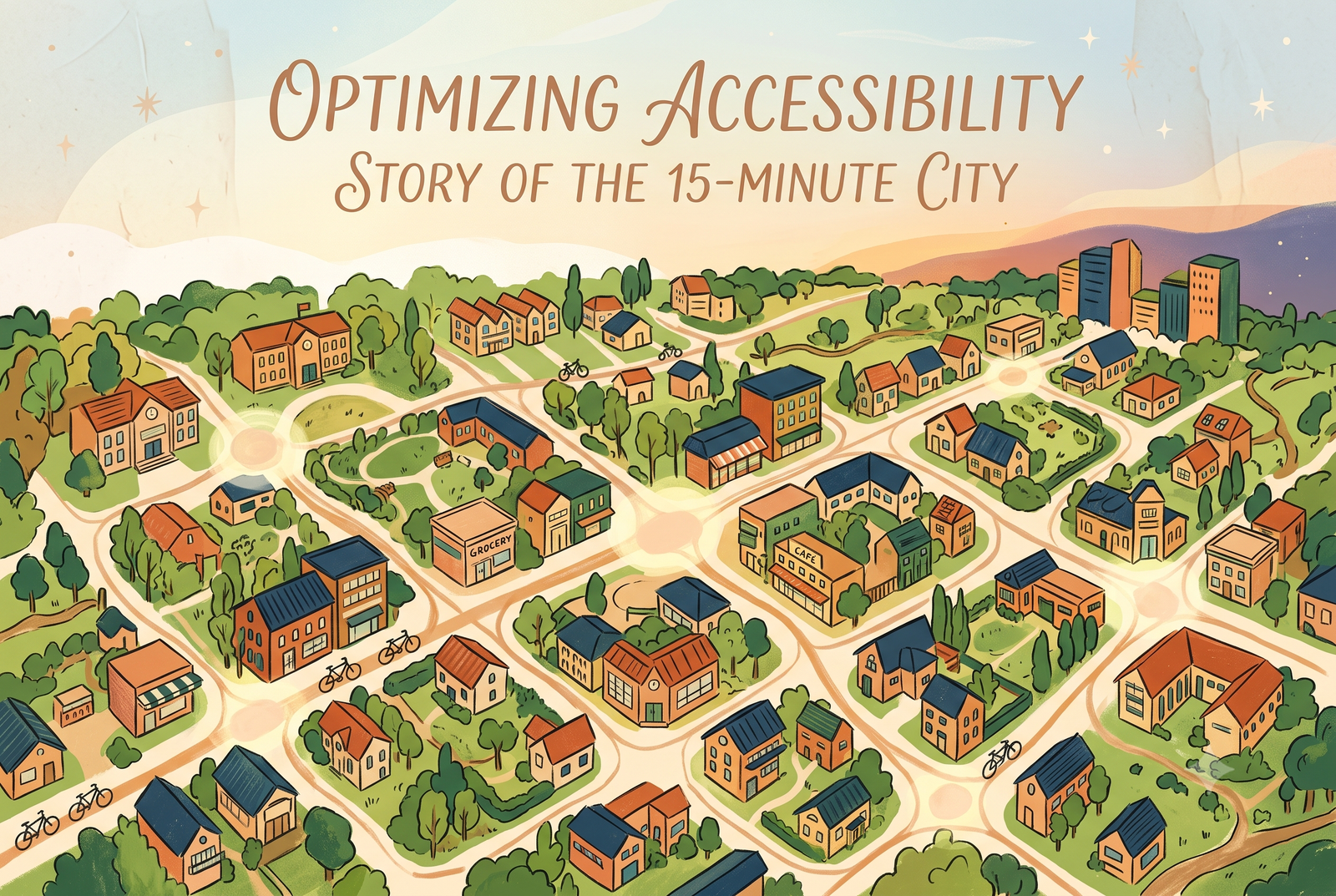
Her project on quantum-accelerated Steiner trees for 15-minute cities earned a place among the finalists at the world's largest pre-college STEM competition. Prishaa Shrimali of Marymount School of New York, was selected as a Grand Finalist at the 2026 Regeneron International Science and Engineering Fair (ISEF) in Phoenix, Arizona. Her project was Optimizing Urban Accessibility: […]
In 2026, the following Cheenta students have been successful for Indian Statistical Institute's M.Stat Entrance. They ranked within the first 50 in the entire country in these entrances. I.S.I. M.Stat Entrance
In 2026, the following Cheenta students have been successful for Indian Statistical Institute's B.Stat Entrance and Chennai Mathematical Institute's B.Sc. Math Entrance. They ranked within the first 200 in the entire country in these entrances. Most of these students attended the problem solving workshops regularly, which happen 5 days every week. CMI B.Sc. Math Entrance […]