Singapore Math Olympiad Past Years Questions- Number Theory (Senior)
 Join Trial or Access Free ResourcesJoin Trial or Access Free Resources
If \(\log {\sqrt{2}} x=10-3 \log {\sqrt{2}} 10\), find \(x\).
(A) 0.32
(B) 0.032
(C) 0.0032
(D) 0.64
(E) 0.064
Find the smallest positive odd integer greater than 1 that is a factor of
\((2023)^{2023}+(2026)^{2026}+(2029)^{2029}\) .
Find the remainder of \(7^{2023}+9^{2023}\) when divided by \(64\) .
Let \(x, y, z>1\), and let \(A\) be a positive number such that \(\log x A=30, \log _y A=50\) and \(\log {x y}(A z)=150\). Find
\(\left(\log _A z\right)^2\).
Find the largest integer that is less than
\(\text { - } \frac{3^{10}-2^{10}}{10 !}\left(\frac{1}{1 ! 9 ! 2}+\frac{1}{2 ! 8 ! 2^2}+\frac{1}{3 ! 7 ! 2^3}+\cdots+\frac{1}{9 ! 1 ! 2^9}\right)^{-1}\) .
Here, \(n !=n \cdot(n-1) \cdots 3 \cdot 2 \cdot 1\). For example, \(5 !=5 \cdot 4 \cdot 3 \cdot 2 \cdot 1=120\).
Find the remainder when \(3^{2023}\) is divided by \(215\) .
Find the sum of the prime divisors of \(64000027\) .
Which of the following is true?
(A) \(\sqrt[6]{\frac{1}{333}}<\sqrt[3]{\frac{1}{18}}<\sqrt{\frac{1}{7}}\)
(B) \(\sqrt[3]{\frac{1}{18}}<\sqrt[6]{\frac{1}{333}}<\sqrt{\frac{1}{7}}\)
(C) \(\sqrt[3]{\frac{1}{18}}<\sqrt{\frac{1}{7}}<\sqrt[6]{\frac{1}{333}}\)
(D) \(\sqrt{\frac{1}{7}}<\sqrt[6]{\frac{1}{333}}<\sqrt[3]{\frac{1}{18}}\)
(E) None of the above.
Suppose \(\sqrt{\left(\log {377 \times 377} 2022\right)\left(\log {377} 2022\right)}=\log _k 2022\). Find \(k\).
(A) \(\sqrt{337}\)
(B) \(337^{\sqrt{2}}\)
(C) \(337 \sqrt{2}\)
(D) \(\sqrt{337}^{\sqrt{2}}\)
(E) \(\sqrt{337 \times 2}\)
How many positive integers less than or equal to 2022 cannot be expressed as
\(\lfloor 2 x+1\rfloor+\lfloor 5 x+1\rfloor\) for some real number \(x\) ? Here, \(\lfloor x\rfloor\) denotes the greatest integer less than or equal to \(x\). For example, \(\lfloor-2.1\rfloor=-3,\lfloor 3.9\rfloor=3\).
Let \(k=-1+\sqrt{2022^{1 / 5}-1}\), and let \(f(x)=\left(k^2+2 k+2\right)^{10 x}\). Find the value of \(\log _{2022} f(2022)\).
Find the smallest odd integer \(N\), where \(N>2022\), such that when \(1808,2022\) and \(N\) are each divided by a positive integer \(p\), where \(p>1\), they all leave the same remainder.
For some positive integer \(n\), the number \(n^3-3 n^2+3 n\) has a units digit of \(6\) . Find the product of the last two digits of the number \(7(n-1)^{12}+1\).
How many positive integers \(n\) do not satisfy the inequality \(n^{\frac{1}{3} \log _{20} n}>\sqrt{n}\) ?
Find the value of \(2021^{\left(\log {2021} 2020\right)\left(\log {2020} 2019\right)\left(\log _{2019} 2018\right)}\).
(A) 2018
(B) 2019
(C) 2020
(D) 2021
(E) None of the above
Select all the inequalities which hold for all real values of (x) and (y).
(i) \(x \leq x^2+y^2\),
(ii) \(x y \leq x^2+y^2\),
(iii) \(x-y \leq x^2+y^2\),
(iv) \(y+x y \leq x^2+y^2\),
(v) \(x+y-1 \leq x^2+y^2 \).
(A) (i)
(B) (i) and (iii)
(C) (iii) and (iv)
(D) (ii)
(E) (ii) and (v)
Let \(x\) be the integer such that \(x=5 \sqrt{2+4 \log _x 5}\). Determine the value of \(x\).
Let \(n\) be a positive integer such that \(\frac{2021 n}{2021+n}\) is also a positive integer. Determine the smallest possible value of (n).
Determine the number of 5-digit numbers with the following properties:
(i) All the digits are non-zero;
(ii) The digits can be repeated;
(iii) The difference between consecutive digits is exactly 1 .
Which of the following is equal to \(\sqrt{5+\sqrt{3}}+\sqrt{5-\sqrt{3}}\) ?
(A) \(\sqrt{10-\sqrt{22}}\)
(B) \(\sqrt{10+\sqrt{22}}\)
(C) \(\sqrt{10-2 \sqrt{22}}\)
(D) \(\sqrt{10+2 \sqrt{22}}\)
(E) None of the above
Simplify
\(\log 8 5 \cdot\left(\log _5 3+\log {25} 9+\log _{125} 27\right)\) .
(A) \(\log _2 3\)
(B)\(\log _3 2\)
(C) \(\log _2 9\)
(D) \(\log _3 16\)
(E) \(\log _2 27\)
Let \(a=50^{\frac{1}{505}}, b=10^{\frac{1}{303}}\) and \(c=6^{\frac{1}{202}}\). Which of the following is true?
(A) \(a<b<c\)
(B) \(a<c<b\)
(C) \(b<a<c\)
(D) \(b<c<a\)
(E) \(c<b<a\)
Find the minimum possible value of \(|x-10|-|x-20|+|x-30|\), where \(x\) is any real number.
Let \(a, b\) be positive real numbers, where \(a>b\). Suppose there exists a real number (x) such that \(\left(\log _2 a x\right)\left(\log _2 b x\right)+25=0\). Find the minimum possible value of \(\frac{a}{b}\).
Find the smallest positive integer that is greater than the following expression:
(\(\sqrt{7}+\sqrt{5})^4\).
The digit sum of a number, say 987 , is the sum of its digits, \(9+8+7=24\). Let (A) be the digit sum of \(2020^{2021}\), and let (B) be the digit sum of (A). Find the digit sum of (B).
\(40=2 \times 2 \times 2 \times 5\) is a positive divisor of 1440 that is a product of 4 prime numbers. \(48=2 \times 2 \times 2 \times 2 \times 3\) is a positive divisor of 1440 that is a product of 5 prime numbers. Find the sum of all the positive divisors of 1440 that are products of an odd number of prime numbers.
Simplify
\[
(\sqrt{10}-\sqrt{2})^{\frac{1}{3}}(\sqrt{10}+\sqrt{2})^{\frac{7}{3}} .
\]
(A) \(24+4 \sqrt{5}\)
(B) \(24+6 \sqrt{5}\)
(C) \(24+8 \sqrt{5}\)
(D) \(24+10 \sqrt{5}\)
(E) \(24+12 \sqrt{5}\)
Let \(a=4^{3000}, b=6^{2500}\) and \(c=7^{2000}\). Which of the following statement is true?
(A) \(a<b<c\)
(B) \(a<c<b\)
(C) \(b<a<c\)
(D) \(c<a<b\)
(E) \(c<b<a\)
If \(\log _{21} 3=x\), express \(\log _7 9\) in terms of \(x\).
(A) \(\frac{2 x}{2-x}\)
(B) \(\frac{2 x}{1-x}\)
(C) \(\frac{2 x}{x-2}\)
(D) \(\frac{2 x}{x-1}\)
(E) \(\frac{x}{1-x}\)
Find the largest positive integer (n) such that (n+8) is a factor of \(n^3+13 n^2+40 n+40\).
Find the value of the following expression:
\[
\frac{2\left(1^2+2^2+3^2+\ldots+49^2+50^2\right)+(1 \times 2)+(2 \times 3)+(3 \times 4)+\ldots+(48 \times 49)+(49 \times 50)}{100} .
\]
Find the remainder when \(10^{43}\) is divided by \(126\) .

Publishing original scientific research in a peer-reviewed journal is an achievement many scholars work toward for years. Achieving this feat early in one's academic journey requires exceptional intellectual rigor, creativity, and persistence. Aaditya Punatar and Muskan Sadana have reached this remarkable milestone, successfully publishing their collaborative research paper in the prestigious Journal of Emerging Investigators […]
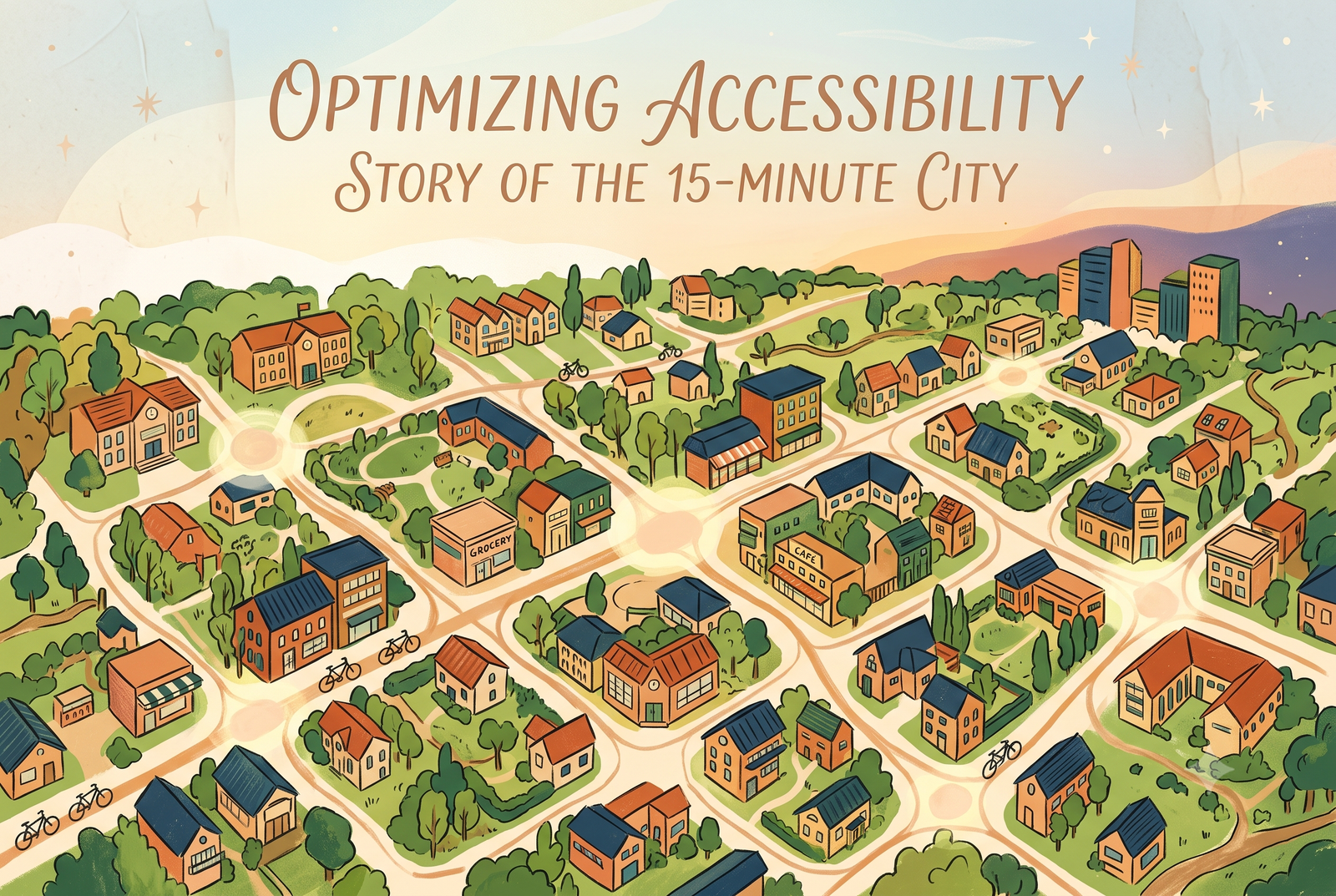
Her project on quantum-accelerated Steiner trees for 15-minute cities earned a place among the finalists at the world's largest pre-college STEM competition. Prishaa Shrimali of Marymount School of New York, was selected as a Grand Finalist at the 2026 Regeneron International Science and Engineering Fair (ISEF) in Phoenix, Arizona. Her project was Optimizing Urban Accessibility: […]
In 2026, the following Cheenta students have been successful for Indian Statistical Institute's M.Stat Entrance. They ranked within the first 50 in the entire country in these entrances. I.S.I. M.Stat Entrance
In 2026, the following Cheenta students have been successful for Indian Statistical Institute's B.Stat Entrance and Chennai Mathematical Institute's B.Sc. Math Entrance. They ranked within the first 200 in the entire country in these entrances. Most of these students attended the problem solving workshops regularly, which happen 5 days every week. CMI B.Sc. Math Entrance […]