Let's discuss a problem and find out whether a sequence is bounded or unbounded from TIFR 2013 Problem 35. Try before reading the solution.
Question: TIFR 2013 problem 35
True/False?
Let \( \{a_n\} \) be any non-constant sequence in \(\mathbb{R}\) such that \( a_{n+1}=\frac{a_n + a_{n+2} }{2} \) for all \(n \ge 1 \). Then \(\{a_n\} \) is unbounded.
Hint:
The given expression is same as \( a_{n+1}-a_n = a_{n+2} -a_{n+1} \).
Discussion:
The distance between two successive terms in the given sequence is constant. It is given by \( |a_{n+1}- a_n| = |a_n - a_{n-1}| = ... = |a_1-a_0| \).
So for the sequence to be non-constant, \( a_1 \ne a_0 \). Because otherwise, the sequence will have distance between any two successive terms zero, which is just another way of saying that the sequence is constant.
There are two cases:
Case 1: \(a_1 > a_0\).
Then \(a_{n+1} > a_n\), that is the sequence is increasing, and not only that, it is an arithmetic progression with common difference \(a_1-a_0 (> 0)\). Therefore, the sequence is unbounded above.
Case 2: \(a_1<a_0\).
Then as in the previous case the sequence this time will become a decreasing sequence, not only that, it is an arithmetic progression with common difference \( < 0 \). Therefore, the sequence is unbounded below.
Remark:
We don't really need to take the two cases. The key point is that the given recurrence relation is that of an arithmetic progression whose common difference is non-zero. Hence the sequence has to be unbounded.

Publishing original scientific research in a peer-reviewed journal is an achievement many scholars work toward for years. Achieving this feat early in one's academic journey requires exceptional intellectual rigor, creativity, and persistence. Aaditya Punatar and Muskan Sadana have reached this remarkable milestone, successfully publishing their collaborative research paper in the prestigious Journal of Emerging Investigators […]
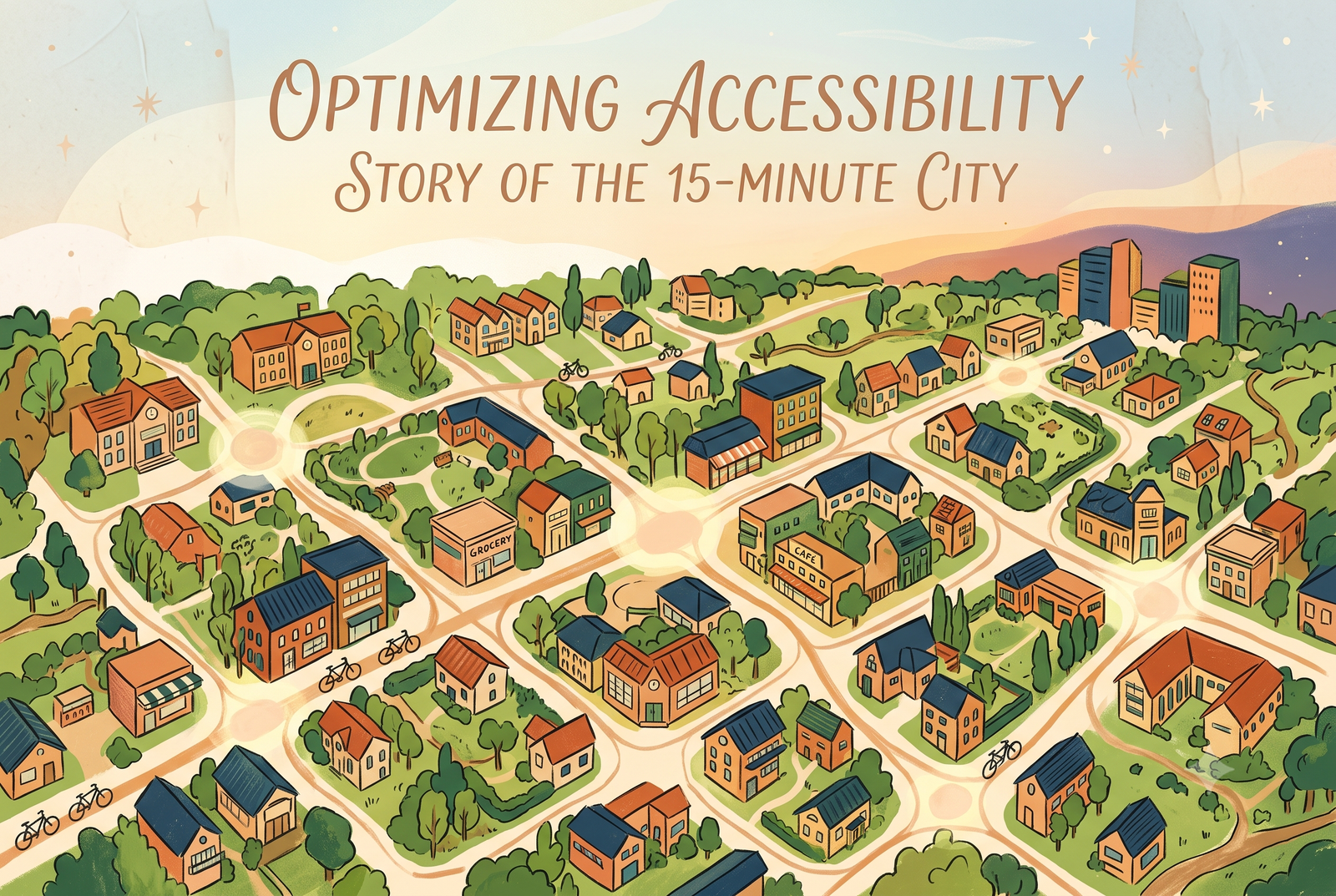
Her project on quantum-accelerated Steiner trees for 15-minute cities earned a place among the finalists at the world's largest pre-college STEM competition. Prishaa Shrimali of Marymount School of New York, was selected as a Grand Finalist at the 2026 Regeneron International Science and Engineering Fair (ISEF) in Phoenix, Arizona. Her project was Optimizing Urban Accessibility: […]
In 2026, the following Cheenta students have been successful for Indian Statistical Institute's M.Stat Entrance. They ranked within the first 50 in the entire country in these entrances. I.S.I. M.Stat Entrance
In 2026, the following Cheenta students have been successful for Indian Statistical Institute's B.Stat Entrance and Chennai Mathematical Institute's B.Sc. Math Entrance. They ranked within the first 200 in the entire country in these entrances. Most of these students attended the problem solving workshops regularly, which happen 5 days every week. CMI B.Sc. Math Entrance […]