In this post, you will find ISI B.Stat B.Math 2021 Objective Paper with Problems and Solutions. This is a work in progress, so the solutions and discussions will be uploaded soon. You may share your solutions in the comments below.
[Work in Progress]
Problem 1
The number of ways one can express $2^{2} 3^{3} 5^{5} 7^{7}$ as a product of two numbers $a$ and $b$, where $\text{gcd}(a, b)=1$, and $1<a<b$, is
Problem 2
The sum of all the solutions of $ 2 + \log_2 (x-2) = \log_{(x-2)} 8$ in the interval $(2, \infty)$ is
Problem 3
Let $f: \mathbb{R} \rightarrow \mathbb{R}$ be a continuous function such that
$$
f(x+1)=\frac{1}{2} f(x) \text { for all } x \in \mathbb{R}
$$
and let $a_{n}=\int_{0}^{n} f(x) d x$ for all integers $n \geq 1$. Then:
(A) $\lim {n \rightarrow \infty} a_{n}$ exists and equals $\int_{0}^{1} f(x) d x$.
(B) $\lim {n \rightarrow \infty} a_{n}$ does not exist.
(C) $\lim {n \rightarrow \infty} a_{n}$ exists if and only if $|\int_{0}^{1} f(x) d x|<1$.
(D) $\lim {n \rightarrow \infty} a_{n}$ exists and equals $2 \int_{0}^{1} f(x) d x$.
Problem 4
Consider the curves $x^{2}+y^{2}-4 x-6 y-12=0,9 x^{2}+4 y^{2}-900=0$ and $y^{2}-6 y-6 x+51=0 .$ The maximum number of disjoint regions into which these curves divide the $X Y$ -plane (excluding the curves themselves), is
(A) 4 .
(B) 5 .
(C) 6 .
(D) 7 .
Problem 5
A box has $13$ distinct pairs of socks. Let $p_{r}$ denote the probability of having at least one matching pair among $a$ bunch of $r$ socks drawn at random from the box. If $r_{0}$ is the maximum possible value of $r$ such that $p_{r}<1$, then the value of $p_{r_{0}}$ is
(A) $1-\frac{12}{ 26C_{12} }$.
(B) $1-\frac{13}{ 26C_{13} }$.
(C) $1-\frac{2^{13}}{ 26C_{13} } .$
(D) $1-\frac{2^{12}}{26C_{12}}$.
Problem 6
Let $a, b, c, d>0$, be any real numbers. Then the maximum prossible value of $c x+d y$, over all points on the ellipse $\frac{x^{2}}{a^{2}}+\frac{y^{2}}{b^{2}}=1$, must the
(A) $\sqrt{a^{2} c^{2}+b^{2} d^{2}}$.
(B) $\sqrt{a^{2} b^{2}+c^{2} d^{2}}$.
(C) $\sqrt{\frac{a^{2} c^{2}+b^{2} d^{2}}{a^{2}+b^{2}}}$.
(D) $\sqrt{\frac{a^{2} b^{2}+c^{2} d^{2}}{c^{2}+d^{2}}}$.
Problem 7
Let $f(x)=\sin x+\alpha x, x \in \mathbb{R}$, where $\alpha$ is a fixed real number. The function $f$ is one-to-one if and only if
(A) $\alpha>1$ or $\alpha<-1$.
(B) $\alpha \geq 1$ or $\alpha \leq-1$.
(C) $a \geq 1$ or $\alpha<-1$.
(D) $\alpha>1$ or $\alpha \leq-1$.
Problem 8
The Value of
$$1+\frac{1}{1+2}+\frac{1}{1+2+3}+\cdots+\frac{1}{1+2+3+\cdots 2021}$$ is
(A) $\frac{2021}{1010}$.
(B) $\frac{2021}{1011}$.
(C) $\frac{2021}{1012}$.
(D) $\frac{2021}{1013}$.
Problem 9
The volume of the region $S=\{(x, y, z):|x|+2|y|+3|z| \leq 6\}$ is
(A) 36 .
(B) 48 .
(C) 72
(D) 6 .
Problem 10:
Let $f: \mathbb{R} \rightarrow \mathbb{R}$ be a twice differentiable function such that $\frac{d^{2} f(x)}{d x^{2}}$ is positive for all $x \in \mathbb{R}$, and suppose $f(0)=1, f(1)=4$. Which of the following is not a possible value of $f(2)$ ?
(A) 7 .
(B) 8 .
(C) 9 .
(D) $10$
Problem 11:
Let, $f(x)=e^{-|x|}, x \in \mathbb{R}$,
and $g(\theta)=\int_{-1}^{1} f\left(\frac{x}{\theta}\right) d x, \theta \neq 0$
Then , $\lim _{\theta \rightarrow 0} \frac{g(\theta)}{\theta}$
(A) equals 0 .
(B) equals $+\infty$.
(C) equals 2 .
(D) does not exist.
Problem 12:
The number of different ways to colour the vertices of a square $P Q R S$ using one or more colours from the set \{Red, Blue, Green, Yellow \}$, such that no two adjacent vertices have the same colour is
(A) 36 .
(B) 48 .
(C) 72 .
(D) 84 .
Problem 13:
Define $a=p^{3}+p^{2}+p+11$ and $b=p^{2}+1$, where $p$ is any prime number. Let $d=g c d(a, b)$. Then the set of possible values of $d$ is
(A) ${1,2,5}$.
(B) ${2,5,10}$.
(C) ${1,5,10}$.
(D) ${1,2,10}$.
Problem 14:
Consider all $2 \times 2$ matrices whose entries are distinct and taken from the set $\{1,2,3,4\}$. The sum of determinants of all such matrices is
(A) 24 .
(B) 10 .
(C) 12 .
(D) 0 .
Problem 15:
Let $a, b, c$ and $d$ be four non-negative real numbers where $a+b+c+d= 1$. The number of different ways one can choose these numbers such that $a^{2}+b^{2}+c^{2}+d^{2}=\max \{a, b, c, d\}$ is
(A) 1 .
(B) 5 .
(C) 11 .
(D) 15 .
Problem 16:
The polynomial $x^{4}+4 x+c=0$ has at least one real root if and only if
(A) $c<2$.
(B) $c \leq 2$.
(C) $c<3$.
(D) $c \leq 3$.
problem 17:
The number of all integer solutions of the equation $x^{2}+y^{2}+x-y=$ 2021 is
(A) 5 .
(B) 7 .
(C) 1 .
(D) $0 .$
Problem 18:
The number of different values of $a$ for which the equation $x^{3}-x+a=$ 0 has two identical real roots is
(A) 0 .
(B) 1 .
(C) $2 .$
(D) 3 .
Problem 19:
Suppose $f(x)$ is a twice differentiable function on $[a, b]$ such that $f(a)=0=f(b)$
and $x^{2} \frac{d^{2} f(x)}{d x^{2}}+4 x \frac{d f(x)}{d x}+2 f(x)>0$ for all $x \in(a, b)$
Then,
(A) $f$ is negative for all $x \in(a, b)$.
(B) $f$ is positive for all $x \in(a, b)$.
(C) $f(x)=0$ for exactly one $x \in(a, b)$.
(D) $f(x)=0$ for at least two $x \in(a, b)$.
Problem 20:
Consider the following two subsets of $\mathbb{C}$ :
$A=\{\frac{1}{z}:|z|=2\}$ and $B=\{\frac{1}{z}:|z-1|=2\} .$
Then ,
(A) $A$ is a circle, but $B$ is not a circle.
(B) $B$ is a circle, but $A$ is not a circle.
(C) $A$ and $B$ are both circles.
(D) Neither $A$ nor $B$ is a circle.
Problem 21:
For a positive integer $n$, the equation
$$x^{2}=n+y^{2}, \quad x, y$$ integers
does not have a solution if and only if
(A) $n=2$.
(B) $n$ is a prime number.
(C) $n$ is an odd number.
(D) $n$ is an even number not divisible by 4 .
problem 22:
Let $f: \mathbb{R} \rightarrow \mathbb{R}$ be any twice differentiable function such that its second
derivative is continuous and $\frac{d f(x)}{d x} \neq 0$ for all $x \neq 0$.
If $\lim _{x \rightarrow 0} \frac{f(x)}{x^{2}}=\pi$, then ,
(A) for all $x \neq 0, \quad f(x)>f(0)$.
(B) for all $x \neq 0, \quad f(x)0$
(C) for all $x, \quad \frac{d^{2} f(x)}{d x^{2}}>0$
(D) for all $x, \quad \frac{d^{2} f(x)}{d x^{2}}<0$.
Problem 23:
Let us denote the fractional part of a real number $x$ by ${x}$ (note:
${x}=x-[x]$ where $[x]$ is the integer part of $x$ ). Then,
$$\lim _{n \rightarrow \infty}\{(3+2 \sqrt{2})^{n}\}$$
(A) equals 0.
(D) equals 1 .
(C) equals $\frac{1}{2}$.
(D) does not exist.
Problem 24:
Let,
$$p(x)=x^{3}-3 x^{2}+2 x, x \in \mathbb{R}$$
$f_{0}(x)= \begin{cases}\int_{0}^{x} p(t) d t, & x \geq 0 \ -\int_{x}^{0} p(t) d t, & x<0\end{cases}$,
$f_{1}(x)=e^{f_{0}(x)}, \quad f_{2}(x)=e^{f_{1}(x)}, \quad \ldots \quad, f_{n}(x)=e^{f_{n-1}(x)}$
How many roots does the equation $\frac{d f_{n}(x)}{d x}=0$ have in the interval $(-\infty, \infty) ?$
(A) 1 .
(B) 3 .
(C) $n+3$.
(D) $3 n$.
Problem 25:
For $0 \leq x<2 \pi$, the number of solutions of the equation
$\sin ^{2} x+2 \cos ^{2} x+3 \sin x \cos x=0$ is
(A) 1 .
(B) 2 .
(C) 3 .
(D) 4 .
Problem 26:
Let $f: \mathbb{R} \rightarrow[0, \infty)$ be a continuous function such that
$f(x+y)=f(x) f(y)$
for all $x, y \in \mathbb{R}$. Suppose that $f$ is differentiable at $x=1$ and
$\left.\frac{d f(x)}{d x}\right|_{x=1}=2 .$
Then, the value of $f(1) \log _{e} f(1)$ is
(A) $e$.
(B) 2 .
$(\mathrm{C}) \log _{e} 2$
(D) 1.
Problem 27:
The expression $\sum_{k=0}^{10} 2^{k} \tan \left(2^{k}\right)$ equals
(A) $\cot 1+2^{11} \cot \left(2^{11}\right)$
(B) $\cot 1-2^{10} \cot \left(2^{10}\right)$.
(C) $\cot 1+2^{10} \cot \left(2^{10}\right)$.
(D) $\cot 1-2^{11} \cot \left(2^{11}\right)$.
Problem 28:
If the maximum and minimum values of $\sin ^{6} x+\cos ^{6} x$, as $x$ takes all
real values, are $a$ and $b$, respectively, then $a-b$ equals
(A) $\frac{1}{2}$.
(B) $\frac{2}{3}$.
(C) $\frac{3}{4}$.
(D) 1 .
Problem 29:
If two real numbers $x$ and $y$ satisfy $(x+5)^{2}+(y-10)^{2}=196$, then the minimum possible value of
$x^{2}+2 x+y^{2}-4 y$ is
(A) $271-112 \sqrt{5}$.
(B) $14-4 \sqrt{5}$.
(C) $276-112 \sqrt{5}$.
(D) $9-4 \sqrt{5}$.
Problem 30:
Define $f: \mathbb{R} \rightarrow \mathbb{R}$ by
$f(x)= \begin{cases}(1-\cos x) \sin \left(\frac{1}{x}\right), & x \neq 0, \ 0, & x=0 .\end{cases}$,
Then,
(A) $f$ is discontinuous.
(B) $f$ is continuous but not differentiable.
(C) $f$ is differentiable and its derivative is discontinuous.
(D) $f$ is differentiable and its derivative is continuous.

Publishing original scientific research in a peer-reviewed journal is an achievement many scholars work toward for years. Achieving this feat early in one's academic journey requires exceptional intellectual rigor, creativity, and persistence. Aaditya Punatar and Muskan Sadana have reached this remarkable milestone, successfully publishing their collaborative research paper in the prestigious Journal of Emerging Investigators […]
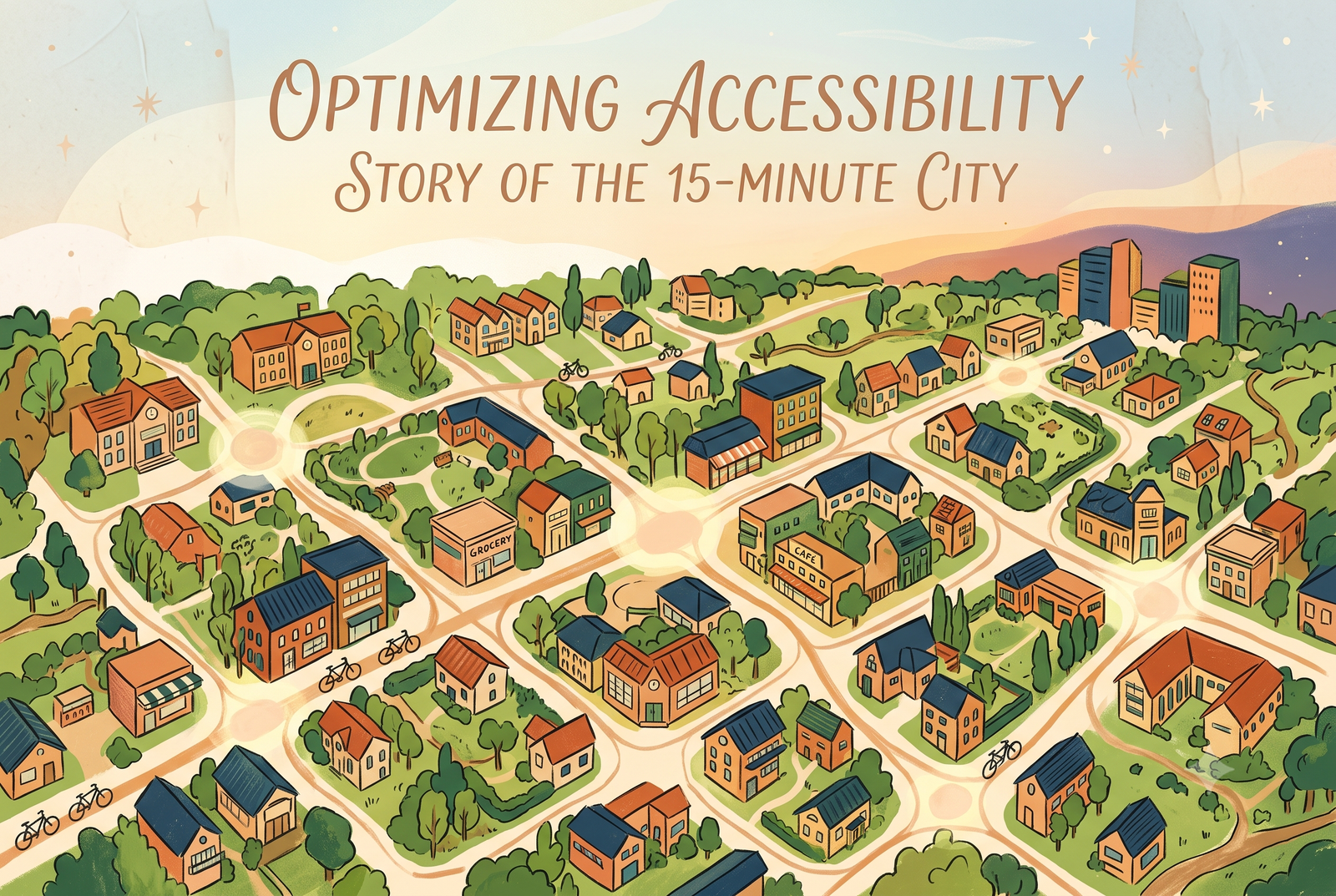
Her project on quantum-accelerated Steiner trees for 15-minute cities earned a place among the finalists at the world's largest pre-college STEM competition. Prishaa Shrimali of Marymount School of New York, was selected as a Grand Finalist at the 2026 Regeneron International Science and Engineering Fair (ISEF) in Phoenix, Arizona. Her project was Optimizing Urban Accessibility: […]

In 2026, the following Cheenta students have been successful for Indian Statistical Institute's M.Stat Entrance. They ranked within the first 50 in the entire country in these entrances. I.S.I. M.Stat Entrance
In 2026, the following Cheenta students have been successful for Indian Statistical Institute's B.Stat Entrance and Chennai Mathematical Institute's B.Sc. Math Entrance. They ranked within the first 200 in the entire country in these entrances. Most of these students attended the problem solving workshops regularly, which happen 5 days every week. CMI B.Sc. Math Entrance […]
