Mathematicians love fixed point theorems. Brouwer fixed point theorem is one such result. It states that "for any continuous function f mapping a compact convex set into itself there is a point a such that f(a) = a." We are interested in one such fixed point theorem.
Consider maps (continuous functions) from [latex] S^n \to S^n [/latex] (n-sphere to n-sphere). We will come up with a 'test' which will say when do a function does not have a fixed point.
The antipodal map h is defined as [latex] h(\bar{x}) = - \bar{x} [/latex]. The bar above x says that x may have more than one coordinate. For example a point on the 2-sphere has three coordinates (x, y, z). Hence h(x, y, z) = (-x, -y, - z).

In the above picture, we have drawn a 2-sphere. A is any point on the sphere. B is its antipodal point. B is found by changing the sign of each coordinate of A. Geometrically B is found by drawing a line from A, through the origin. Wherever that segment hits the sphere again, is its antipodal point.
It is easy to check that h is a continuous map. Also, note that h does not have a fixed point. Since each point on the sphere is sent to some other point (the diametrically opposite point on the sphere), hence no point is left fixed by the map h.
There is a notion called homotopy of maps in advanced mathematics. The idea is this: suppose there are two maps h and g from X to Y. Can you continuously deform h to g ? If yes, then the two maps are said to be homotopic. In more technical language, h and g are homotopic if, there is a map [latex] F: X \times [0,1] \to Y [/latex] such that [latex] F(x, 0) = h(x), F(x, 1) = g(x) [/latex] and F is continuous.
(The word 'map' is used for 'continuous function').
Now we will show that any map which does not have a fixed point, is homotopic to the antipodal map.
Consider [latex] F(x, t) = \dfrac{(1-t) f(x) - tx} { || (1-t)f(x) - tx || } [/latex].
Here f is a map from n-sphere to n-sphere. Here x has n+1 coordinates.
Notice that F(x, 0) = f(x) (denominator is 1 as ||f(x)|| =1 , since f(x) is on the sphere).
Also F(x, 1) = - x, the antipodal map.
Clearly F is continuous if the denominator is not zero. Let us find out when the denominator is zero.
[latex] || (1-t) f(x) - tx || = 0 \implies (1-t) f(x) = tx [/latex].
Taking the absolute value (norm) on both sides, we have [latex] |1-t| || f(x) || = |t| ||x|| [/latex].
Since for x and f(x) are on the surface of the n-sphere, hence their length (norm or absolute value) is 1. Thus we have [latex] (1-t) = t [/latex].
This implies t = 1/2. But plugging in t = 1/2, in the equation (1-t) f(x) = tx, we have f(x) = x. Hence f , has a fixed point.
If f did not have a fixed point then, the denominator will never be zero, making it homotopic to the antipodal map.
There is a beautiful visualization of this above fact. Suppose f does not have a fixed point. Pick any point a on the n-sphere. We want to send it to -a (the antipodal point). The shortest path is along the great circle, but there are infinitely many ways to reaching -a from a along a great circle as -a is exactly opposite to a.
Hence to decide on, which direction to go, we will take the help of f. Since f does not have a fixed point, it will move a to some a'. Once a has moved a little in some direction (to a'), its path to -a becomes fixed (as it is nearer to -a along a certain great circle).

Hence any continuous function, from n-sphere to n-sphere, that does not have a fixed point is homotopic to (can be deformed continuously into) the antipodal map!

Publishing original scientific research in a peer-reviewed journal is an achievement many scholars work toward for years. Achieving this feat early in one's academic journey requires exceptional intellectual rigor, creativity, and persistence. Aaditya Punatar and Muskan Sadana have reached this remarkable milestone, successfully publishing their collaborative research paper in the prestigious Journal of Emerging Investigators […]
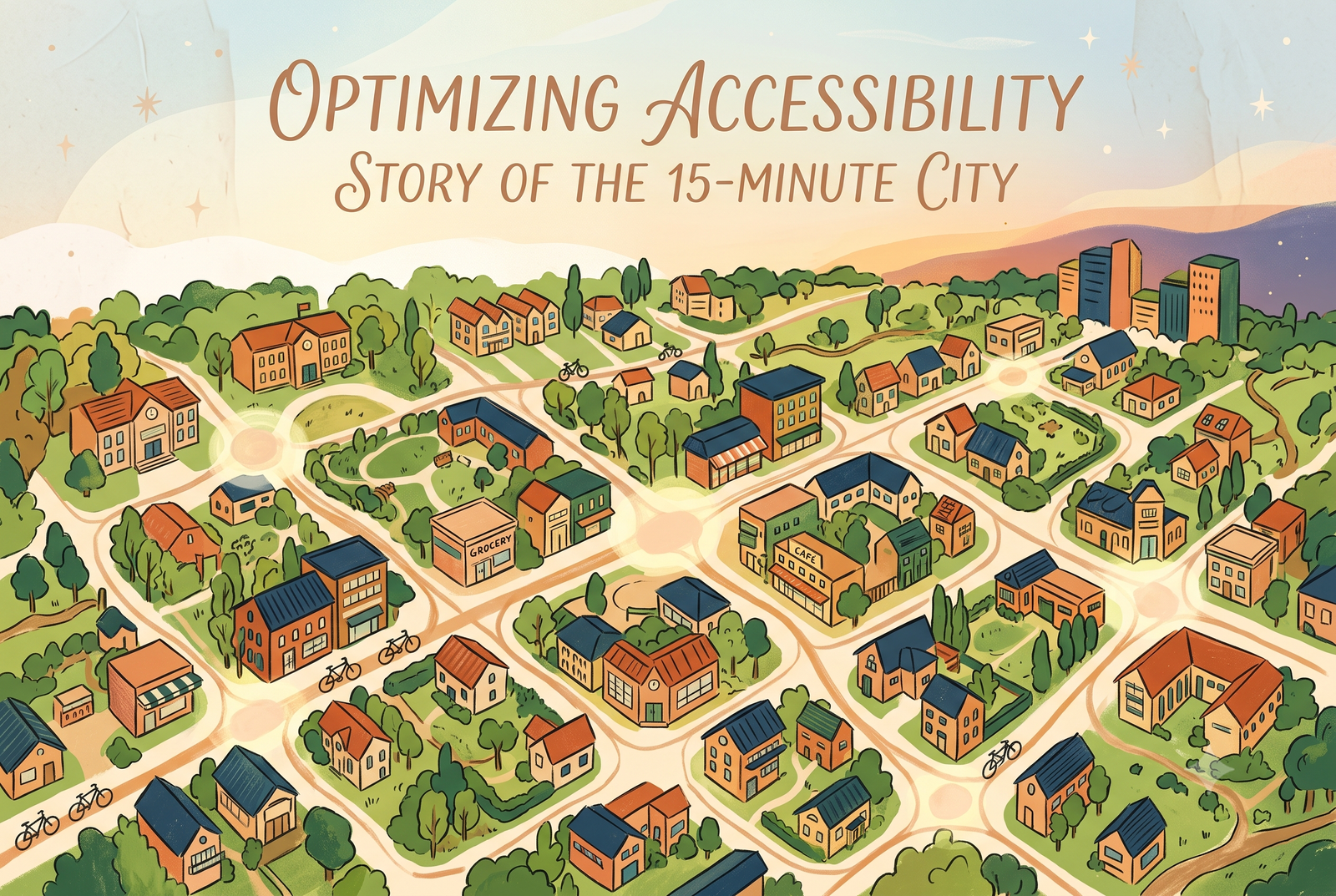
Her project on quantum-accelerated Steiner trees for 15-minute cities earned a place among the finalists at the world's largest pre-college STEM competition. Prishaa Shrimali of Marymount School of New York, was selected as a Grand Finalist at the 2026 Regeneron International Science and Engineering Fair (ISEF) in Phoenix, Arizona. Her project was Optimizing Urban Accessibility: […]

In 2026, the following Cheenta students have been successful for Indian Statistical Institute's M.Stat Entrance. They ranked within the first 50 in the entire country in these entrances. I.S.I. M.Stat Entrance
In 2026, the following Cheenta students have been successful for Indian Statistical Institute's B.Stat Entrance and Chennai Mathematical Institute's B.Sc. Math Entrance. They ranked within the first 200 in the entire country in these entrances. Most of these students attended the problem solving workshops regularly, which happen 5 days every week. CMI B.Sc. Math Entrance […]