Try this beautiful problem from TOMATO Subjective Problem no. 173 based on the Sum of Polynomials.
Problem : Sum of polynomials
Let [latex] {{P_1},{P_2},...{P_n}}[/latex] be polynomials in [latex] {x}[/latex], each having all integer coefficients, such that [latex] {{P_1}={{P_1}^{2}+{P_2}^{2}+...+{P_n}^{2}}}[/latex]. Assume that [latex] {P_1}[/latex] is not the zero polynomial. Show that [latex] {{P_1}=1}[/latex] and [latex] {{P_2}={P_3}=...={P_n}=0}[/latex]
Solution :
As [latex] {P_1},{P_2},...{P_n}[/latex] are integer coefficient polynomials so gives integer values at integer points.
Now as [latex] {P_1}[/latex] is not zero polynomial
[latex] {\displaystyle{P_1}(x)>0}[/latex] for some [latex] \displaystyle{x \in Z}[/latex]
Then [latex] {\displaystyle{P_1}(x)\ge{1}}[/latex] or [latex] P_1(x) \le -1 [/latex] as [latex] {\displaystyle{P_1}(x)}[/latex]=integer
[latex] \Rightarrow (P_1(x))^2 \ge P_1(x)[/latex] or [latex] 0 \ge P_1(x) -(P_1(x))^2 [/latex]
But it is given that [latex] {{P_1}={{P_1}^{2}+{P_2}^{2}+...+{P_n}^{2}}}[/latex]
This implies [latex] (P_2 (x))^2+...+(P_n (x) )^2 \le 0 [/latex]. This is only possible if [latex] (P_1(x))^2 = ... = (P_n(x))^2 = 0[/latex]
Hence the values of x for which [latex] P_1 (x) [/latex] is non-zero, [latex] P_2(x) , ... , P_n(x) [/latex] are all zero. The values of x for which [latex] P_1(x) = 0 [/latex], we have [latex] 0=0+(P_2 (x))^{2}+...+(P_n(x))^2[/latex] implying each is zero.
Therefore [latex] P_2(x) = ... = P_n(x) = 0 [/latex].
Finally [latex] P_1(x) = (P_1(x))^2 [/latex] implies [latex] P_1(x) = 0 \text{or} P_1(x) = 1 [/latex]. Since [latex] P_1(x) \neq 0 [/latex] hence it is 1.
(Proved)

Publishing original scientific research in a peer-reviewed journal is an achievement many scholars work toward for years. Achieving this feat early in one's academic journey requires exceptional intellectual rigor, creativity, and persistence. Aaditya Punatar and Muskan Sadana have reached this remarkable milestone, successfully publishing their collaborative research paper in the prestigious Journal of Emerging Investigators […]
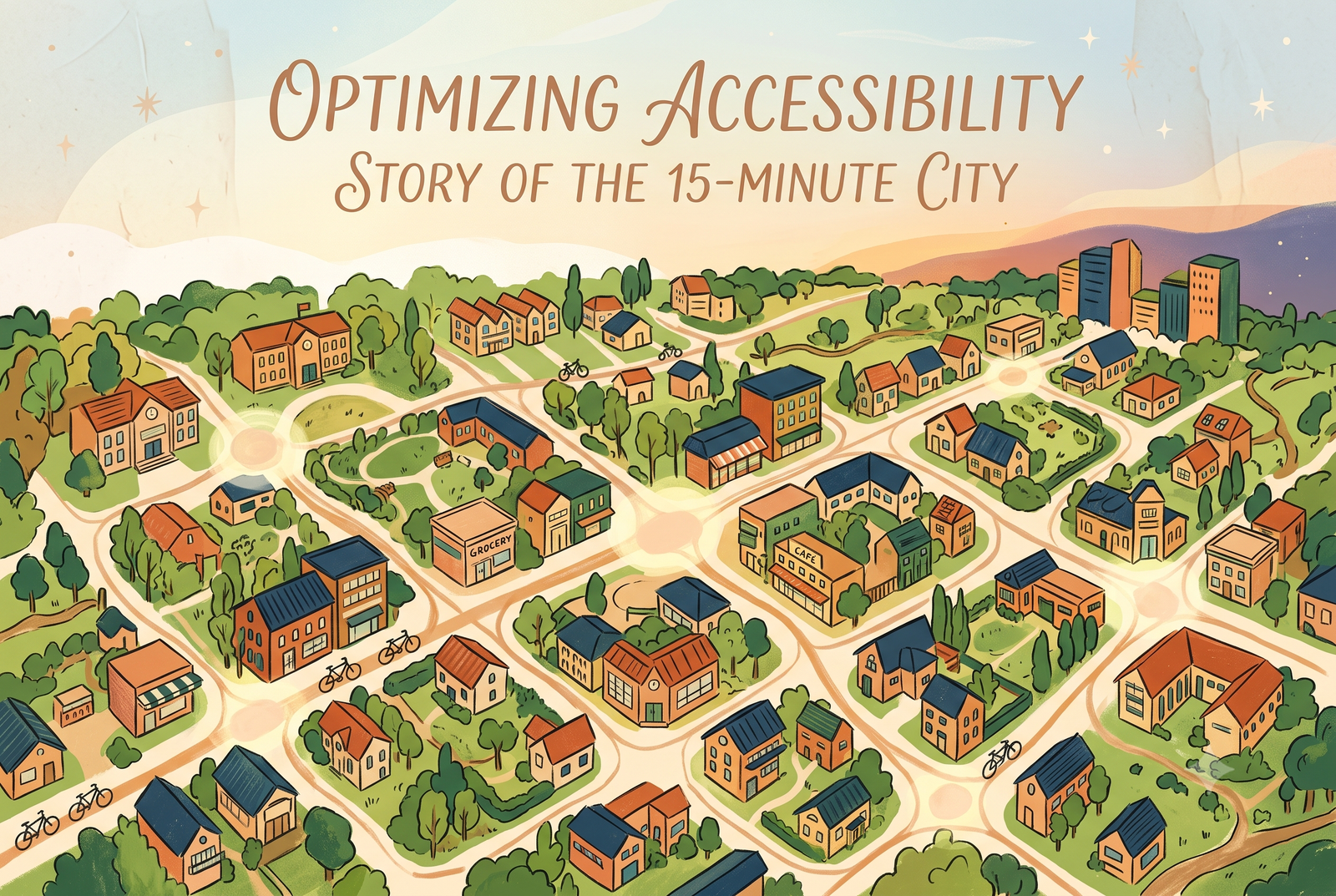
Her project on quantum-accelerated Steiner trees for 15-minute cities earned a place among the finalists at the world's largest pre-college STEM competition. Prishaa Shrimali of Marymount School of New York, was selected as a Grand Finalist at the 2026 Regeneron International Science and Engineering Fair (ISEF) in Phoenix, Arizona. Her project was Optimizing Urban Accessibility: […]
In 2026, the following Cheenta students have been successful for Indian Statistical Institute's M.Stat Entrance. They ranked within the first 50 in the entire country in these entrances. I.S.I. M.Stat Entrance
In 2026, the following Cheenta students have been successful for Indian Statistical Institute's B.Stat Entrance and Chennai Mathematical Institute's B.Sc. Math Entrance. They ranked within the first 200 in the entire country in these entrances. Most of these students attended the problem solving workshops regularly, which happen 5 days every week. CMI B.Sc. Math Entrance […]