Institute of Research in Mathematical Science
Full stack research opportunities for curious and persistent students in school, university and frontier in collaboration with academia and industry.
Recent News.
Three Levels of Research at Cheenta
Advised by Leading Researchers in Pure and Applied Mathematics, Machine Learning, Quantam Computing and Econometrics.
Research in University
For students in College and Universities interested in research projects
LEARN MOREFrontier Research
For early career researchers in collaboration with academia and industry.
LEARN MOREPast Papers
The pre-prints showcase the scope of the research projects.
AI for Social-Driven Crypto Pricing | Abhinav, Angad, Jivin
This project analyzes how cryptocurrency news headlines influence Bitcoin price movements. We collected real-time headlines using the CryptoPanic API and evaluated their sentiment with models like FinBERT and CryptoBERT. Using decision models such as Random Forest, we tested how well sentiment predicts price direction. Automated daily data collection was done using Google Apps Script. By varying sentiment and decision models, we aim to identify the best combination for accurate Bitcoin trend prediction.
Learn MoreAI for VVIPS Driven Asset Pricing | Sritha Uppaluru, Srirudran Y
This study examines how Elon Musk’s tweets influence short-term stock prices using AI-based sentiment analysis. We find that positive tweets often coincide with price increases, while negative tweets link to volatility. Crucially, similar messages from less influential people do not create the same effect, showing that sentiment alone cannot predict market behavior—the sender’s influence also matters.
Learn MoreAI for Games (Basketball) | Shamik Saraswati, Rishi Arun
This paper discusses the methods and results of our analysis of the factors in determining the winner of the popular online game Basketball Heads. We collected data on 28 players and used decision trees to determine the most important factors. Our analysis shows that ball possession is the most important factor, with an ~80% accuracy in determining player outcomes.
Learn MoreAI for Taste Detection | Gahan Mukherjee, Nishanth Alampally
This project uses AI and computer vision to estimate fruit sweetness (brix index) from ordinary RGB and multispectral images. We built models that predict grape sugar content from photos and tested whether adding details like variety and harvest time improves accuracy. What makes this work promising is that it can function with simple smartphone images, allowing farmers to assess grape quality directly in the field. We tested five grape varieties—including Itum, Autumn Royal, and Crimson—to study how color and texture relate to sweetness, showing the potential for fast, low-cost fruit quality evaluation without lab equipment.
Learn MoreHomomorphic Broadcast Encryption | Gurnoor Kaur, Anurag Mudgal
This paper introduces Homomorphic Broadcast Encryption (HBE), a unified framework that combines homomorphic encryption for privacy-preserving computation with broadcast encryption for selective data access. We implement HBE in cloud and IoT settings to enable secure aggregation and controlled result sharing. Tests on a 9-node cloud with 12 users show efficient encrypted computation, fast revocation, and low latency. HBE offers a practical solution for secure collaborative processing in areas like healthcare analytics and financial risk assessment.
Learn MoreAI for Ocean Trash Detection | Ruthvik Kodury
This project develops an efficient method for automating water quality assessment using satellite images and a lightweight deep learning model. We use a CNN enhanced with Class Activation Maps (CAM) to detect water pollution while keeping the architecture small—three convolutional blocks, global average pooling, and a simple classifier. Trained on datasets of polluted and natural water bodies, the model achieves high accuracy with far fewer parameters than existing solutions, making it a practical and scalable tool for future pollution detection.
Learn MoreResearch Advisors
A group of experts who guide Cheenta’s academic and research programs.
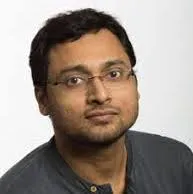
Dr. Ashani Dasgupta
Director, Cheenta Academy
PhD in Mathematics from University of Wisconsin, Milwaukee (USA).
Published Researcher at London Mathematical Society’s Journal of Topology
Published Researcher at London Mathematical Society’s Journal of Topology

Srijit Mukherjee
Director and faculty at Cheenta Academy
BStat and MStat from Indian Statistical Institute, Pursuing PhD in Penn State University
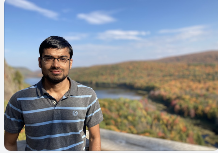
Dr. Arka Banerjee
Visiting Research Faculty
Ph.D., University of Wisconsin–Milwaukee
Postdoctoral Researcher, Auburn University
Postdoctoral Researcher, Auburn University
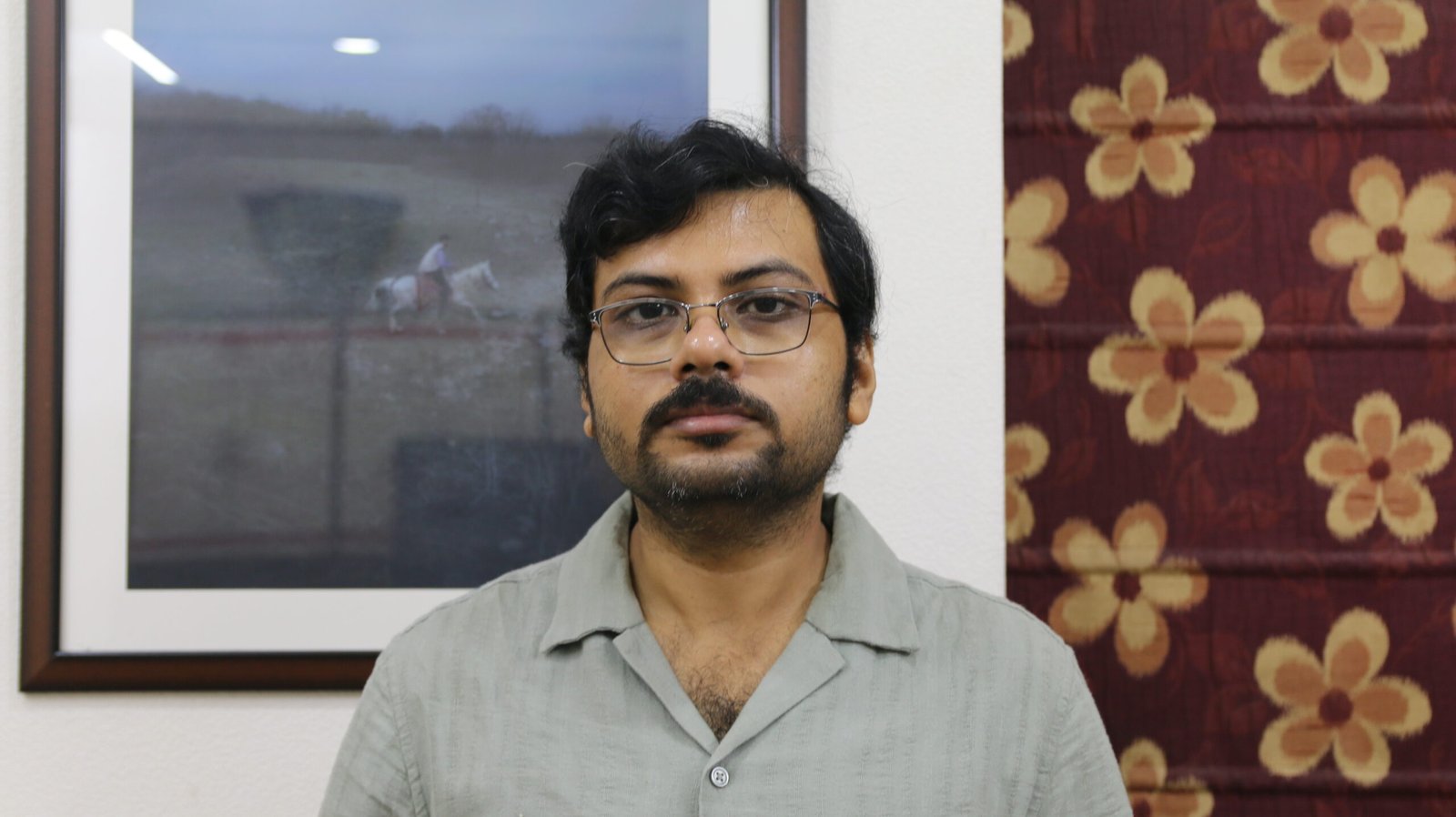
Dr. Soumyadeep Dutta
Research & Mathematics Faculty
Ph.D., Indian Institute of Science (IISc)

Raghunath J V
Mathematics and Research Faculty
B.Tech and M.Tech from IIT Chennai.
Math Olympiad Coach at Cheenta. INMO and IMO Trainer.
Math Olympiad Coach at Cheenta. INMO and IMO Trainer.
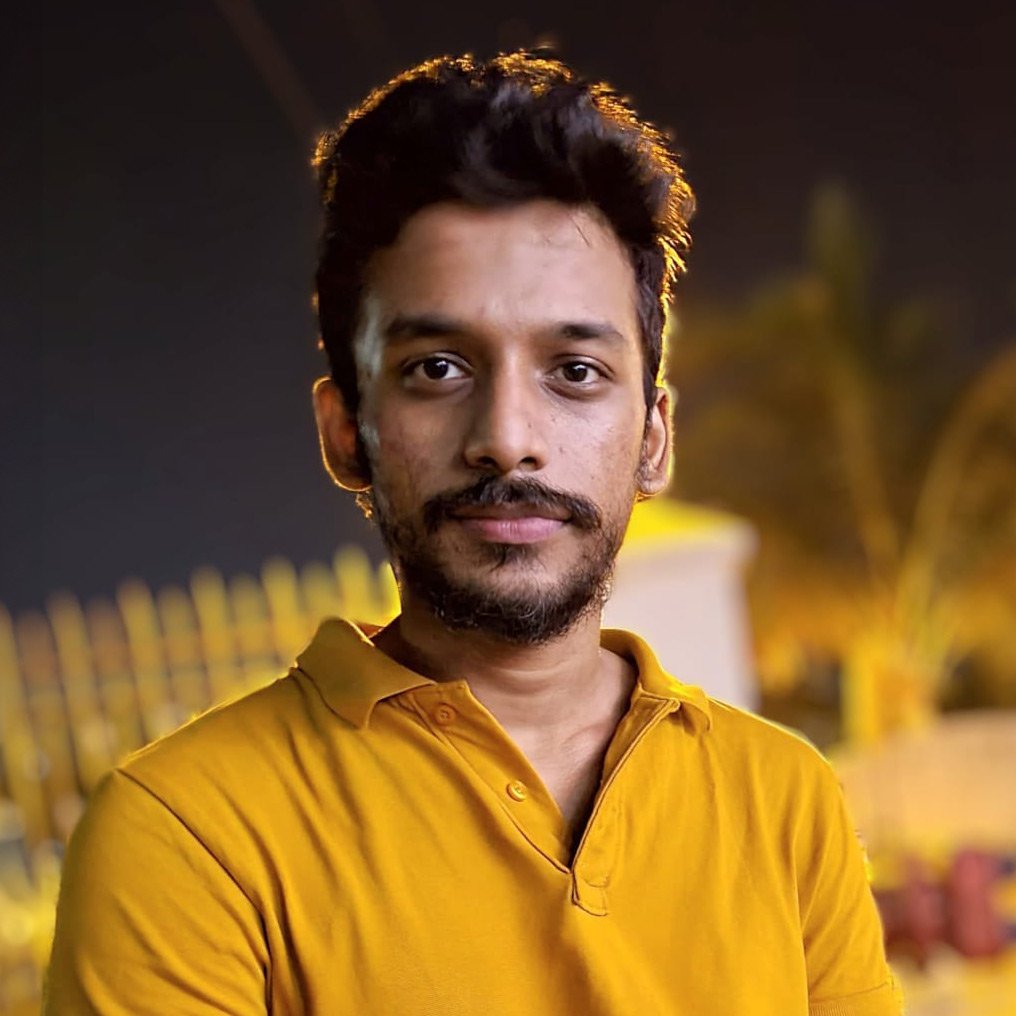
Shayeef Murshid
Mathematics and Research Faculty
B.Math and M.Math from ISI
INMO Merit List
Doctoral Scholar at Indian Statistical Institute
INMO Merit List
Doctoral Scholar at Indian Statistical Institute