Shayeef Murshid's paper got published in Cryptology ePrint Archive

Research in University: Build a Real Research Portfolio
Learn More
Research

Pre-Doctoral Research Opportunities at Cheenta

Cheenta offers pre-doctoral research opportunities for undergraduate and postgraduate students who are interested in pursuing higher studies and research in mathematics, physics, and related areas. These projects are designed to help students develop strong research skills while working closely with experienced mentors and researchers.
 
Students involved in these projects gain exposure to both research and teaching. Along with working on research problems, they also get opportunities to assist in teaching, conduct problem-solving sessions, and mentor younger students. This dual experience helps students strengthen their understanding of the subject, improve communication skills, and build a strong academic profile for future PhD or research applications.
  • Shayeef Murshid

    Doctoral Scholar at Indian Statistical Institute

    Registered Attribute-Based Encryption with Publicly Verifiable Certified Deletion, Everlasting Security, and More
    This project studies how to securely delete encrypted data in a way that guarantees it can never be recovered, even if secret keys are leaked later. Existing solutions depend on central authorities, which create security and trust issues. The research explores how certified deletion can be achieved in decentralized encryption systems with fine-grained access control. It proposes new cryptographic schemes that allow users to prove that data has been permanently deleted, with both private and public verification. The work also ensures very strong security guarantees, where data remains safe even against extremely powerful adversaries after deletion.
    learn more
  • Arka Banerjee

    Ph.D., University of Wisconsin–Milwaukee
    Postdoctoral Researcher, Auburn University

    Coarse cohomology of the complement
    This paper develops a framework for studying the coarse (co)homology of the complement of a subspace in a metric space, extending the notion of coarse (co)homology introduced by Roe. It introduces a model space that captures the coarse geometric structure of such complements and presents a new perspective on coarse Poincaré duality spaces. Using this approach, a version of coarse Alexander duality is established, along with a homological criterion for identifying coarse Poincaré duality spaces. The methods are inspired by the work of Kapovich and Kleiner but follow a distinct and more streamlined approach.
    learn more
  • Srijit Mukherjee

    BStat and MStat from Indian Statistical Institute, Pursuing PhD in Penn State University

    Hemi-brain growth as a biomarker for whole brain growth
    Accurate cerebrospinal fluid (CSF) and brain volume estimation are important components for evaluating hydrocephalus treatments, including shunts and endoscopic third ventriculostomy (ETV) procedures. While MRI-based segmentation typically provides precise measurements, metallic artifacts from implanted shunts in hydrocephalus patients can impede accurate volume determination. This study introduces a method for assessing brain growth in hydrocephalus patients using artifact-affected MRI scans and presents an efficient, automated artificial intelligence (AI)-based pipeline for hemi-brain segmentation and subsequent volume assessment.
    learn more

Invited Talks, Exciting Research

Speaker
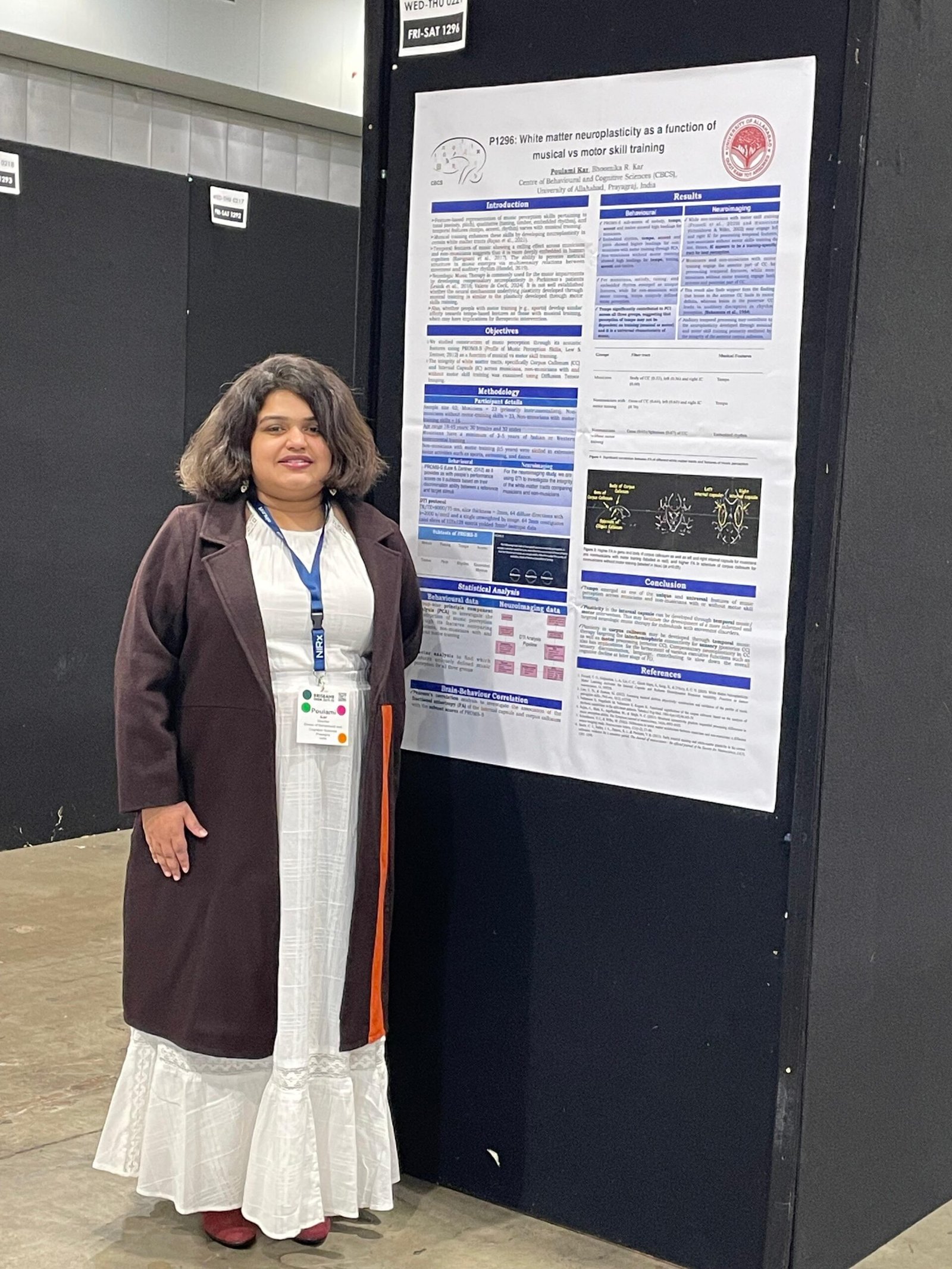
Poulami kar, Research Scientist
in University of Allahabad, India
Research Seminar : Can Math Solve Autism?
October 19, 2025 at 8:15 PM IST
Neuroimaging plays a key role in modern medicine, aiding diagnosis, surgery, and personalized treatment design. Techniques like fMRI and DTI reveal how the brain functions and connects. fMRI tracks real-time brain activity during tasks, linking behaviour to neural processes—useful for conditions like ADHD or speech disorders. DTI maps white matter tracts by measuring water diffusion, with Fractional Anisotropy (FA) indicating structural integrity. In disorders such as Parkinson’s, FA helps track disease progression and subtype differences—rigidity-dominant patients show preserved basal ganglia networks, while tremor-dominant ones involve the cerebellum. Together, these methods advance precision medicine through individualized, targeted interventions.
learn more about this seminar
Speaker
Professor Rajiv Gandhi, Professor, CS, Rutgers-Camden, Lecturer, CIS, University of Pennsylvania.
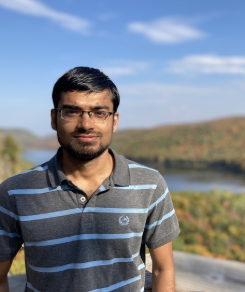
Research Seminar : An Invitation to Algorithmic Thinking and PACT
October 4, 2025 at 8:15 PM IST
Algorithmic thinking is central to computer science, research, and high-level problem solving, shaping how we convert real-world challenges into structured, efficient solutions. In this seminar, Professor Rajiv Gandhi explains how algorithmic reasoning goes beyond coding—it involves breaking problems into smaller components, identifying patterns, choosing the right data structures, and designing step-by-step strategies that are both correct and scalable. Rather than relying on trial-and-error, algorithmic thinking trains the mind to build solutions systematically, making it essential for competitive programming, olympiad-level CS, and research.
learn more about this seminar
Speaker
Dr. Arka Banerjee, Ph.D., University of Wisconsin–Milwaukee
Postdoctoral Researcher, Auburn University
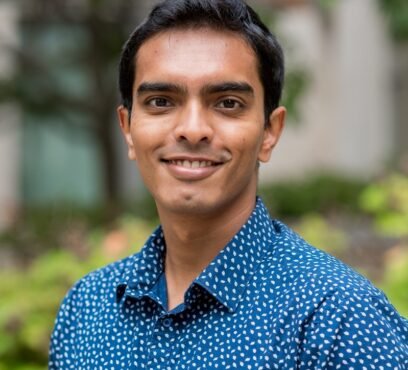
Research Seminar : On a generalization of the Cannon conjecture
November 18, 2025 at 8:15 PM IST
Neuroimaging plays a key role in modern medicine, aiding diagnosis, surgery, and personalized treatment design. Techniques like fMRI and DTI reveal how the brain functions and connects. fMRI tracks real-time brain activity during tasks, linking behaviour to neural processes—useful for conditions like ADHD or speech disorders. DTI maps white matter tracts by measuring water diffusion, with Fractional Anisotropy (FA) indicating structural integrity. In disorders such as Parkinson’s, FA helps track disease progression and subtype differences—rigidity-dominant patients show preserved basal ganglia networks, while tremor-dominant ones involve the cerebellum. Together, these methods advance precision medicine through individualized, targeted interventions.s.
learn more about this seminar
Speaker
Dr. Deep Chatterjee, Research Scientist
Massachusetts Institute of Technology
Research Seminar : Searching for Gravitational Waves
October 11, 2025 at 8:15 PM IST
Neural networks are becoming ubiquitous in our daily lives and the commercial workspace. The application of neural networks in scientific discoveries is starting to show promises. I will present such a use case in the domain of gravitational-wave data analysis in the context of the LIGO-Virgo-KAGRA ground-based gravitational-wave detectors. In particular, I'll talk about a search algorithm, Aframe, for binary black-hole signals, and a parameter estimation algorithm, AMPLFI, to infer the properties of these signals. These are deployed live, and are able to pick up and characterize candidates in less than ten seconds of data collections
learn more about this seminar
Speaker
Dr. Tattwamasi Amrutam, Assistant professor at the Institute of Mathematics, Polish Academy of Sciences
Research Seminar : When Algebra is Topology, An Invitation to C*-Algebras
August 3, 2025 at 8:15 PM IST
Dr. Amrutam introduces how topological ideas help mathematicians “visualize” algebra, making abstract objects more intuitive and structurally meaningful. The seminar motivates key concepts through examples and explains how algebraic invariants can encode geometric behaviour. Viewers are guided through how mathematical objects—often defined purely through symbols and operations—can be studied via shapes, spaces, and continuous transformations.
learn more about this seminar
Research Projects at Cheenta
Dr. Ashani Dasgupta

Dr. Ashani Dasgupta

Dr. Ashani Dasgupta specializes in geometric group theory and low-dimensional topology. His research includes relative hyperbolicity, embedding problems, Morse conditions, local connectedness of boundaries for relatively hyperbolic groups, and connectedness properties of Bowditch boundaries.

Learn More
Srijit Mukherjee

Srijit Mukherjee

Srijit Mukherjee is a PhD student in the EECS Department at Pennsylvania State University (after studies in Statistics at Indian Statistical Institute). He builds interpretable AI solutions for biomedical imaging and diseases, collaborating with doctors and engineers at Harvard and Yale. His work explores expressing "mind, information, and intelligence" through mathematics and engineering, with applications in generative AI for problem-solving and novel problem creation.

Learn More
Arka Banerjee

Arka Banerjee

Arka Banerjee (Postdoc at Auburn University) focuses on metric geometry, geometric group theory, coarse geometry, coarse cohomology, coarse embeddings, group actions on CAT(0) cube complexes, coarse Poincaré duality spaces, and topological methods in geometry and topology.
Learn More
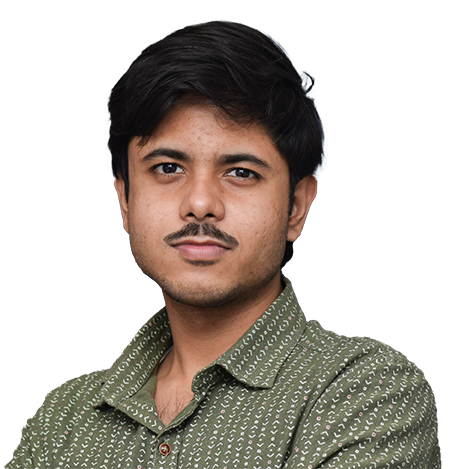
Ragunath JV

Ragunath JV

Raghunath is a PhD applicant in Pure Mathematics, with a focus on Topology, Group Theory, and allied areas. He love discussing Math Olympiad problems, particularly strategical game-theory, geometry, combinatorics problems.
Learn More
Swarnabja Bhaumick

Swarnabja Bhaumick

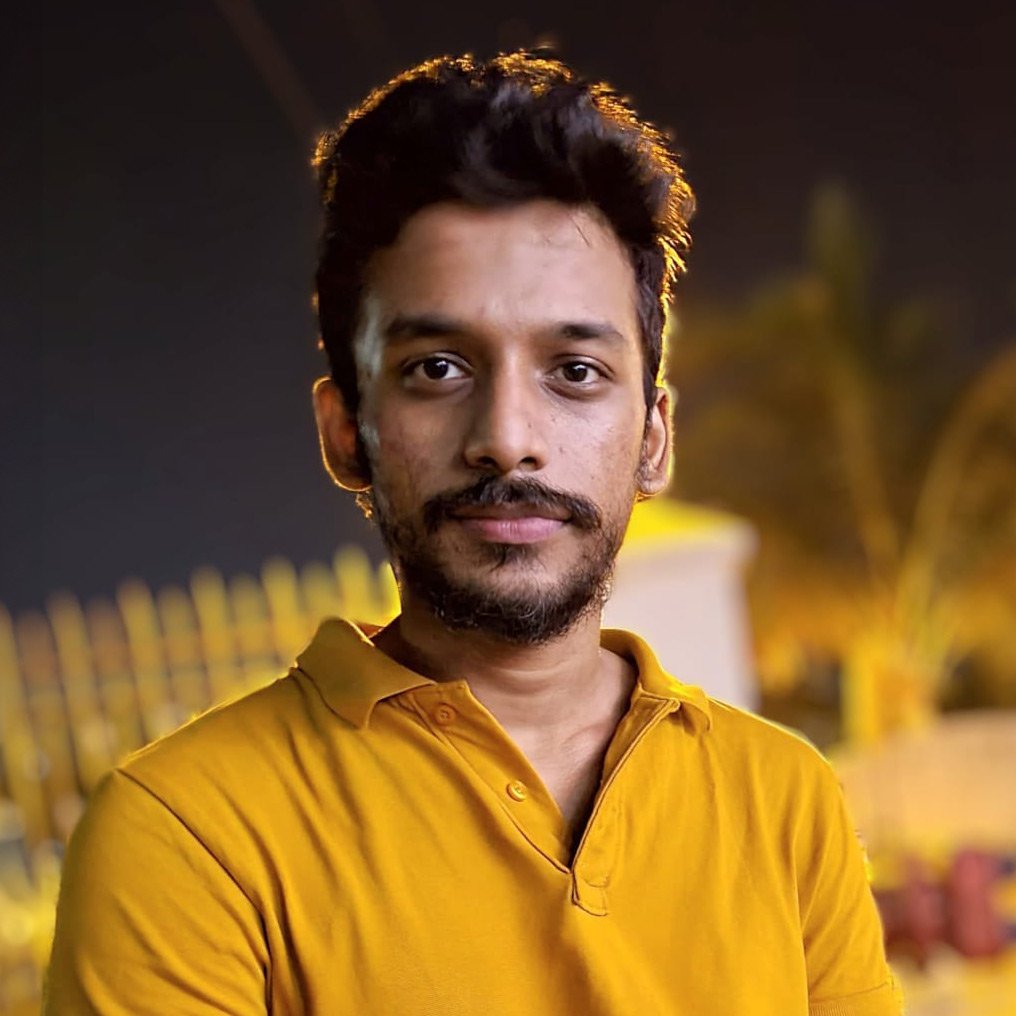
Swarnabja Bhaumick works in computer vision and machine learning, specializing in event and activity recognition in video surveillance for cyber-physical systems. His research uses deep learning methods (hybrid CNN-RNN architectures, graph-based key-frame selection, multi-tier feature fusion) to handle unconstrained videos from drones/CCTVs and achieve robust performance on benchmarks like UCF-101, HMDB, and CCV.
Learn More
Shayeef Murshid

Shayeef Murshid

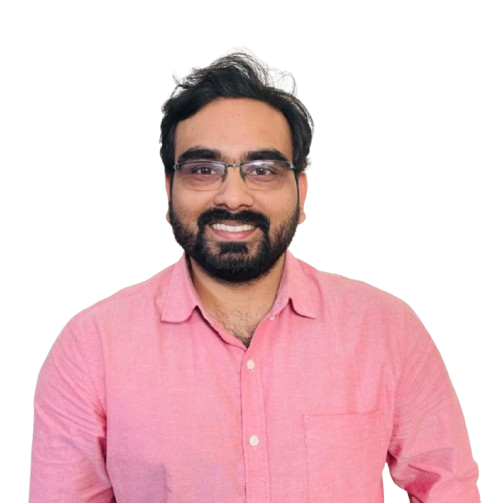
Shayeef Murshid (Indian Statistical Institute) researches quantum computing and quantum information theory, with emphasis on quantum state discrimination, nonlocality, and the intersection with quantum cryptography — including secure encryption protocols and certified data deletion mechanisms.
Learn More

Olympiad, Research, Leadership 
Mentored growth for Path to Ivy Leagues

© 2010 - 2025, Cheenta Academy. All rights reserved.
linkedin facebook pinterest youtube rss twitter instagram facebook-blank rss-blank linkedin-blank pinterest youtube twitter instagram