 in the set of residues of $latex p$ such that
  , where
  and
and  is prime is
  .
[/et_pb_text][/et_pb_column][/et_pb_row][et_pb_row _builder_version="3.25" _i="1" _address="0.1"][et_pb_column type="4_4" _builder_version="3.25" custom_padding="|||" custom_padding__hover="|||" _i="0" _address="0.1.0"][et_pb_accordion open_toggle_text_color="#0c71c3" _builder_version="3.27" toggle_font="||||||||" body_font="Raleway||||||||" text_orientation="center" custom_margin="10px||10px" hover_enabled="0" _i="0" _address="0.1.0.0"][et_pb_accordion_item title="Source of the problem" open="on" _builder_version="3.27" _i="0" _address="0.1.0.0.0" hover_enabled="0"]Brazilian Olympiad Revenge 2010
[/et_pb_accordion_item][et_pb_accordion_item title="Topic" _builder_version="3.27" _i="1" _address="0.1.0.0.1" open="off" hover_enabled="0"]Number Theory
[/et_pb_accordion_item][et_pb_accordion_item title="Difficulty Level" _builder_version="3.27" _i="2" _address="0.1.0.0.2" open="off" hover_enabled="0"]Medium
[/et_pb_accordion_item][et_pb_accordion_item title="Suggested Book" _builder_version="3.27" _i="3" _address="0.1.0.0.3" open="off" hover_enabled="0"]Elementary Number Theory by David Burton
[/et_pb_accordion_item][/et_pb_accordion][et_pb_text _builder_version="3.22.4" text_font="Raleway|300|||||||" text_text_color="#ffffff" header_font="Raleway|300|||||||" header_text_color="#e2e2e2" background_color="#0c71c3" border_radii="on|5px|5px|5px|5px" box_shadow_style="preset3" custom_margin="48px||48px" custom_padding="20px|20px|20px|20px" _i="1" _address="0.1.0.1"]
.
[/et_pb_text][/et_pb_column][/et_pb_row][et_pb_row _builder_version="3.25" _i="1" _address="0.1"][et_pb_column type="4_4" _builder_version="3.25" custom_padding="|||" custom_padding__hover="|||" _i="0" _address="0.1.0"][et_pb_accordion open_toggle_text_color="#0c71c3" _builder_version="3.27" toggle_font="||||||||" body_font="Raleway||||||||" text_orientation="center" custom_margin="10px||10px" hover_enabled="0" _i="0" _address="0.1.0.0"][et_pb_accordion_item title="Source of the problem" open="on" _builder_version="3.27" _i="0" _address="0.1.0.0.0" hover_enabled="0"]Brazilian Olympiad Revenge 2010
[/et_pb_accordion_item][et_pb_accordion_item title="Topic" _builder_version="3.27" _i="1" _address="0.1.0.0.1" open="off" hover_enabled="0"]Number Theory
[/et_pb_accordion_item][et_pb_accordion_item title="Difficulty Level" _builder_version="3.27" _i="2" _address="0.1.0.0.2" open="off" hover_enabled="0"]Medium
[/et_pb_accordion_item][et_pb_accordion_item title="Suggested Book" _builder_version="3.27" _i="3" _address="0.1.0.0.3" open="off" hover_enabled="0"]Elementary Number Theory by David Burton
[/et_pb_accordion_item][/et_pb_accordion][et_pb_text _builder_version="3.22.4" text_font="Raleway|300|||||||" text_text_color="#ffffff" header_font="Raleway|300|||||||" header_text_color="#e2e2e2" background_color="#0c71c3" border_radii="on|5px|5px|5px|5px" box_shadow_style="preset3" custom_margin="48px||48px" custom_padding="20px|20px|20px|20px" _i="1" _address="0.1.0.1"]Let us denote the residue class of $latex p$ by $latex \mathbb{Z}_p$. Show that, there exist non-zero $latex b,c$ in $latex \mathbb{Z}_p$ such that $latex y\equiv bx\;\text{mod}\; p$ and $latex z\equiv cy\;\text{mod}\; p$.
[/et_pb_tab][et_pb_tab title="Hint 3" _builder_version="3.27" _i="3" _address="0.1.0.2.3" hover_enabled="0"]From hint 2, show that $latex (1+b+bc)^2\equiv ab^2cx\;\text{mod}\;p$. This means that $latex x\equiv a^{-1}c^{-1}(1+b^{-1}+c)^2\;\text{mod}\;p$ (you need to convince yourself that the inverses exist). Now it becomes a matter of simply choosing $latex b,c$. [/et_pb_tab][et_pb_tab title="Hint 4" _builder_version="3.27" _i="4" _address="0.1.0.2.4" hover_enabled="0"]
Note that, $latex 1+b^{-1}+c$ cannot be zero. Given any $latex b\neq p-1$, there exists exactly one non-zero $latex c$ such that $latex 1+b^{-1}+c$ is 0 modulo $latex p$. Hence, in this case there are $latex (p-2)^2$ choices. For $latex b=p-1$, this special $latex c$ is actually 0. Hence in this case there are $latex p-1$ choices. Thus, the total number of choices is $latex (p-2)^2+(p-1)=p^2-4p+4+(p-1)=p^2-3p+3$. Adding to this the $latex 3p-1$ cases considered in hint 1, we get $latex p^2+1$ as the answer.
[/et_pb_tab][/et_pb_tabs][et_pb_text _builder_version="3.26.4" text_font="Raleway|300|||||||" text_text_color="#ffffff" header_font="Raleway|300|||||||" header_text_color="#e2e2e2" background_color="#0c71c3" border_radii="on|5px|5px|5px|5px" box_shadow_style="preset3" custom_margin="48px||48px" custom_padding="20px|20px|20px|20px" _i="3" _address="0.1.0.3"]Math Olympiad is the greatest and most challenging academic contest for school students. Brilliant school students from over 100 countries participate in it every year.Cheenta works with small groups of gifted students through an intense training program. It is a deeply personalized journey toward intellectual prowess and technical sophistication.[/et_pb_blurb][et_pb_button button_url="https://cheenta.com/matholympiad/" url_new_window="on" button_text="Learn More" button_alignment="center" _builder_version="3.23.3" custom_button="on" button_bg_color="#0c71c3" button_border_color="#0c71c3" button_border_radius="0px" button_font="Raleway||||||||" button_icon="%%3%%" button_text_shadow_style="preset1" box_shadow_style="preset1" box_shadow_color="#0c71c3" background_layout="dark" _i="7" _address="0.1.0.7"][/et_pb_button][et_pb_text _builder_version="3.22.4" text_font="Raleway|300|||||||" text_text_color="#ffffff" header_font="Raleway|300|||||||" header_text_color="#e2e2e2" background_color="#0c71c3" border_radii="on|5px|5px|5px|5px" box_shadow_style="preset3" custom_margin="50px||50px" custom_padding="20px|20px|20px|20px" _i="8" _address="0.1.0.8"]

Publishing original scientific research in a peer-reviewed journal is an achievement many scholars work toward for years. Achieving this feat early in one's academic journey requires exceptional intellectual rigor, creativity, and persistence. Aaditya Punatar and Muskan Sadana have reached this remarkable milestone, successfully publishing their collaborative research paper in the prestigious Journal of Emerging Investigators […]
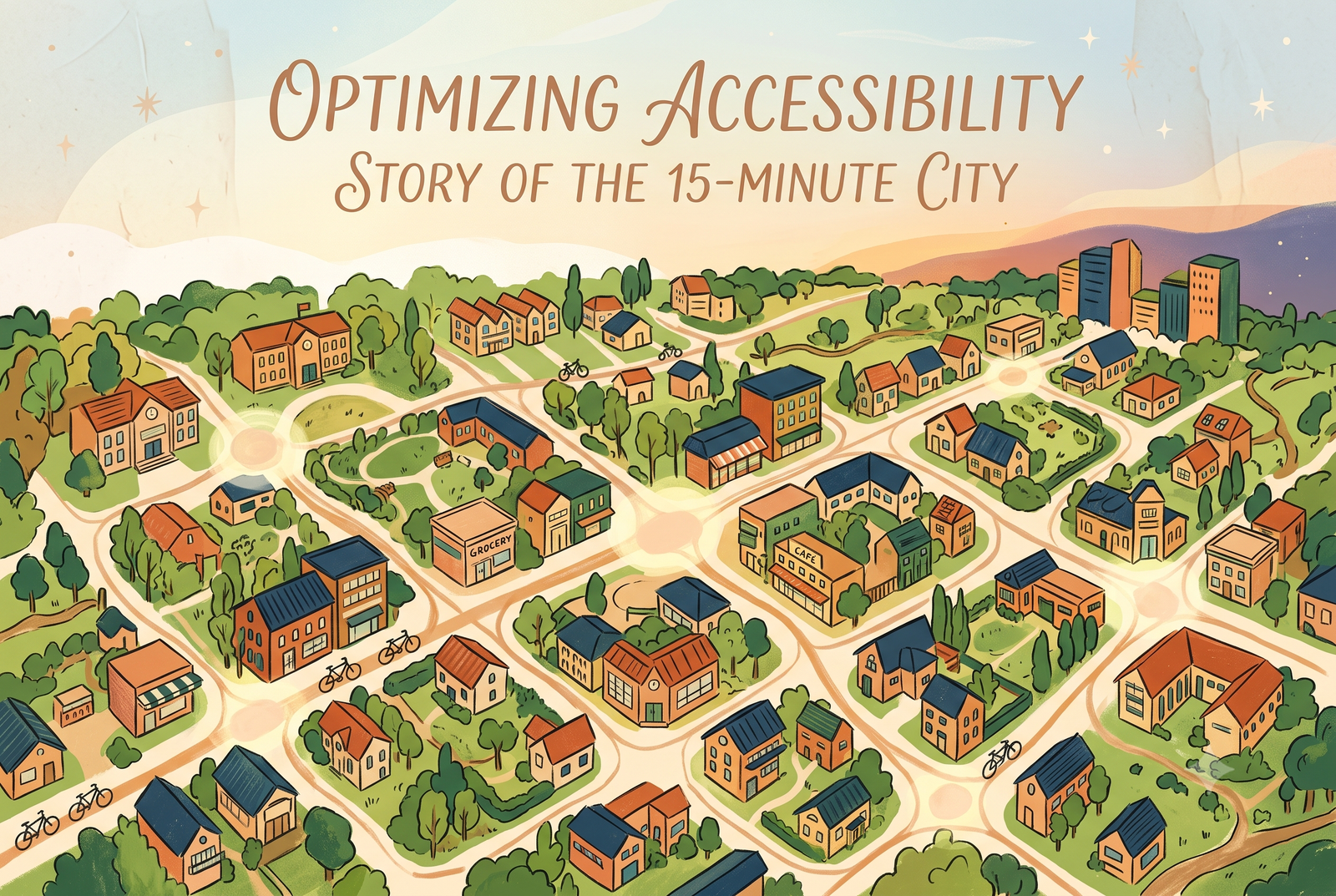
Her project on quantum-accelerated Steiner trees for 15-minute cities earned a place among the finalists at the world's largest pre-college STEM competition. Prishaa Shrimali of Marymount School of New York, was selected as a Grand Finalist at the 2026 Regeneron International Science and Engineering Fair (ISEF) in Phoenix, Arizona. Her project was Optimizing Urban Accessibility: […]

In 2026, the following Cheenta students have been successful for Indian Statistical Institute's M.Stat Entrance. They ranked within the first 50 in the entire country in these entrances. I.S.I. M.Stat Entrance
In 2026, the following Cheenta students have been successful for Indian Statistical Institute's B.Stat Entrance and Chennai Mathematical Institute's B.Sc. Math Entrance. They ranked within the first 200 in the entire country in these entrances. Most of these students attended the problem solving workshops regularly, which happen 5 days every week. CMI B.Sc. Math Entrance […]
