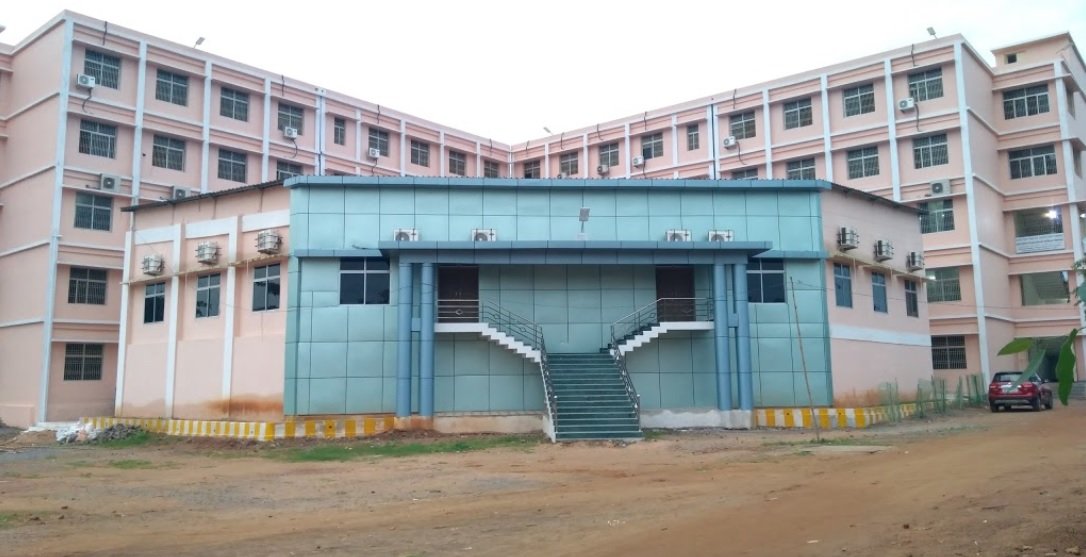
Rank of Best Math Colleges and Universities in India, 2025
What is Math Rank?
We found the best mathematics and statistics departments in Indian colleges & universities. Math Ranks are prepared at Cheenta Academy, Kolkata. Cheenta is an institute of Olympiad, Research & Leadership programs for outstanding school students.
In this document we have ranked Mathematics and Statistics departments at colleges and universities based on faculty strength (qualification, international exposure), publication in past one year, frequency of seminars - symposiums and reputation.
Why TIFR, IMSc are not in the list?
We looked at organizations offering undergraduate programs. TIFR and IMSc. do not fit that description. Nevertheless they are among best places of mathematical research in the country.
Read with Caution
We have compiled research activities, seminars and faculty strength carefully. However this process is not error-free. We welcome (and infact need) more input from colleges and universities to improve this list.
You may send your suggestions to helpdesk@cheenta.com.
The sole purpose of this document is to assist students in high school to choose colleges and universities at the undergraduate level.
Understand
The top 50 institutions are ranked in 5 Levels based on research intensity and reputation. However the institutes inside each level are not “ranked” per-se. For example Chennai Mathematical Institute and Indian Statistical Institute are both in Level 1. We have avoided ranking one ahead of the other.
Rank: In top 1 to 10
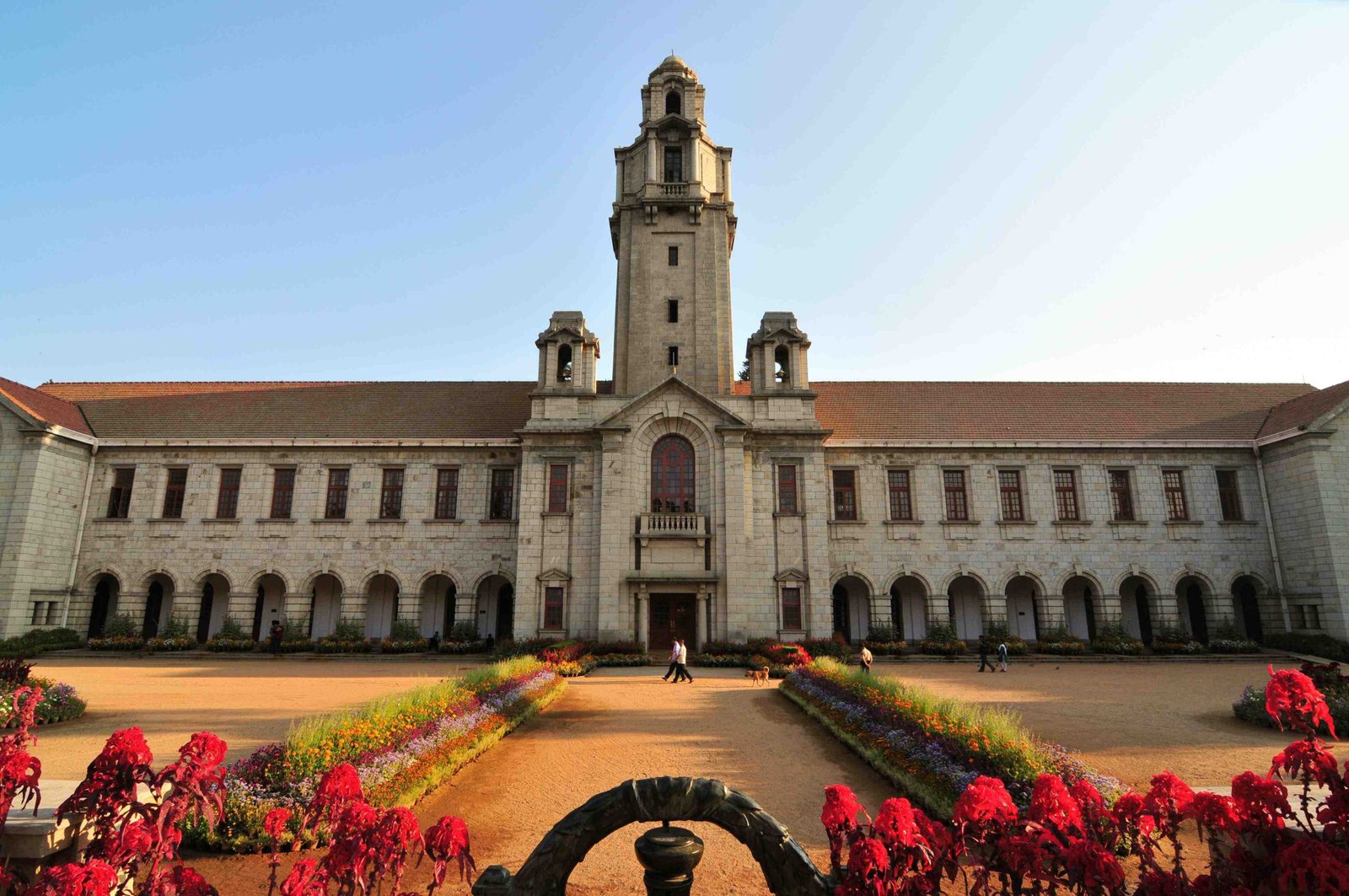
Indian Institute of Science, Karnataka
- 28 Faculty members
- 98 journal publications in 2024
- 154 seminars related in mathematical science in 2024
- 138 seats (this includes 20% supernumerary seats for women and 5 seats for foreign nationals and OCI(F))
Admission Process
Admission is based on performance in one of the following national examinations: Joint Entrance Examination Main, Joint Entrance
Examination Advanced.
Specimen of Research
Characters Twisted by Roots of Unity; Arvind Ayyer et al.
Rank: In top 1 to 10
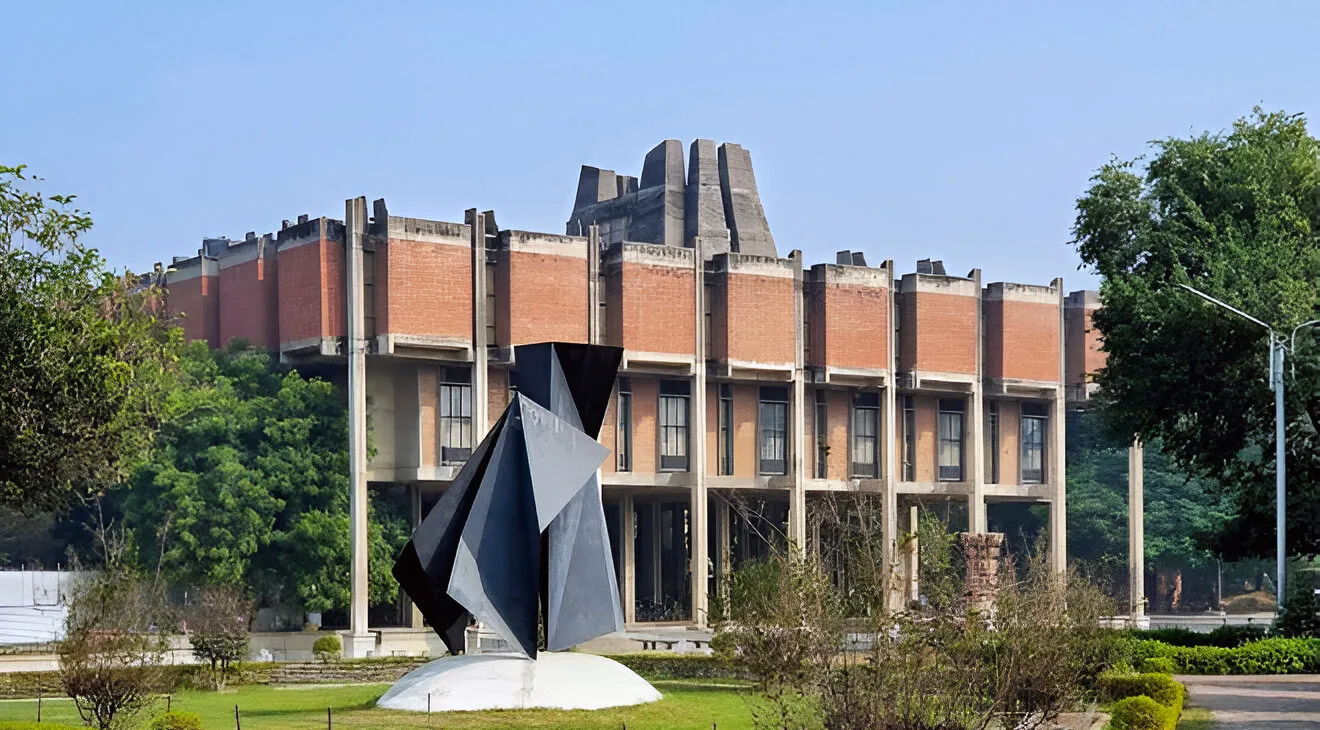
Indian Institute of Technology, Kanpur
- 53 Faculty members
- 205 journal publications in 2024
- 29 seminars related in mathematical science in 2024
- 64 seats
Admission Process
Admission is based on the Joint Entrance Examination (JEE) Advanced rank.
Specimen of Research
Global analysis of acoustic frequency characteristics in birds; Akash Anand et al.
Rank: In top 1 to 10
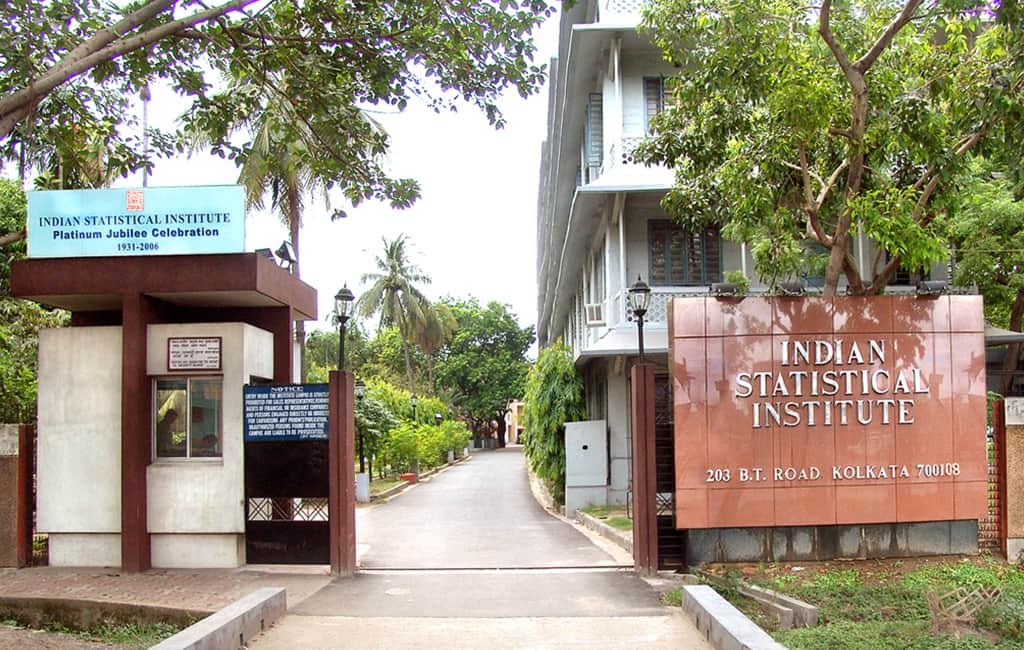
Indian Statistical Institute, Kolkata
- 28 Faculty members
- 51 journal publications in 2024
- 109 seminars related in mathematical science in 2024
- 50 seats
Admission Process
ISI Admission Test - Objective Section (MCQs), Descriptive Section. Interview (Shortlisted candidate).
Specimen of Research
On high-dimensional modifications of the nearest neighbor classifier;
Anil K. Ghosh et al.
Rank: In top 1 to 10
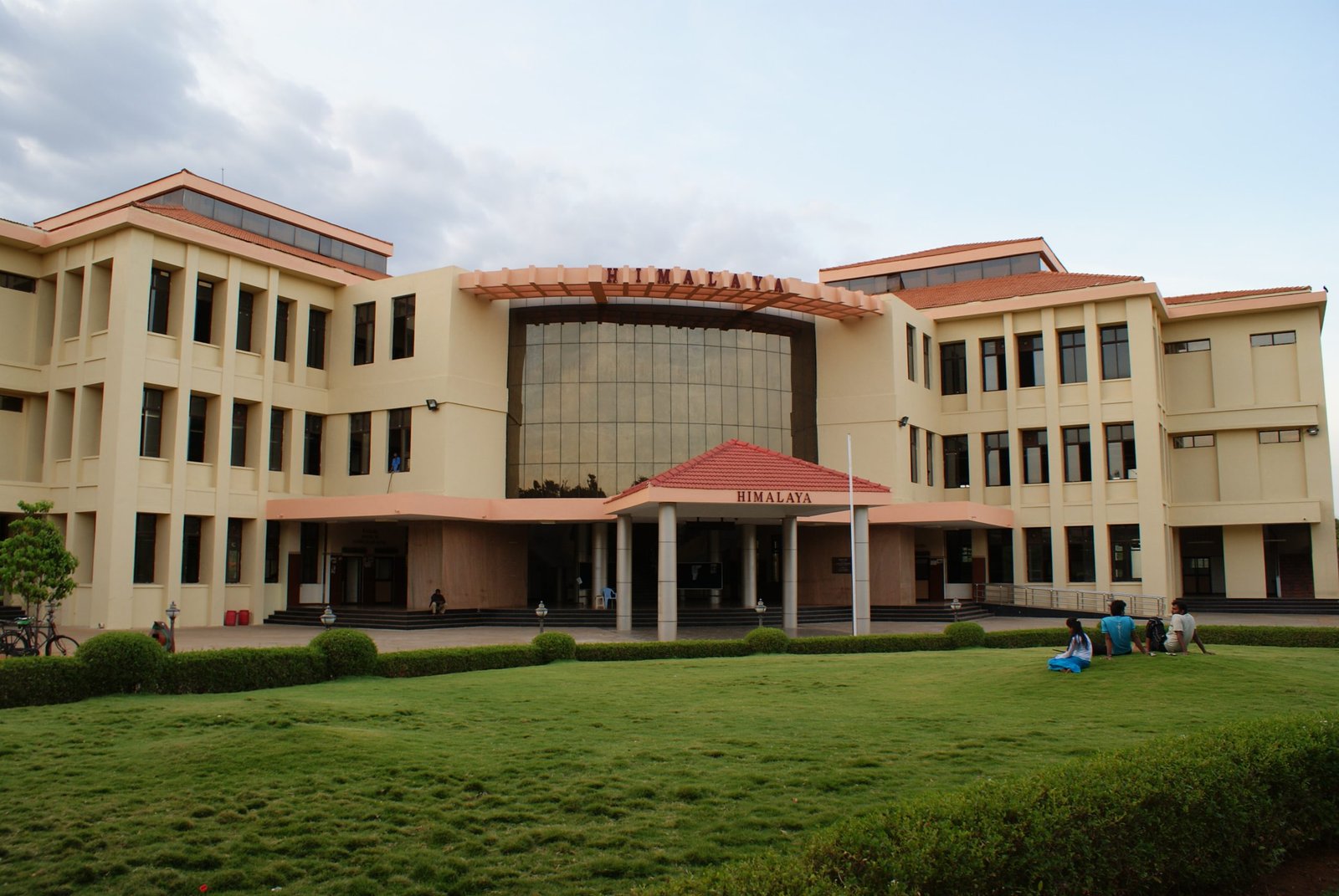
Indian Institute Of Technology, Madras
- 45 Faculty members
- 140 journal publications in 2024
- 38 seminars related in mathematical science in 2024
- varies from time to time
Admission Process
Admission is based on the Joint Entrance Examination (JEE) Main rank.
Specimen of Research
Neumann Domains of Planar Analytic Eigenfunctions; Akash Anand et al.
Rank: In top 5 to 10
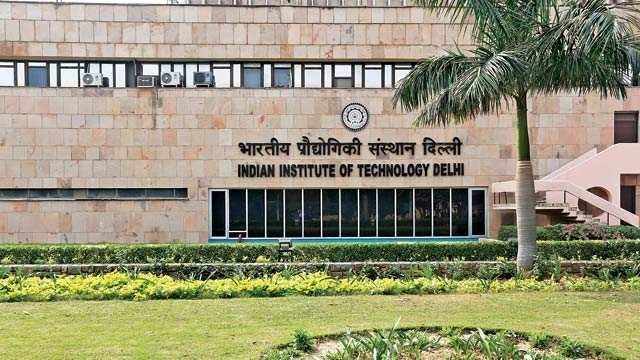
Indian Institute Of Technology, Delhi
- 43 Faculty members
- 180 journal publications in 2024
- 1 seminar related in mathematical science in 2024
- varies from time to time
Admission Process
Admission is based on the Joint Entrance Examination (JEE) Main rank.
Specimen of Research
Fractal dimensions of fractal transformations and quantization dimensions for bi-Lipschitz mappings; Amit Priyadarshi et al.
Rank: In top 1 to 10
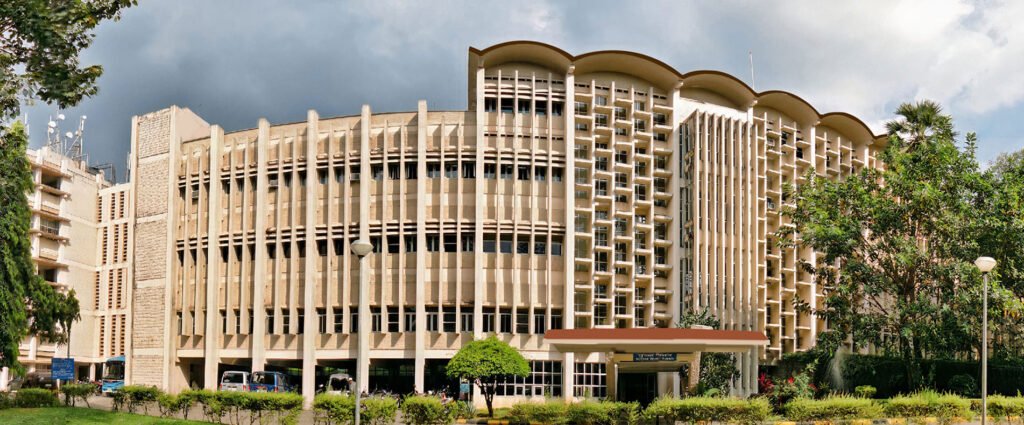
Indian Institute Of Technology, Bombay
- 49 Faculty members
- 115 journal publications in 2024
- 6 seminars related in mathematical science in 2024
- 18 seats
Admission Process
Admission is based on the Joint Entrance Examination (JEE) Advanced rank.
Specimen of Research
Low-rank matrices, tournaments, and symmetric designs; Niranjan Balachandran et al.
Rank: In top 1 to 10
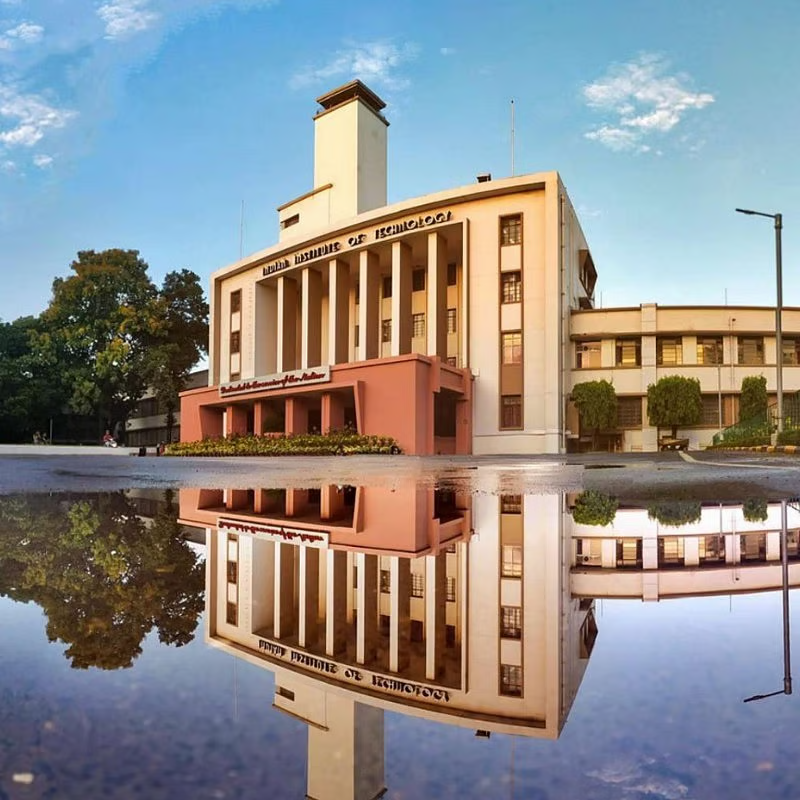
Indian Institute Of Technology Kharagpur
- 37 Faculty members
- 147 journal publications in 2024
- 15 seminars related in mathematical science in 2024
- 69 seats
Admission Process
Admission is based on the Joint Entrance Examination (JEE) Main rank.
Specimen of Research
Minsum Problem for Discrete and Weighted Set Flow on Dynamic Path Network; Bodhayan Roy et al.
Rank: In top 1 to 10
Chennai Mathematical Institute
- 18 Faculty members
- 57 journal publications in 2024
- 66 seminars related in mathematical science in 2024
- 30 seats
Admission Process
CMI Entrance Exam, conducted in May. Direct Admission via National Olympiads In Mathematics - Mathematical Olympiad (RMO, INMO)
Specimen of Research
Untangling Climate’s Complexity: Methodological Insights; Sourish Das et al.
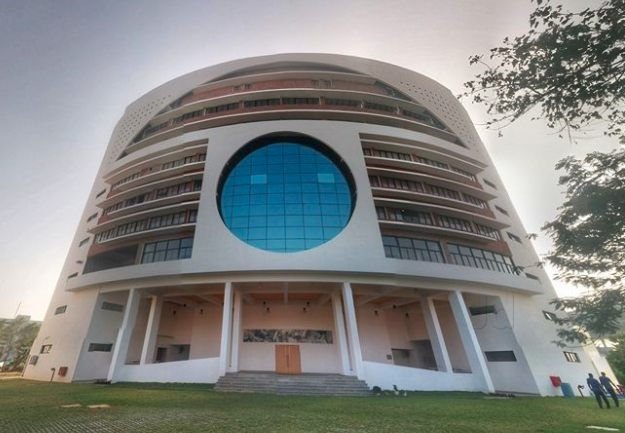
Rank: In top 1 to 10
IISER Mohali
- 21 Faculty members
- 34 journal publications in 2024
- 59 seminars related in mathematical science in 2024
- 270 seats
Admission Process
Admission is primarily through the IISER Aptitude Test (IAT). The IAT assesses proficiency in Physics, Chemistry, Mathematics, and Biology.
Specimen of Research
Automorphic Word Maps and Amit–ashurst Conjecture; Amit Kulshrestha et al.
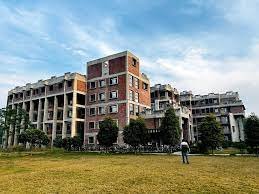
Rank: In top 1 to 10
IISER Thiruvananthapuram
- 24 Faculty members
- 44 journal publications in 2024
- 72 seminars related in mathematical science in 2024
- 180 seats
Admission Process
Admission is primarily through the IISER Aptitude Test (IAT). The IAT assesses proficiency in Physics, Chemistry, Mathematics, and Biology.
Specimen of Research
Well-posedness of Three-dimensional Damped Cahn-hilliard-navier-stokes Equations; Dharmatti Sheetal et al.
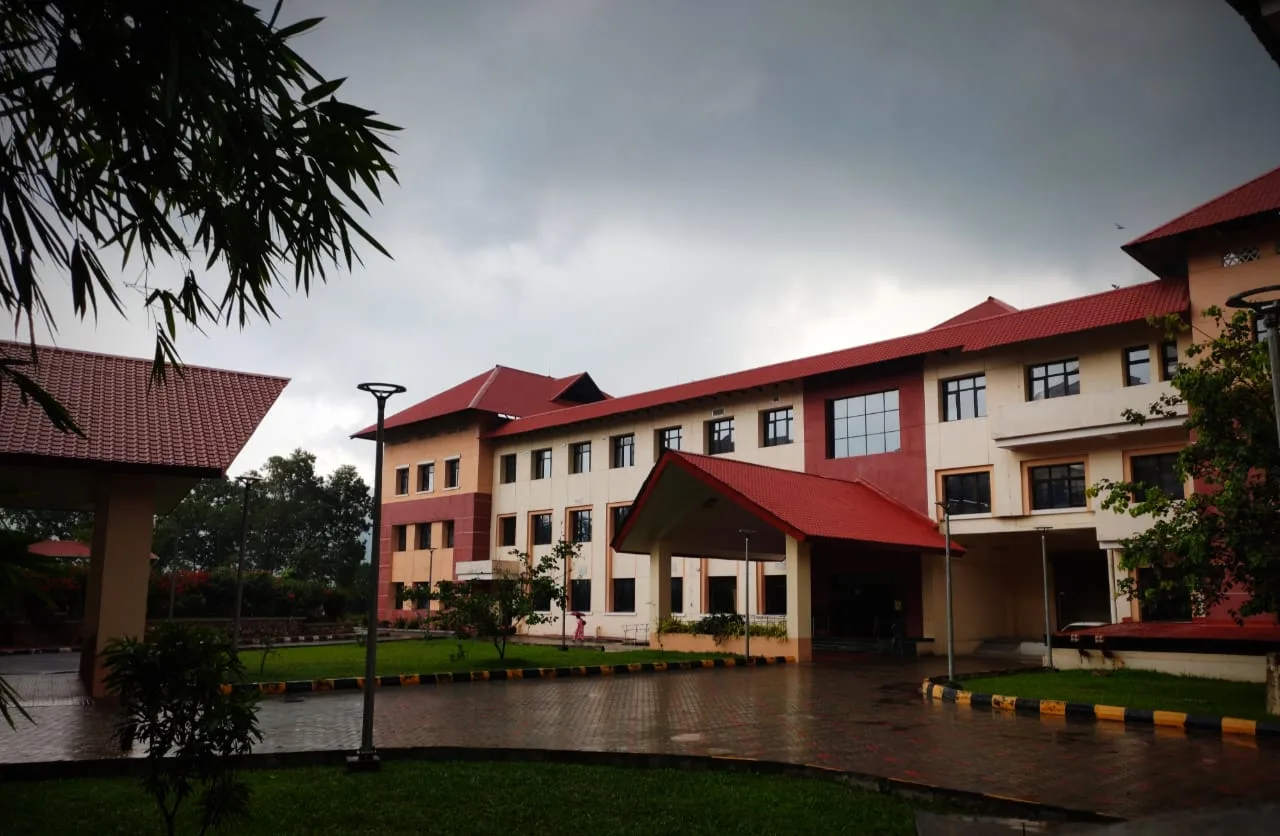
Rank: In top 11 to 20
NISER
- 22 Faculty members
- 36 journal publications in 2024
- 3 seminars related in mathematical science in 2024
- 200 seats
Admission Process
Admission for the Bachelor Programme are conducted via National Entrance Screening Test (NEST), the pan-India test that NISER and CEBS, Mumbai jointly conduct for intake of students into the flagship Integrated BSc programme of these institutions.
Specimen of Research
Coexistence of Hilbert Space Effects and Orthogonality; Anil Kumar Karn.
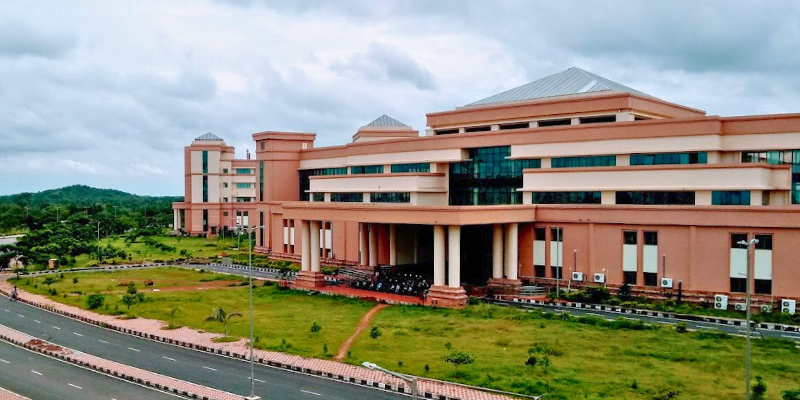
Rank: In top 11 to 20
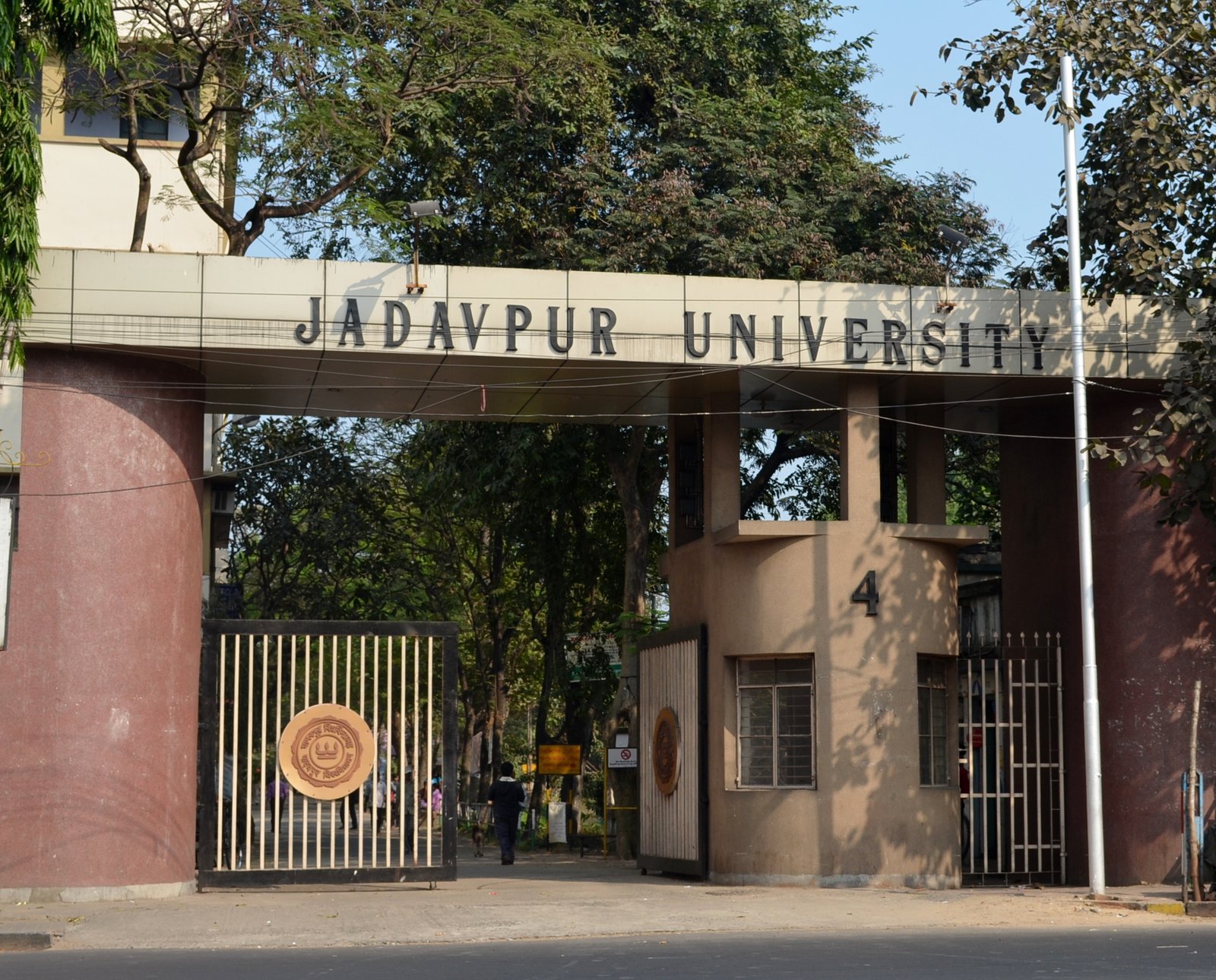
Jadavpur University
- 34 Faculty members
- 192 journal publications in 2024
- 0 seminar related in mathematical science in 2024
- 75 seats
Admission Process
Admission is based strictly on the marks obtained in the 10+2 Board examination. There is no admission test for the B.Sc. Mathematics program.
Specimen of Research
Ion-acoustic solitary structures in electron-ion dusty plasma; Anup Bandyopadhyay et al.
Rank: In top 11 to 20
Indian Institute Of Technology Roorkee
- 28 Faculty members
- 174 journal publications in 2024
- 0 seminar related in mathematical science in 2024
- 49 seats
Admission Process
Admission is based on the Joint Entrance Examination (JEE) Main and Advanced rank.
Specimen of Research
Can isothermal plane Couette flow in fluid overlying porous layer be linearly unstable? Premananda Bera et al.

Rank: In top 11 to 20
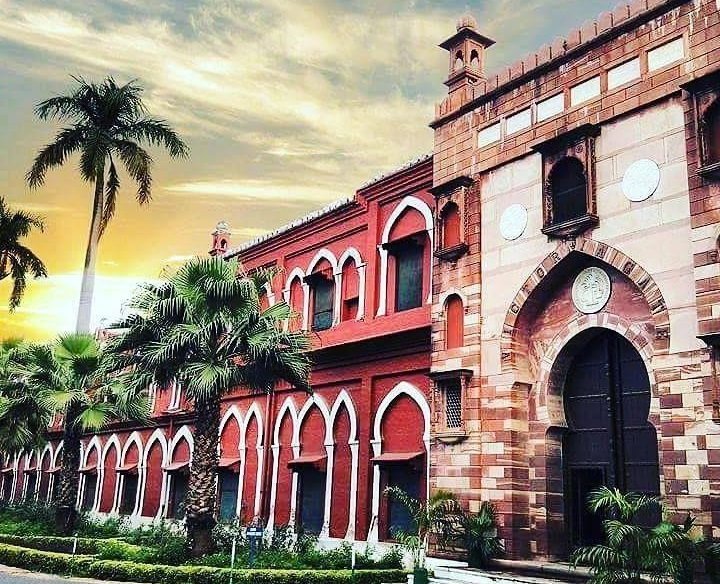
Aligarh Muslim University
- 26 Faculty members
- 143 journal publications in 2024
- 1 seminar related in mathematical science in 2024
- 120 seats
Admission Process
Admission is based on the candidate's performance in the CUET, conducted by the National Testing Agency (NTA).
Specimen of Research
The Impact of Seed Size on Initial Drought Stress Resilience and Yield in Wheat Cultivation; Shakir Ali et al.
Rank: In top 11 to 20
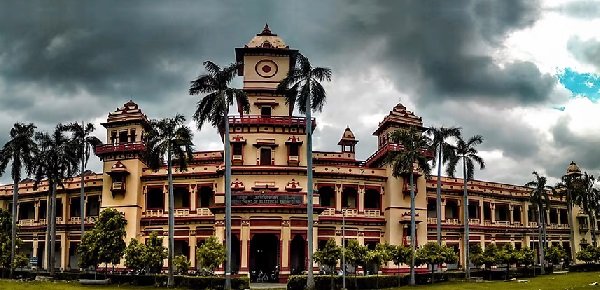
Banaras Hindu University
- 25 Faculty members
- 132 journal publications in 2024
- 2 seminars related in mathematical science in 2024
- 573 seats
Admission Process
Admission is based on the candidate's performance in the CUET, conducted by the National Testing Agency (NTA).
Specimen of Research
Modeling the impacts of chemical substances and time delay to mitigate regional atmospheric pollutants and enhance rainfall; A K Misra et al.
Rank: In top 11 to 20
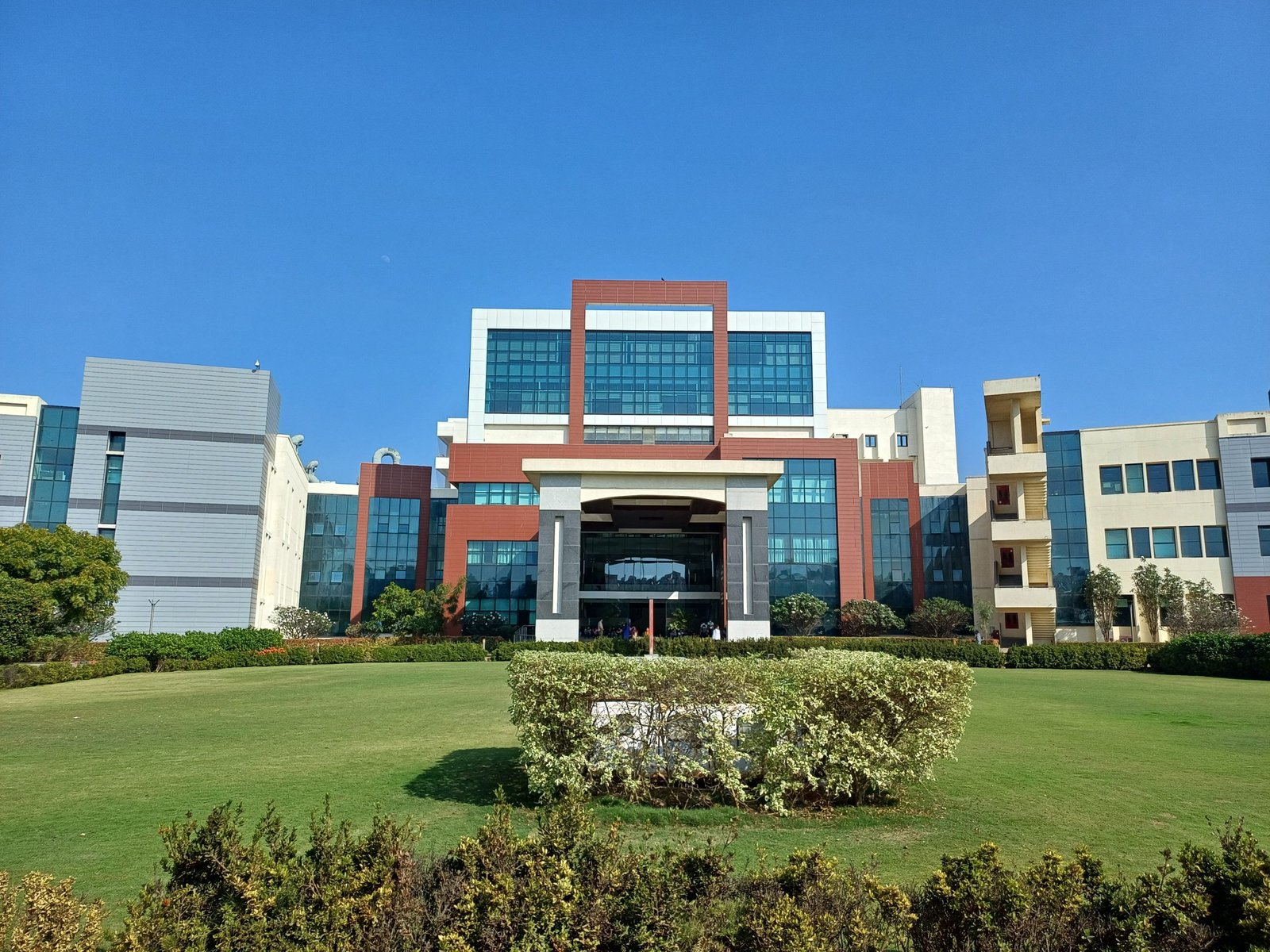
IISER Pune
- 25 Faculty members
- 66 journal publications in 2024
- 17 seminars related in mathematical science in 2024
- 288 seats approximately
Admission Process
Admission is primarily through the IISER Aptitude Test (IAT). The IAT assesses proficiency in Physics, Chemistry, Mathematics, and Biology.
Specimen of Research
A Motivic Riemann-roch Theorem for Deligne-mumford Stacks; Amit Hogadi et al.
Rank: In top 11 to 20
IISER Bhopal
- 23 Faculty members
- 48 journal publications in 2024
- 38 seminars related in mathematical science in 2024
- The number of seats is not specified
Admission Process
Admission is primarily through the IISER Aptitude Test (IAT). The IAT assesses proficiency in Physics, Chemistry, Mathematics, and Biology.
Specimen of Research
Hecke Eigenvalues And Fourier–jacobi Coefficients Of Siegel Cusp Forms of Degree 2; Karam Deo Shankhadhar et al.
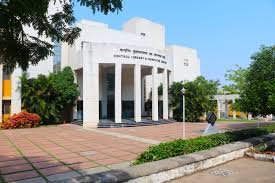
Rank: In top 11 to 20
BITS Pilani
- 21 Faculty members
- 121 journal publications in 2024
- 0 seminar related in mathematical science in 2024
- The number of seats is not specified
Admission Process
BITSAT (BITS Admission Test): Admission is based on the candidate's performance in BITSAT, a computer-based online test conducted by BITS Pilani.
Specimen of Research
A Parameter-uniform Implicit Approach for Two-parameter Singularly Perturbed Parabolic Problems; Devendra Kumar et al.
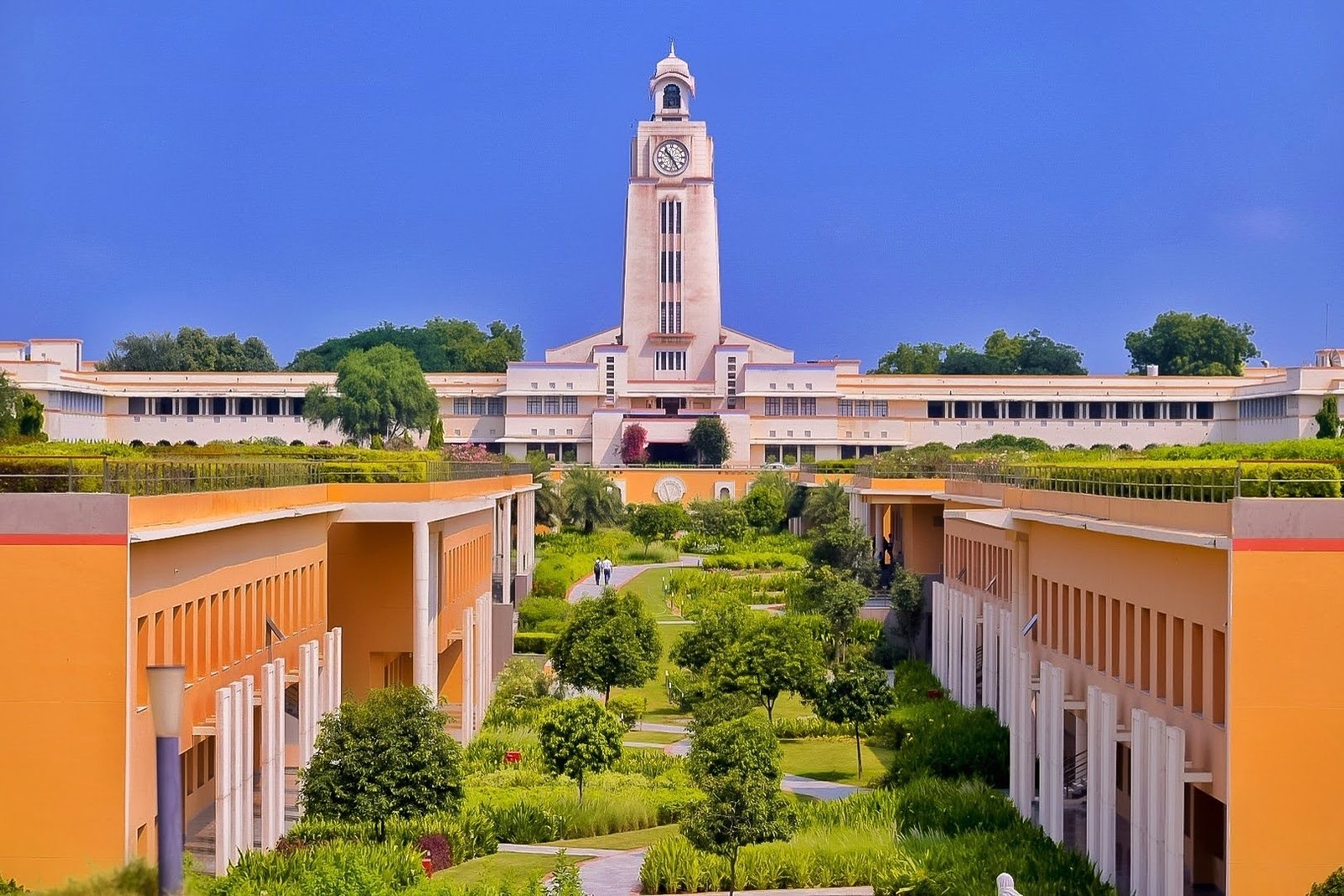
Rank: In top 11 to 20
Anna University
- 36 Faculty members
- 27 journal publications in 2024
- 0 seminar related in mathematical science in 2024
- 100 seats approximately
Admission Process
Admission is based on merit and TANCET counseling.
Specimen of Research
Global analysis of acoustic frequency characteristics in birds; Akash Anand et al.
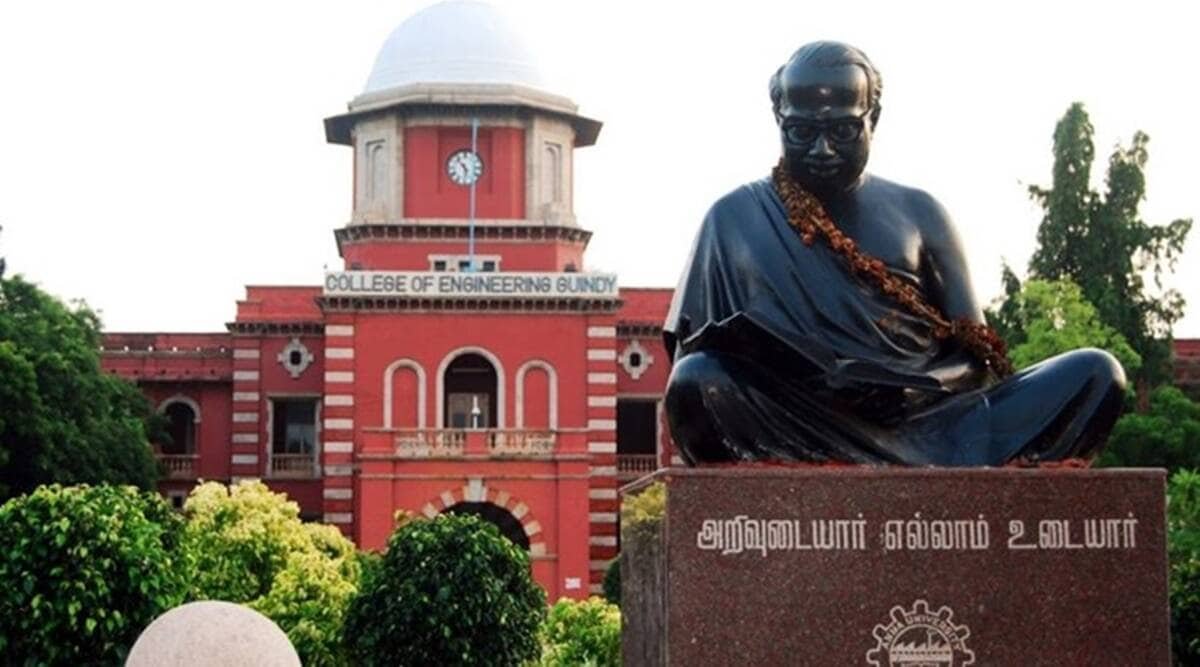
Rank: In top 11 to 20
IISER Kolkata
- 18 Faculty members
- 36 journal publications in 2024
- 29 seminar related in mathematical science in 2024
- The seat limit is not clearly specified
Admission Process
Direct Admission is based Candidates JEE Advanced rank within a specified cutoff. Candidates who have passed 10+2 with science subjects but do not have JEE Advanced eligibility can appear for the IISER Aptitude Test
Specimen of Research
Mean Residual Life Ageing Intensity Function;
Asok K. Nanda et al.
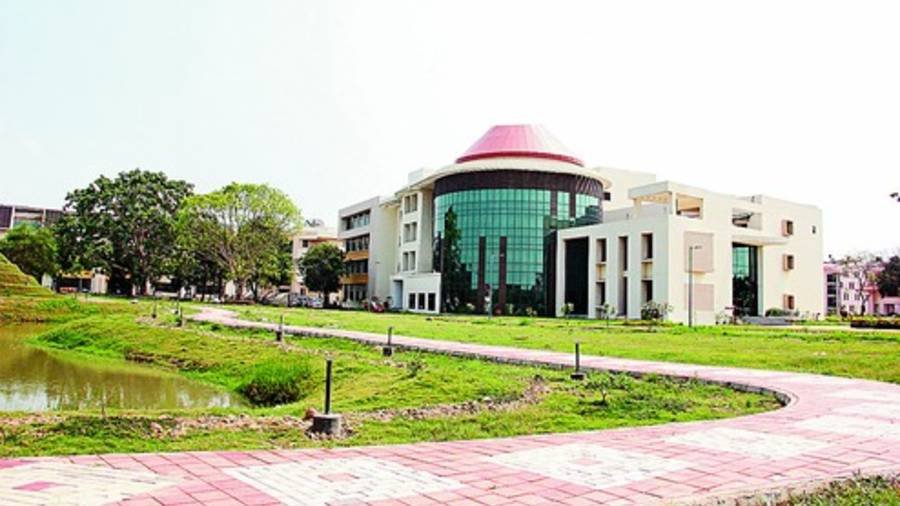
Rank: In top 21 to 30
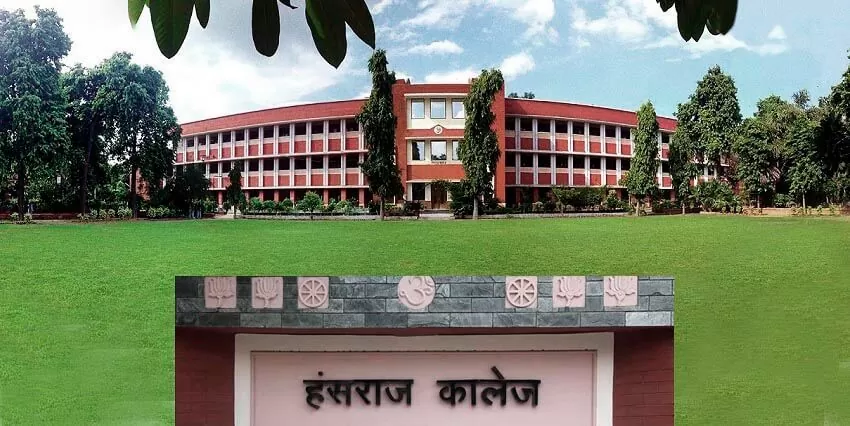
Hansraj College
- 21 Faculty members
- 21 journal publications in 2024
- 4 seminars related in mathematical science in 2024
- 101 seats approximately
Admission Process
Admission is based on the candidate's performance in the CUET exam
Specimen of Research
Conjugacy Classes of Automorphisms of the Unit Ball in a Complex Hilbert Space; Mukund Madhav Mishra et al.
Rank: In top 21 to 30
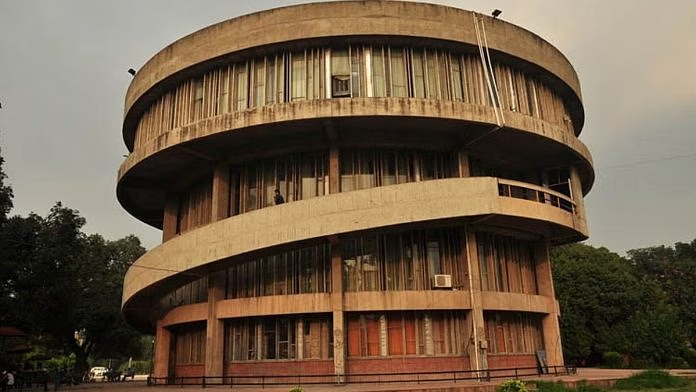
Panjab University
- 21 Faculty members
- 40 journal publications in 2024
- 0 seminar related in mathematical science in 2024
- 35 seats approximately
Admission Process
Admission is based on the candidate's performance in the iPanjab University Common Entrance Test (Undergraduate) [PU-CET (U.G.)].
Specimen of Research
Corrigendum to “The discriminant of compositum of algebraic number fields”; Mukund Madhav Mishra et al.
Rank: In top 21 to 30
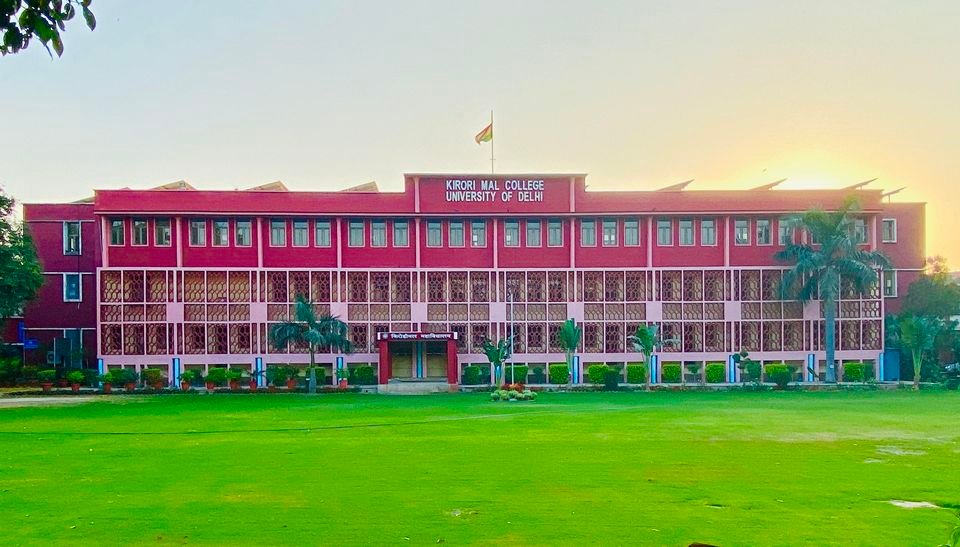
Kirori Mal College
- 20 Faculty members
- 17 journal publications in 2024
- 1 seminar related in mathematical science in 2024
- 83 seats approximately
Admission Process
Admission is based on the candidate's performance in the CUET exam
Specimen of Research
Frames as Operator Orbits for Quaternionic Hilbert spaces; Dr. Shiv Kumar Kaushik et al.
Rank: In top 21 to 30
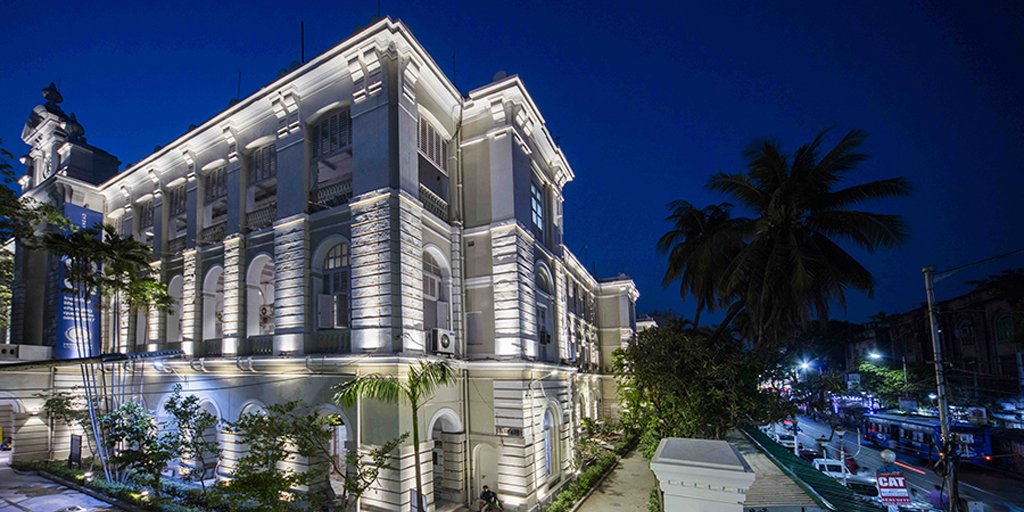
Presidency College
- 13 Faculty members
- 55 journal publications in 2024
- 16 seminars related in mathematical science in 2024
- 53 seats approximately
Admission Process
Admission is based on the Presidency University Bachelor Degree Entrance Test (PUBDET)
Specimen of Research
On the Design of a Searchable Encryption Protocol for Keyword Search using Proactive Secret Sharing;
Avishek Adhikari et al.
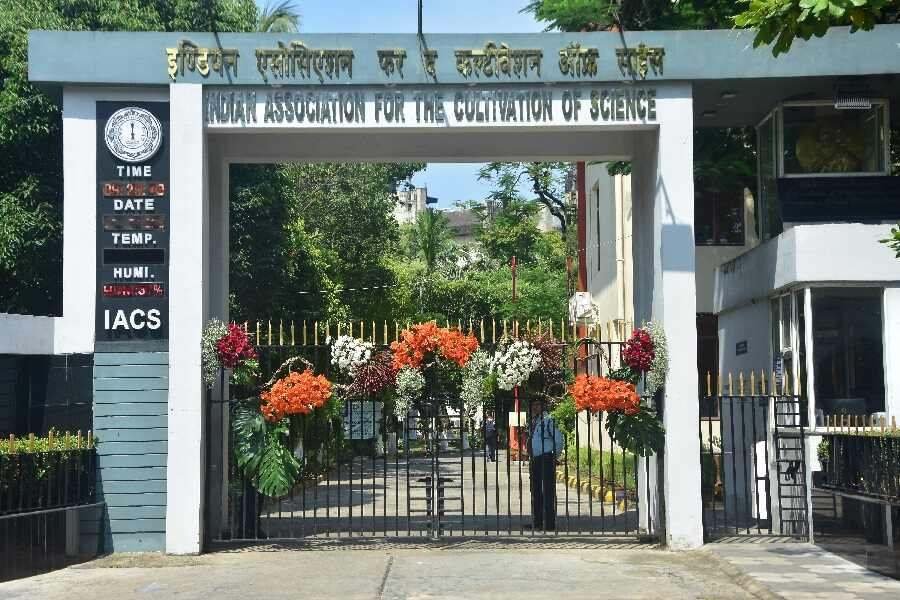
Rank: In top 25 to 30
Indian Association for the Cultivation of Science
- 8 Faculty members
- 35 journal publications in 2024
- 0 seminar related in mathematical science in 2024
- 80 seats approximately
Admission Process
Admission is primarily based on performance in the UG Pre-Interview Screening Test (UPST) and the subsequent interview.
Specimen of Research
ARCH-COMP 2024 Category Report: Falsification; Rajarshi Ray et al.
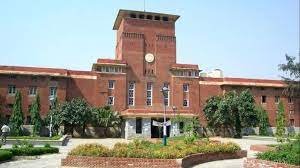
Rank: In top 21 to 30
Miranda House
- 17 Faculty members
- 8 journal publications in 2024
- 0 seminar related in mathematical science in 2024
- 88 seats approximately
Admission Process
Admission is based on the candidate's performance in the CUET exam
Specimen of Research
On scalarization and well-posedness in set optimization with a partial set order relation; Manjari Srivastava et al.
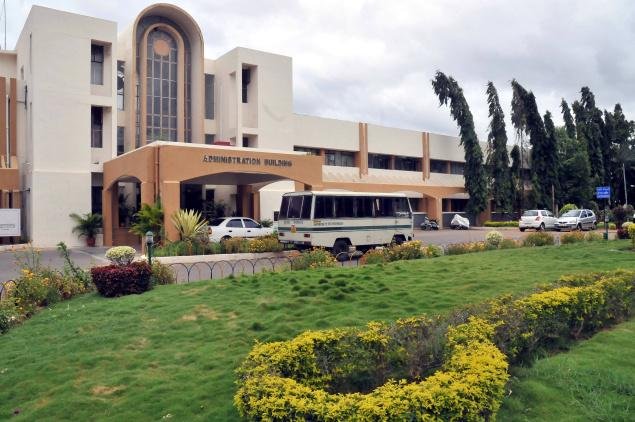
Rank: In top 21 to 30
University of Hyderabad
- 18 Faculty members
- 9 journal publications in 2024
- 0 seminar related in mathematical science in 2024
- 121 seats approximately
Admission Process
Admission is based on the candidate's performance in the CUET exam
Specimen of Research
Analysis of Stability, Bifurcation, and Chaos in Generalized Mackey-Glass Equations; Sachin Bhalekar et al.
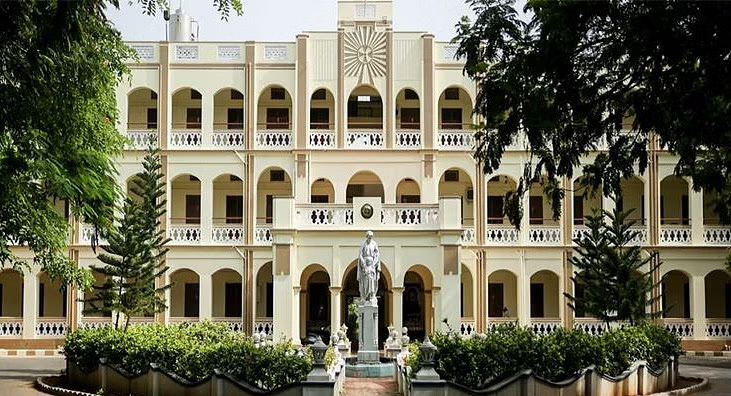
Rank: In top 21 to 30
Loyola College
- 18 Faculty members
- 43 journal publications in 2024
- 4 seminars related in mathematical science in 2024
- The number of seats is not specified
Admission Process
Admission is based on the candidate's score in the 10+2 exam
Specimen of Research
Molecular descriptors of symmetrically configured carbon nanocones via quotient graph technique; D. Antony Xavier et al.
Rank: In top 29 to 30
St. Joseph's College
- 25 Faculty members
- 9 journal publications in 2024
- 19 seminars related in mathematical science in 2024
- The number of seats is not specified
Admission Process
Admission is based on the candidate's performance in the St. Joseph’s University Entrance Test (SJUET), followed by personal interviews.
Specimen of Research
Poisson Input and Exponential Service Time Finite Capacity Interdependent Queueing Model with Breakdown and Controllable Arrival Rates; M Thiagarajan et al.
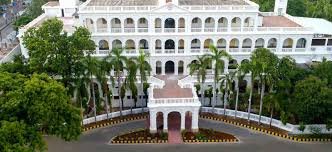
Rank: In top 21 to 30
Jamia Millia Islamia
- 16 Faculty members
- 33 journal publications in 2024
- 0 seminar related in mathematical science in 2024
- 45 setas
Admission Process
Admission is based on the candidate's performance in the CUET exam
Specimen of Research
Couette flow of viscoelastic dusty fluid through a porous oscillating plate in a rotating frame along with heat transfer; Arshad Khan et al.
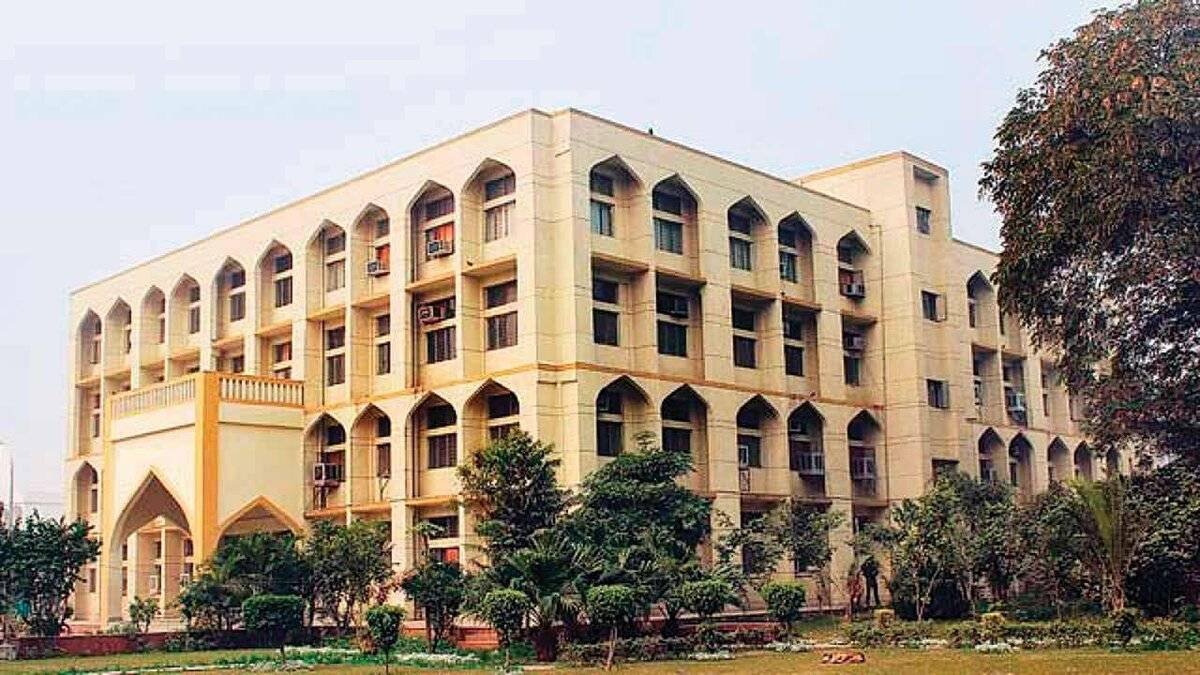
Rank: In top 31 to 40
Ramjas College
- 17 Faculty members
- 14 journal publications in 2024
- 0 seminar related in mathematical science in 2024
- 100 setas
Admission Process
Admission is based on the candidate's performance in the CUET exam
Specimen of Research
\text { Rationalized Toeplitz Hankel operators on the space of Torus } L^2\left(T^n\right); Ruchika Verma et al.
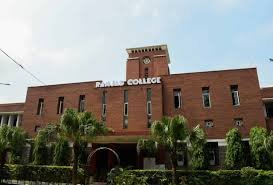
Rank: In top 31 to 40
Thiagarajar College
- 26 Faculty members
- 22 journal publications in 2024
- 0 seminar related in mathematical science in 2024
- The seat limit is not clearly specified
Admission Process
Admission is based on the candidate's score in the 10+2 exam
Specimen of Research
Econometric and stochastic analysis of stock price before and during COVID‑19 in India; Madhavan Madheswaran et al.
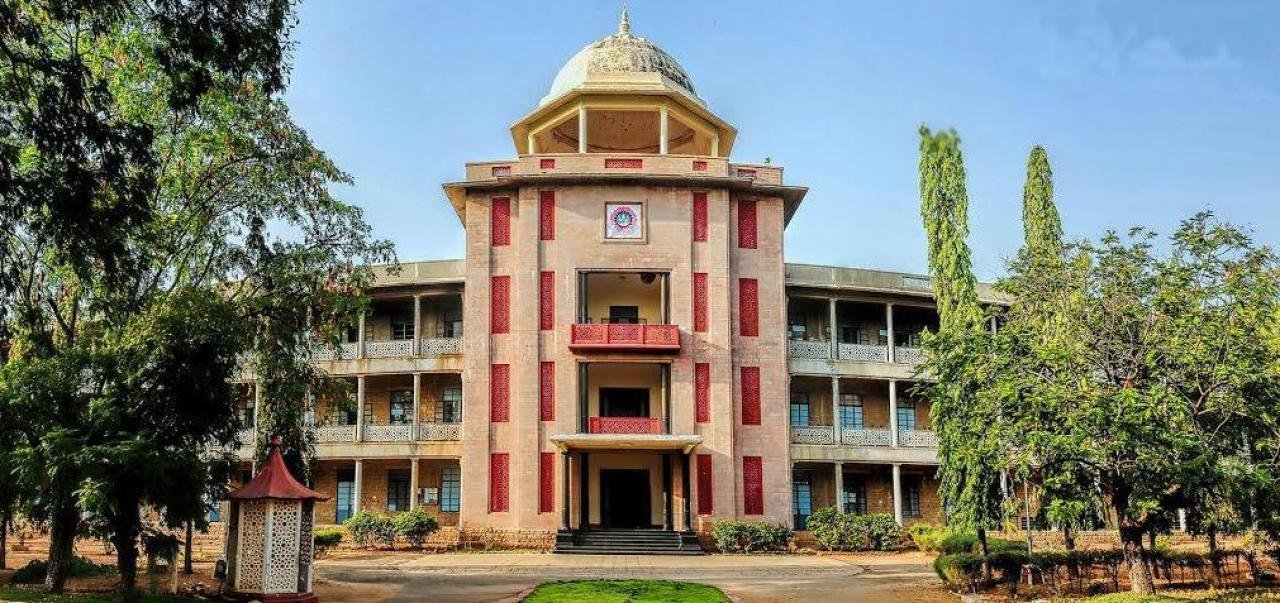
Rank: In top 31 to 40
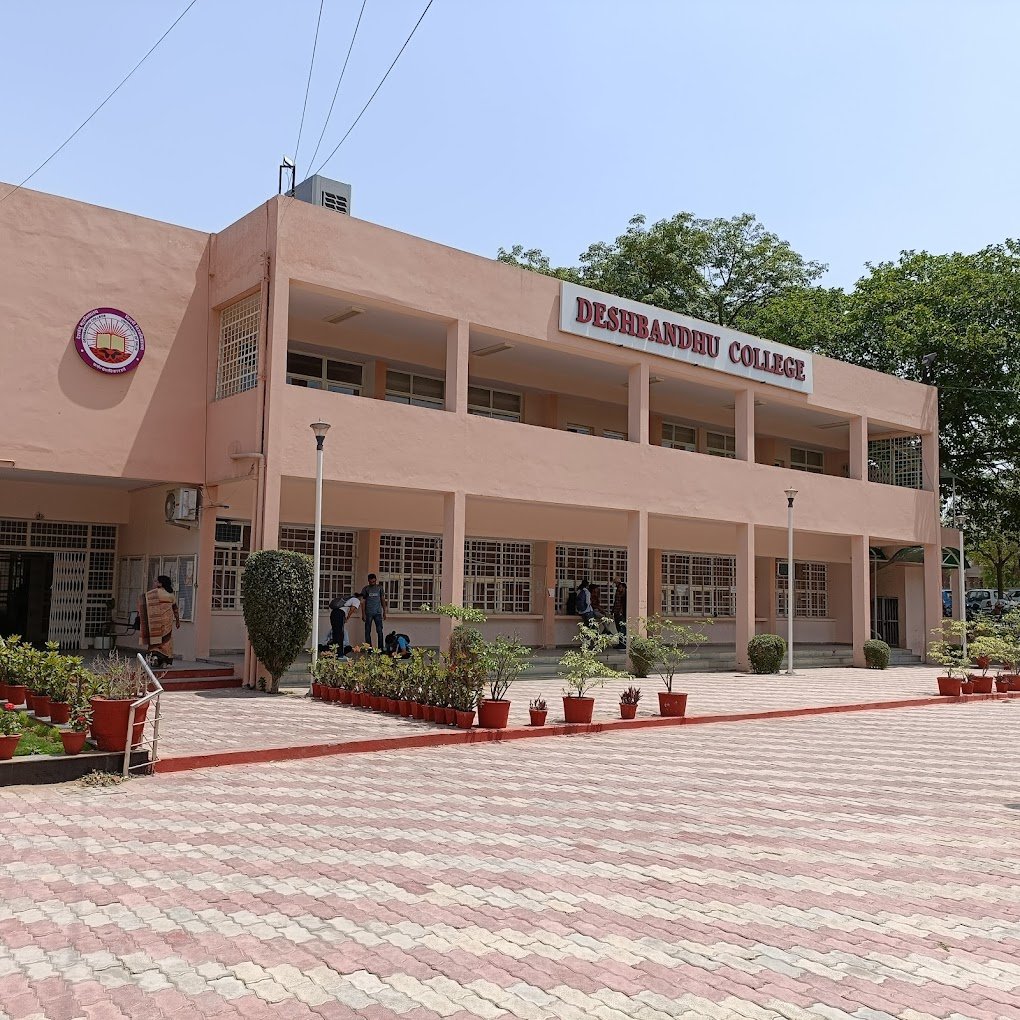
Deshbandhu College
- 24 Faculty members
- 10 journal publications in 2024
- 0 seminar related in mathematical science in 2024
- 151 seats
Admission Process
Admission is based on the candidate's performance in the CUET exam
Specimen of Research
An orthogonal spline collocation method for singularly perturbed parabolic reaction–diffusion problems with time delay; Pankaj Mishra et al.
Rank: In top 31 to 40
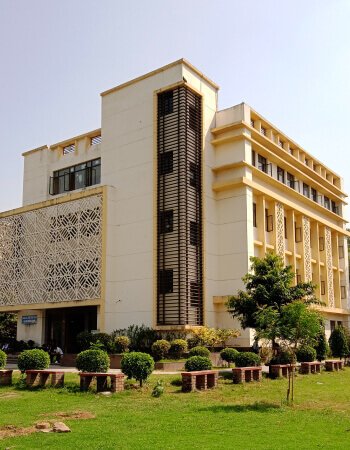
Dyal Singh College
- 22 Faculty members
- 15 journal publications in 2024
- 0 seminar related in mathematical science in 2024
- 117 seats approximately
Admission Process
Admission is based on the candidate's performance in the CUET exam
Specimen of Research
Convergence analysis of modified Szász operators associated with Hermite polynomials; Akanksha Verma et al.
Rank: In top 31 to 40
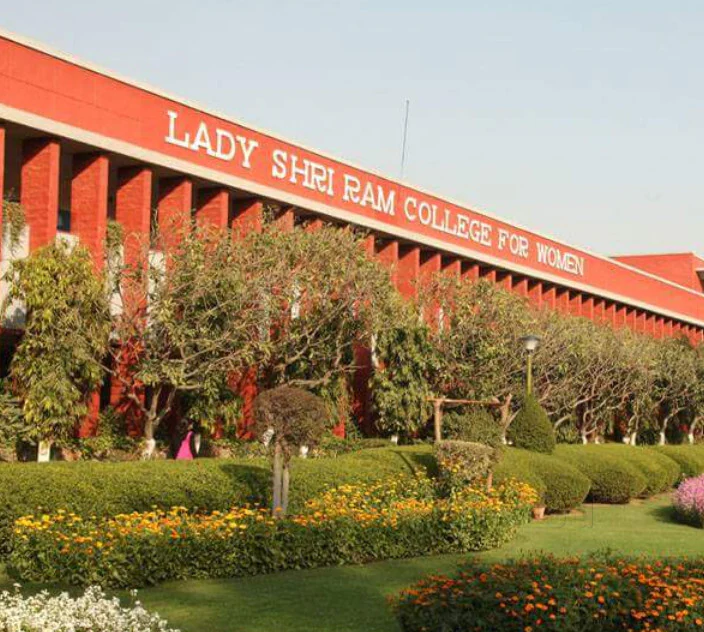
Lady Shri Ram College for Women
- 12 Faculty members
- 6 journal publications in 2024
- 0 seminar related in mathematical science in 2024
- 76 seats approximately
Admission Process
Admission is based on the candidate's performance in the CUET exam
Specimen of Research
Group decision making model for selection of performance indicators for sustainable supplier evaluation in agro-food supply chain; Jyoti Dhingra Darbari et al.
Rank: In top 31 to 40
St. Stephen's College
- 6 Faculty members
- 0 journal publications in 2024
- 0 seminar related in mathematical science in 2024
- 40 seats approximately
Admission Process
Admission is based on the candidate's performance in the CUET exam
Specimen of Research
No research copy found.
Rank: In top 31 to 40
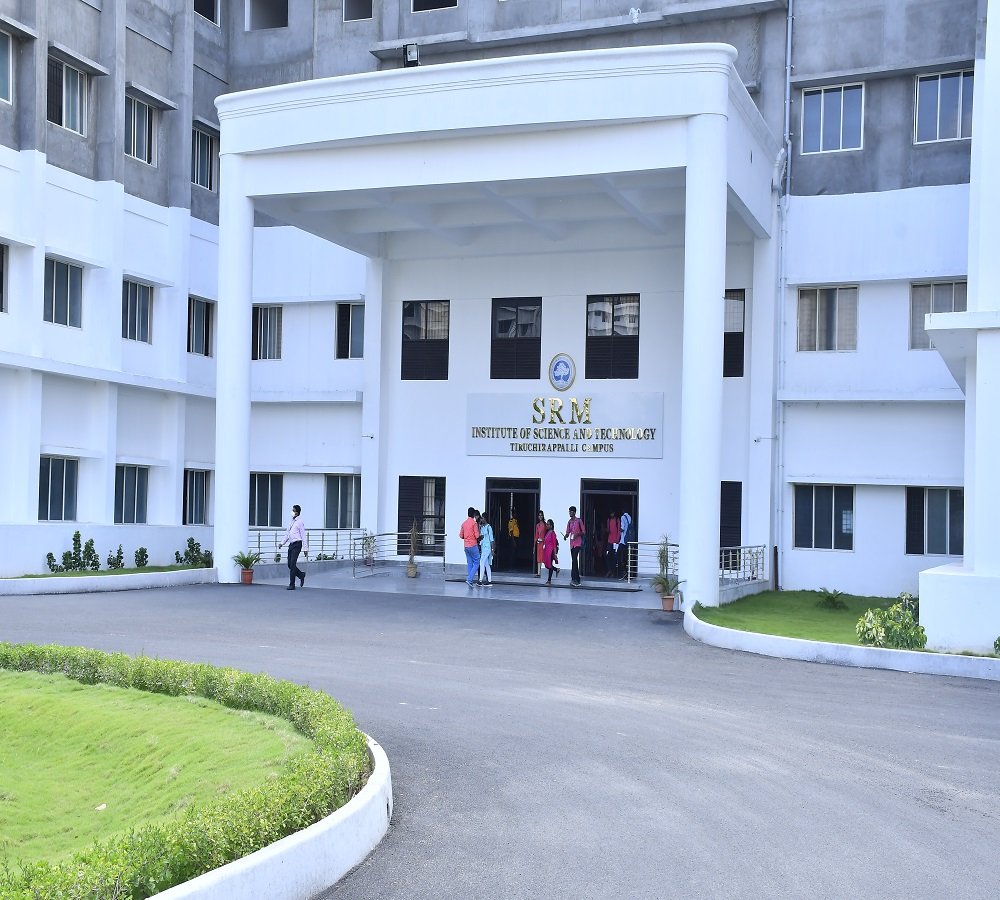
S.R.M. Institute of Science and Technology
- 19 Faculty members
- 16 journal publications in 2024
- 5 seminars related in mathematical science in 2024
- 30 seats approximately
Admission Process
Admission is based on the candidate's performance in the Entrance exams SRM Joint Entrance Exam (SRMJEE)
Specimen of Research
On the learning of high order polynomial reconstructions for essentially non-oscillatory schemes; Ritesh Kumar Dubey et al.
Rank: In top 31 to 40
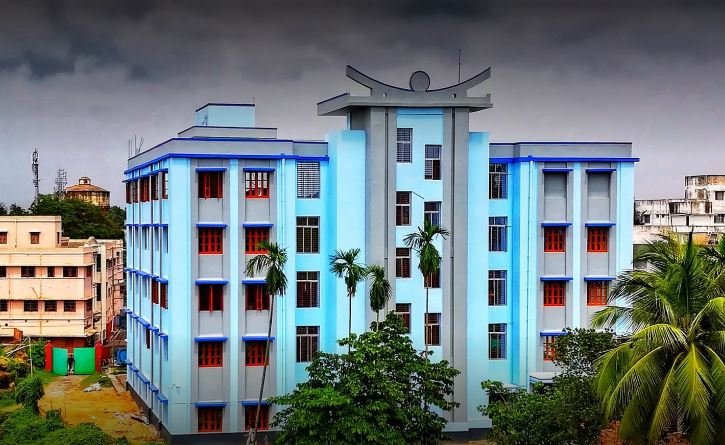
Rama Krishna Mission Vivekananda Centenary College
- 15 Faculty members
- 26 journal publications in 2024
- 26 seminars related in mathematical science in 2024
- 60 seats approximately
Admission Process
Admission is based on the candidate's performance in the Entrance exams RKMVCC
Specimen of Research
Dynamical systems analysis of a cosmological model with interacting Umami Chaplygin fluid in adiabatic particle creation mechanism: Some bouncing features; Sujay Kr. Biswas et al.
Rank: In top 31 to 40
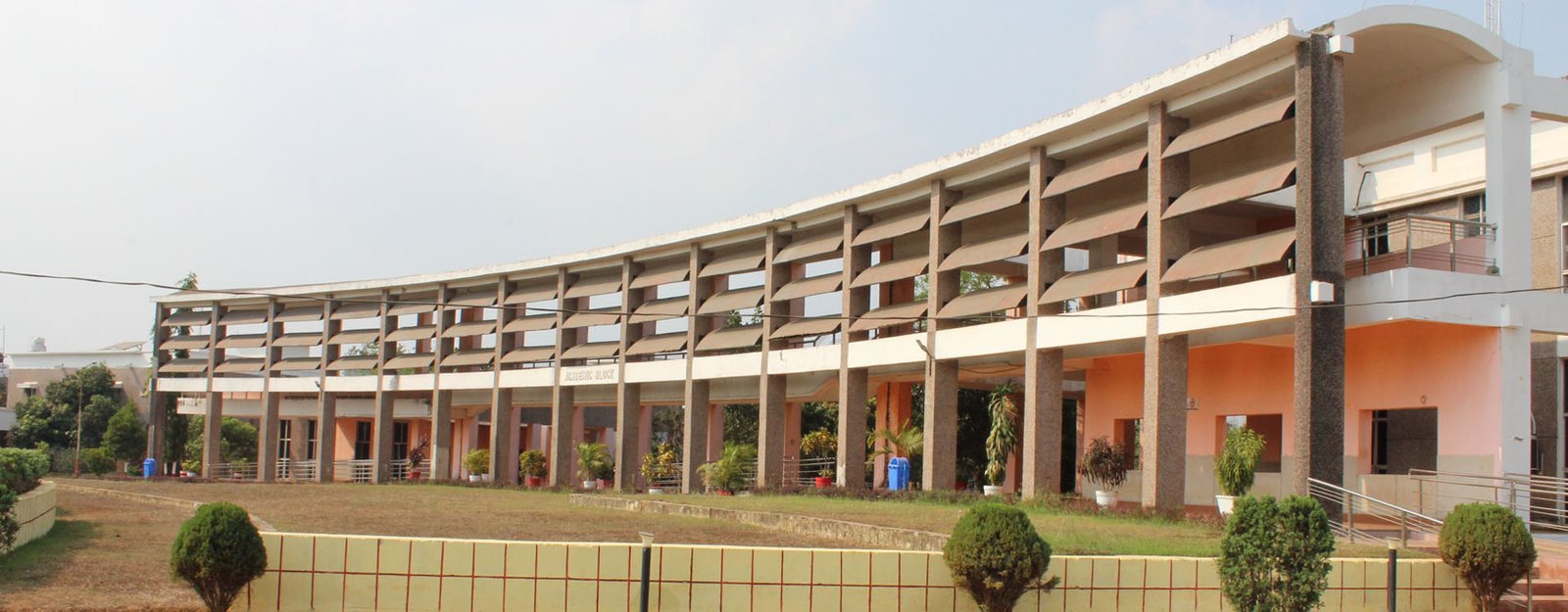
IMA Bhubaneswar
- 5 Faculty members
- 15 journal publications in 2024
- 4 seminars related in mathematical science in 2024
- 30 seats approximately
Admission Process
Admission is based on the entrance examination that is conducted worldwide to assess candidates' proficiency in mathematics and related subjects.
Specimen of Research
Certain properties of Bazilevi type univalent class defined through subordination; Trailokya Panigrahi et al.
Rank: In top 31 to 40
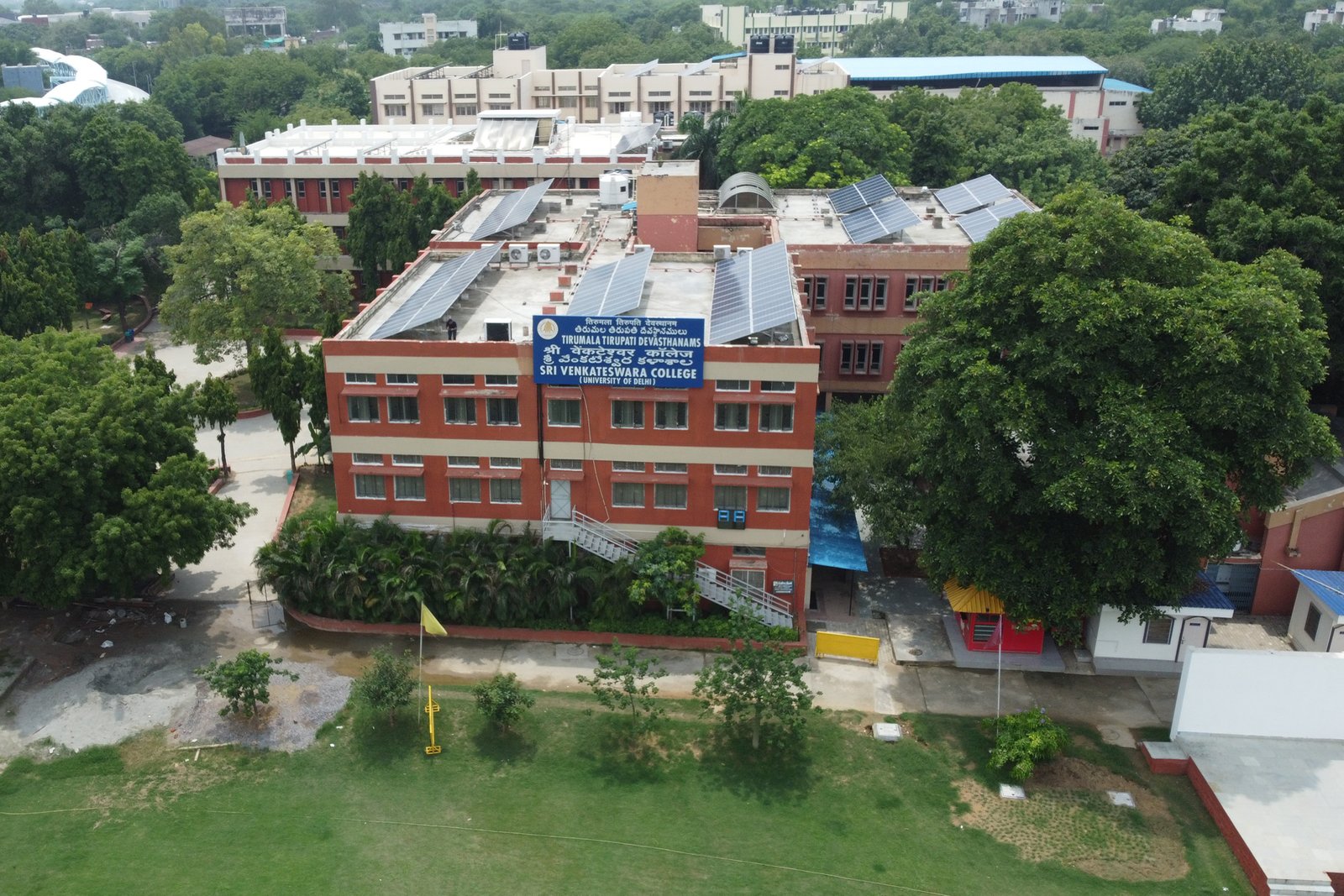
Sri Venkateswara College
- 17 Faculty members
- 20 journal publications in 2024
- 1 seminar related in mathematical science in 2024
- 47 seats approximately
Admission Process
Admission is based on the candidate's performance in the CUET exam
Specimen of Research
Graphoidally independent infinite cactus; Deepti Jain et al.
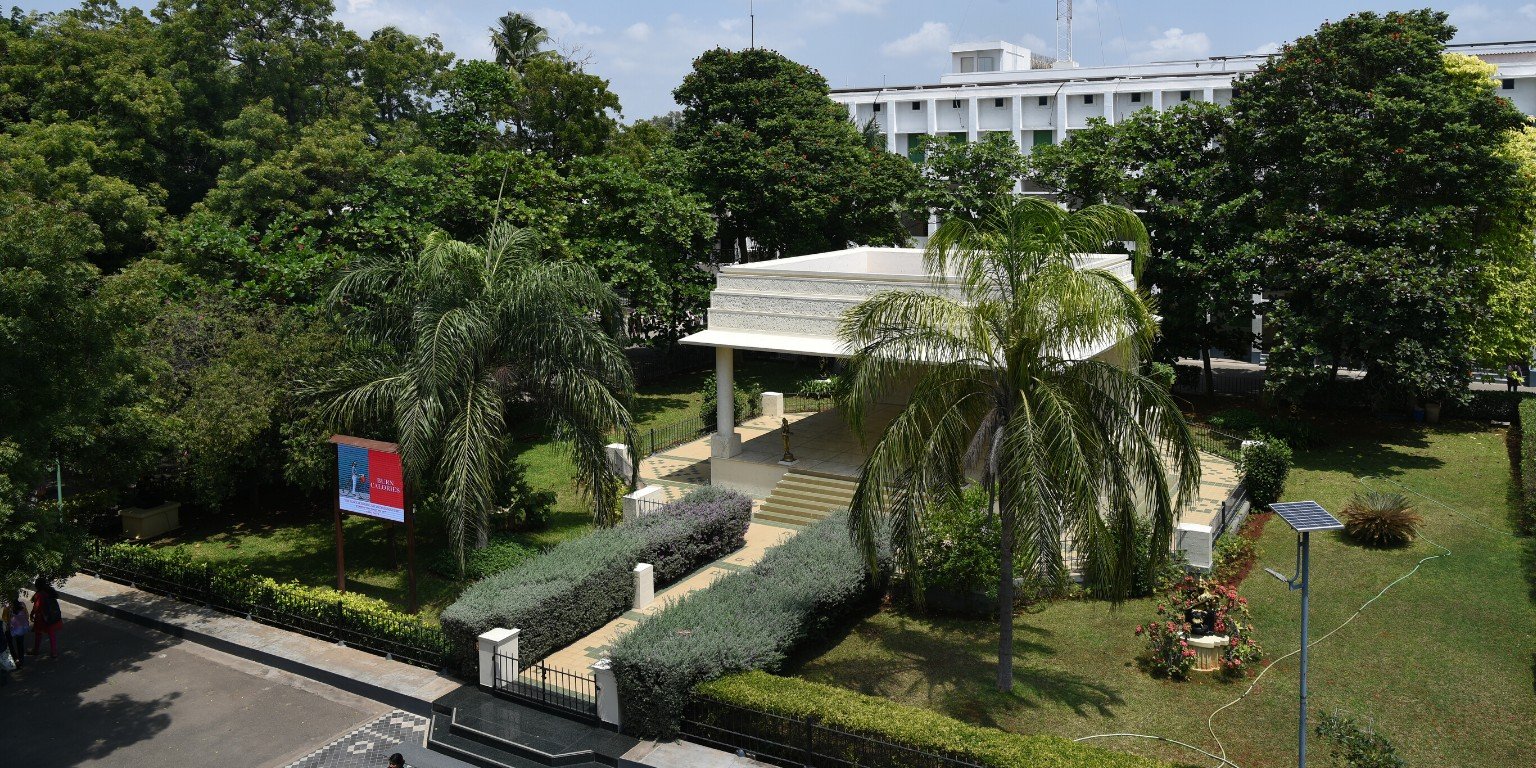
Rank: In top 41 to 50
PSGR Krishnammal College for Women
- 26 Faculty members
- 26 journal publications in 2024
- 0 seminar related in mathematical science in 2024
- 47 seats approximately
Admission Process
Admission are primarily based on academic merit, considering the marks obtained in the qualifying examination (10+2).
Specimen of Research
Binary soft simply* alpha open sets and continuous function; C. R. Parvathy et al.
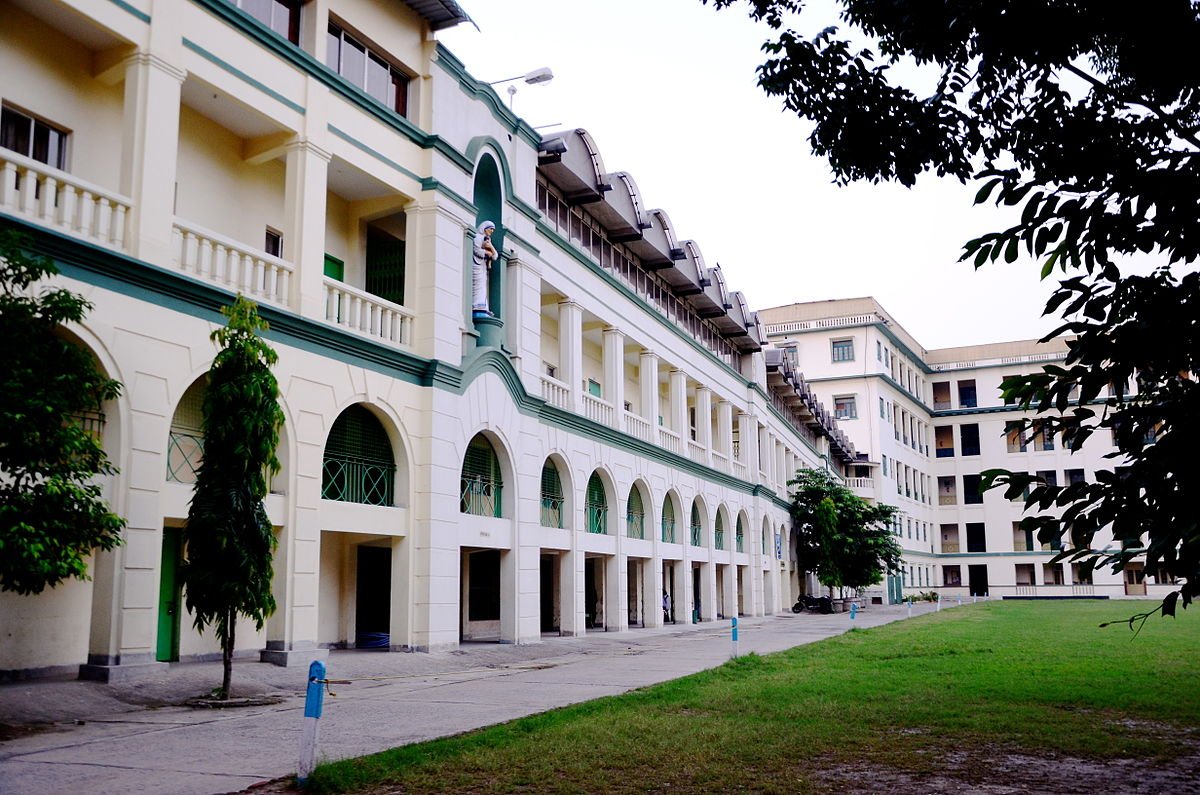
Rank: In top 41 to 50
St. Xaviers College Kolkata
- 8 Faculty members
- 2 journal publications in 2024
- 0 seminar related in mathematical science in 2024
- The seat limit is not specified
Admission Process
Admission are primarily based on academic merit, considering the marks obtained in the qualifying examination (10+2).
Specimen of Research
Modular forms and its application; Utpal Pore et al.
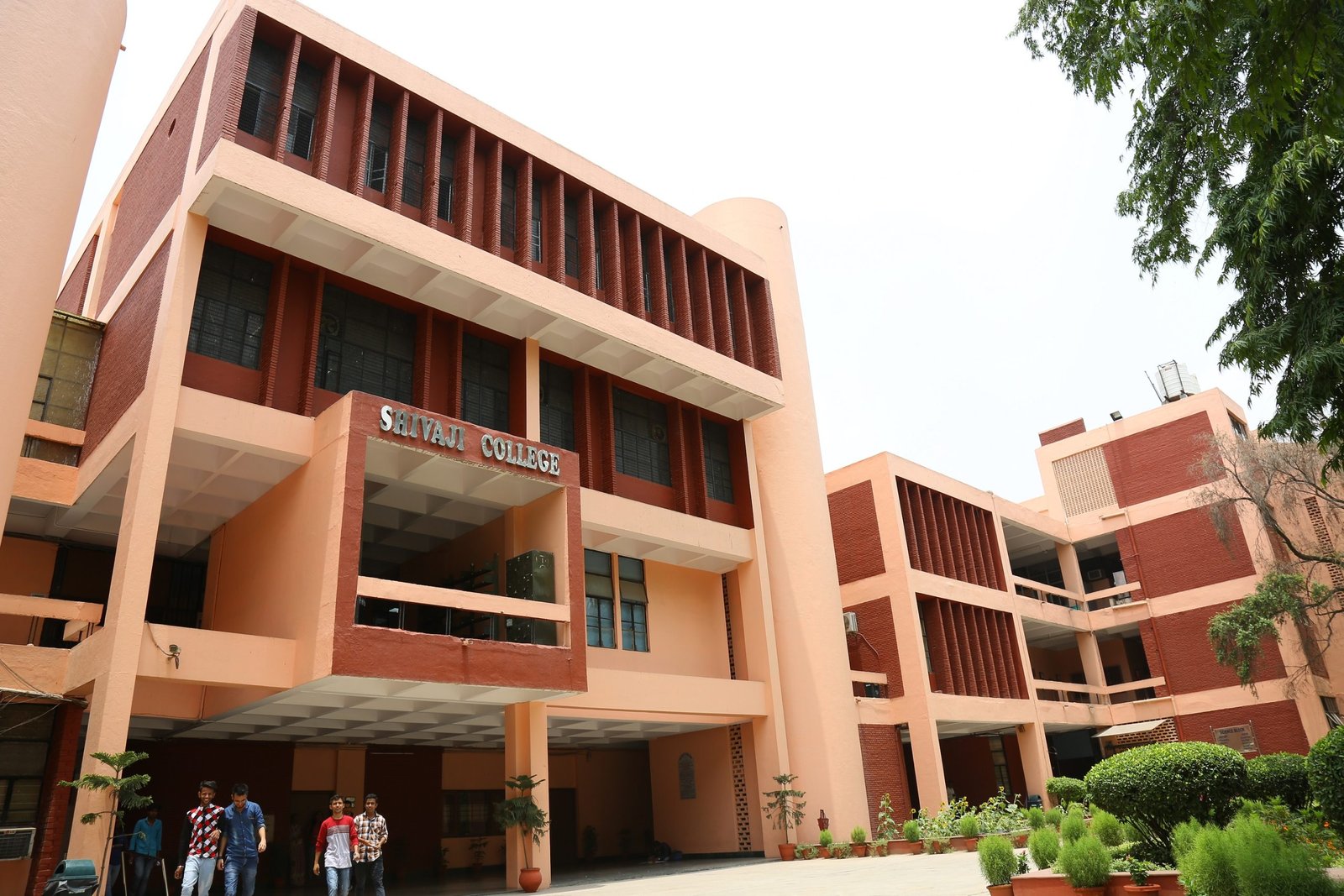
Rank: In top 41 to 50
Shivaji College
- 21 Faculty members
- 23 journal publications in 2024
- 0 seminar related in mathematical science in 2024
- 115 seats approximately
Admission Process
Admission is based on the candidate's performance in the CUET exam
Specimen of Research
Construction of Irregular Complete Interpolation Sets for Shift-invariant Spaces; Kumari Priyanka et al.
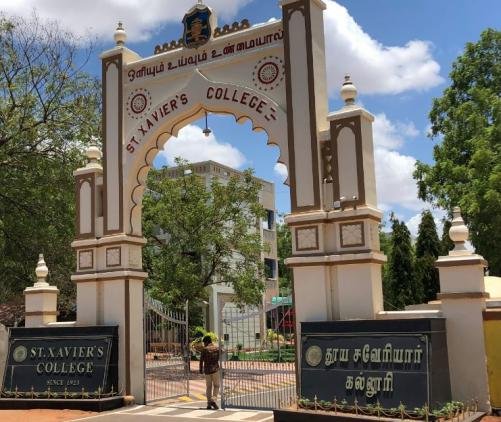
Rank: In top 41 to 50
St Xavier's College Palayamkottai
- 16 Faculty members
- 7 journal publications in 2024
- 0 seminar related in mathematical science in 2024
- The seat limit is not specified
Admission Process
Admissions are based on merit, considering marks obtained in the Higher Secondary or equivalent examination.
Specimen of Research
Domination Integrity of Generalized Transformation Graphs; Therese Sunitha Mary et al.
Rank: In top 41 to 50
St Xavier's College Palayamkottai
- 16 Faculty members
- 7 journal publications in 2024
- 0 seminar related in mathematical science in 2024
- The seat limit is not specified
Admission Process
Admissions are based on merit, considering marks obtained in the Higher Secondary or equivalent examination.
Specimen of Research
Domination Integrity of Generalized Transformation Graphs; Therese Sunitha Mary et al.
Rank: In top 41 to 50
University College, Thiruvananthapuram
- 9 Faculty members
- 7 journal publications in 2024
- 1 seminar related in mathematical science in 2024
- The seat limit is not specified
Admission Process
Admissions are based on merit, considering marks obtained in the Higher Secondary or equivalent examination.
Specimen of Research
On the total edge irregularity strength of certain classes of cycle related graphs; Santhosh Kumar K R et al.

Rank: In top 41 to 50
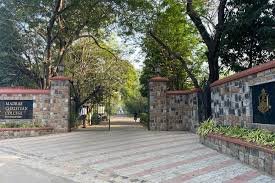
Madras Christian College
- 12 Faculty members
- 3 journal publications in 2024
- 0 seminar related in mathematical science in 2024
- 50 seats approximately
Admission Process
Admissions are primarily based on academic merit, considering the marks obtained in the qualifying examination (10+2).
Specimen of Research
Hardy Spaces and Integral Means of Certain Integral Operators on Analytic Functions; S Sunil Verma et al.
Rank: In top 41 to 50
St. Xaviers College Mumbai
- 5 Faculty members
- 0 journal publications in 2024
- 2 seminars related in mathematical science in 2024
- The seat limit is not specified
Admission Process
Admissions are primarily based on academic merit, considering the marks obtained in the qualifying examination (10+2).
Specimen of Research
No Academic research paper has been found in 2024.

Rank: In top 41 to 50
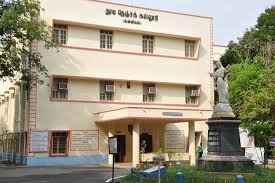
Sacred Heart College (Tirupattur)
- 19 Faculty members
- 17 journal publications in 2024
- 0 seminar related in mathematical science in 2024
- 120 seats approximately
Admission Process
Admissions are primarily based on academic merit, considering the marks obtained in the qualifying examination (10+2).
Specimen of Research
Bifurcation and Stability of a Discrete-time SIS Epidemic Model with Treatment; George Maria SELVAM et al.
Rank: In top 41 to 50
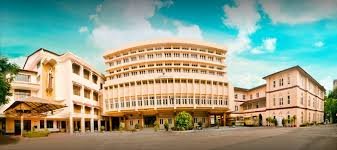
St.Teresa's College, Ernakulam
- 19 Faculty members
- 2 journal publications in 2024
- 0 seminar related in mathematical science in 2024
- The seat limit is not specified
Admission Process
Admissions are primarily based on academic merit, considering the marks obtained in the qualifying examination (10+2).
Specimen of Research
Fluid Maxwell’s equations in the language of geometric algebra, Susan Mathew Panakkal et al.
Rank: In top 41 to 50
IISER Berhampur (Odisha)
- 8 Faculty members
- 26 journal publications in 2024
- 8 seminars related in mathematical science in 2024
- 300 seats approximately
Admission Process
Admissions is primarily through the IISER Aptitude Test (IAT).The IAT assesses proficiency in Physics, Chemistry, Mathematics, and Biology.
Specimen of Research
Non-polya Fields With Large P ´ Olya Groups Arising from Lehmer Quintics; Prem Prakash Pandey et al.