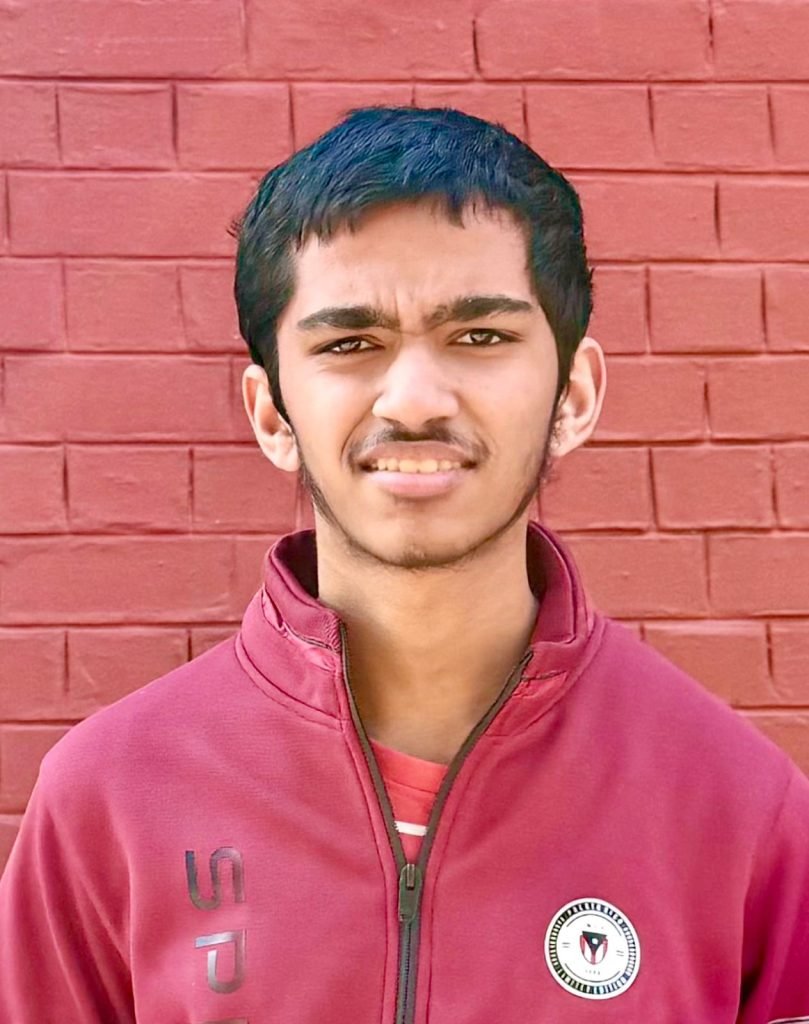
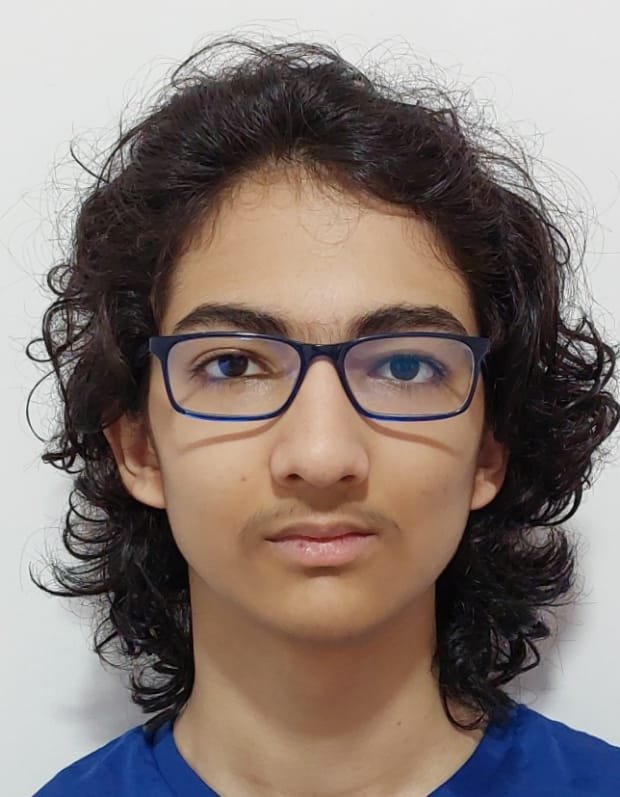
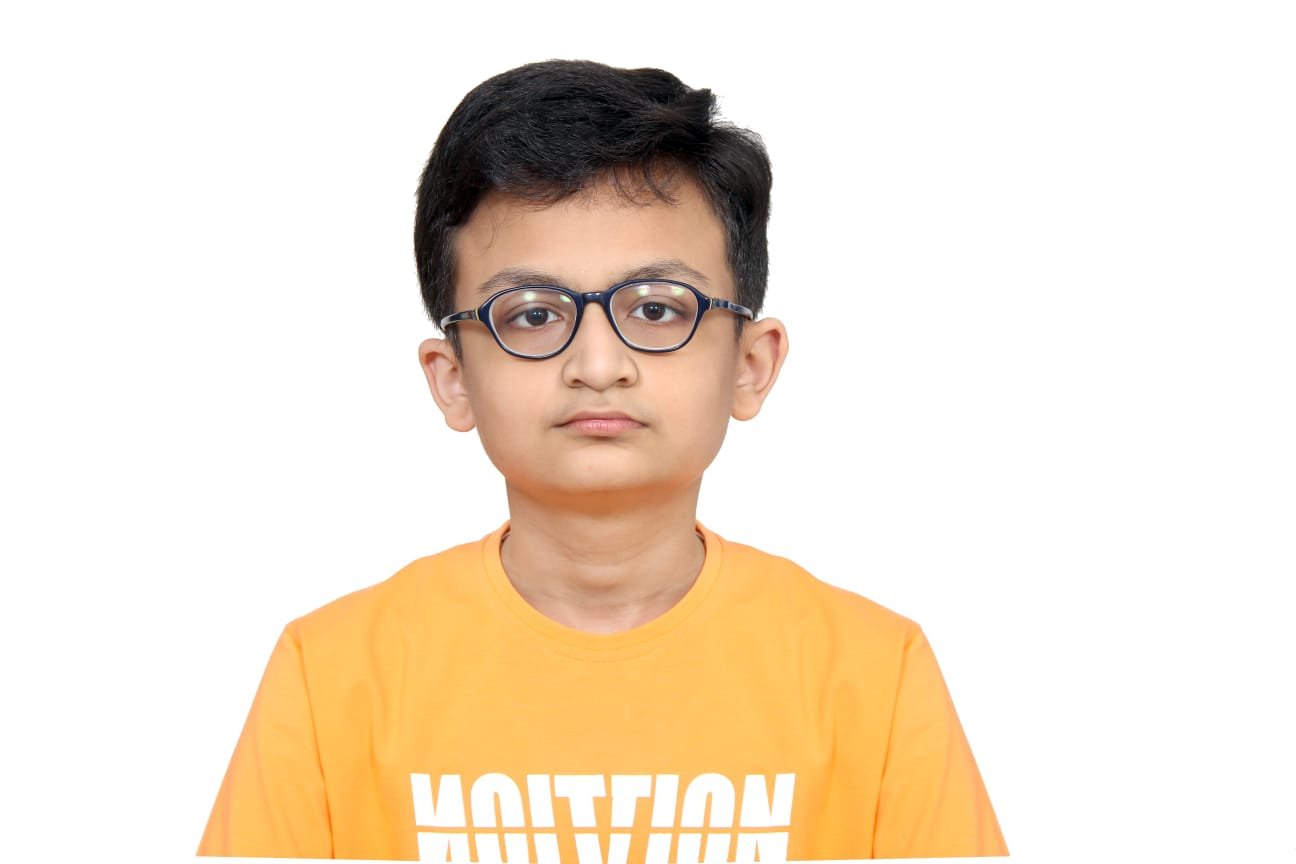
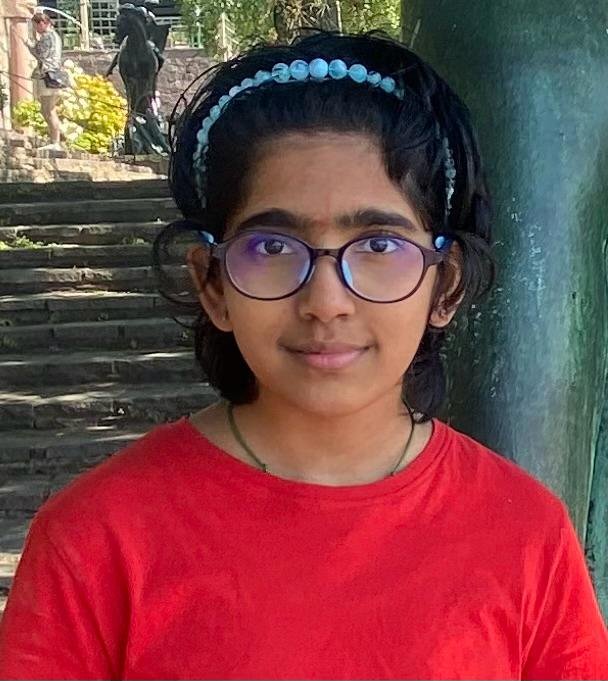
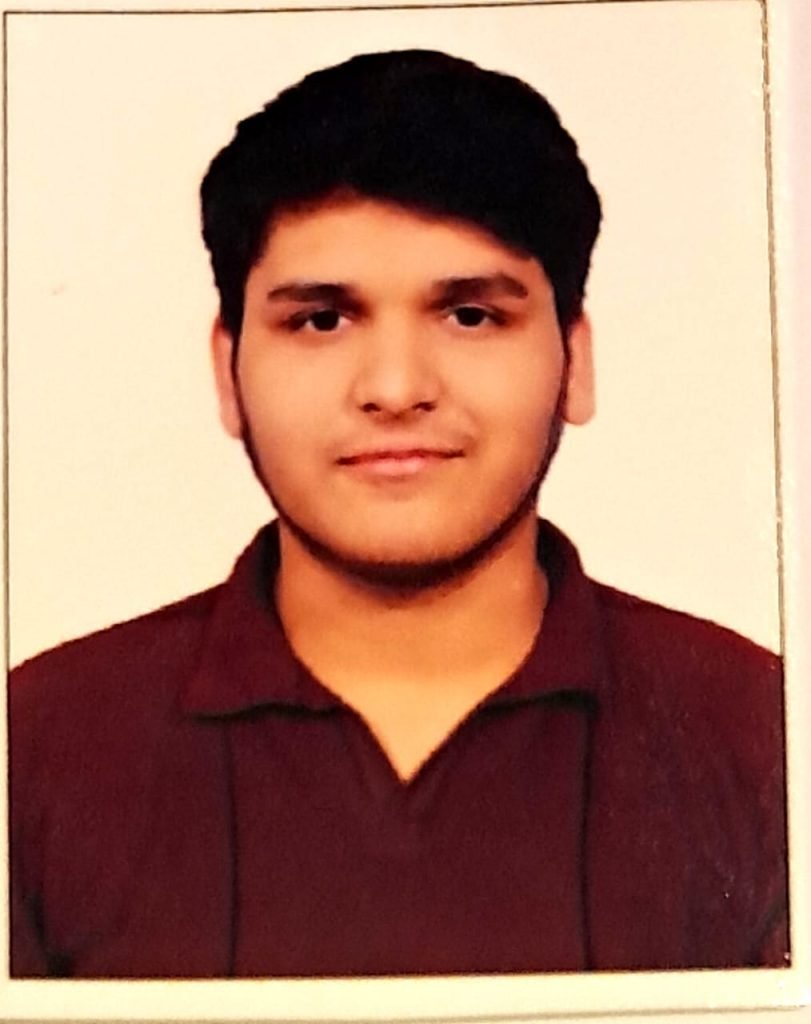
8 Cheenta students cracked the Regional Math Olympiad 2025 

In 2025, 8 students from Cheenta Academy cracked the prestigious Regional Math Olympiad. In this post, we will share some of their success stories and learning strategies.

The Regional Mathematics Olympiad (RMO) and the Indian National Mathematics Olympiad (INMO) are two most important mathematics contests in India.These two contests are for the students who are below 20 years of age.
These contests help find students with strong mathematical talent. INMO is the higher stage after RMO. It recognises the best problem solvers in the country.

In RMO the top performers may get chances for further training.They may also get opportunities to represent India in international competitions like the International Mathematical Olympiad (IMO). 

Achieving success in the Regional Mathematics Olympiad (RMO) and aiming for the Indian National Mathematics Olympiad (INMO) is a remarkable feat, requiring dedication, strategic preparation, and a strong foundation in mathematical problem-solving.

In this post, we share RMO success stories of Ayan kalra & Adhiraj Singh Anand. They performed excellently in RMO. Through their experiences, we learn about their journey, study methods, and useful tips for students who are preparing for RMO and INMO. 
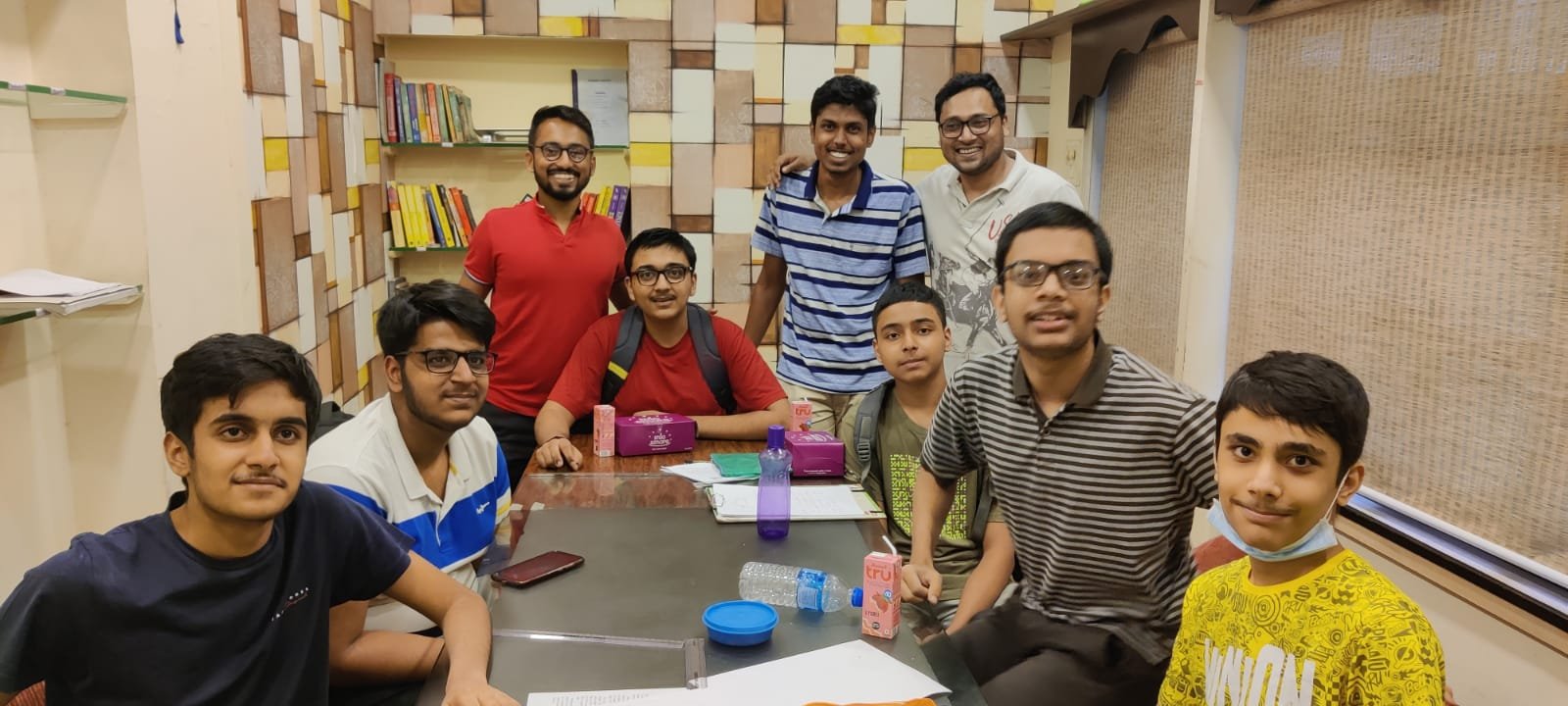
Arjun Gupta won gold and bronze in IMO

Arjun Gupta is one of the brightest young minds, who has made remarkable achievements in the world of Math Olympiads.

Arjun’s mathematical story includes success in the IOQM 2023 and RMO 2023, where his performance placed him among the top math talents in India. With focused preparation and strong mentorship at Cheenta, he went on to qualify for the INMO (Indian National Mathematical Olympiad) — a highly competitive stage. His success at INMO led him to the prestigious INMO Training Camp (INMOTC), where India’s most promising young mathematicians train for international excellence.

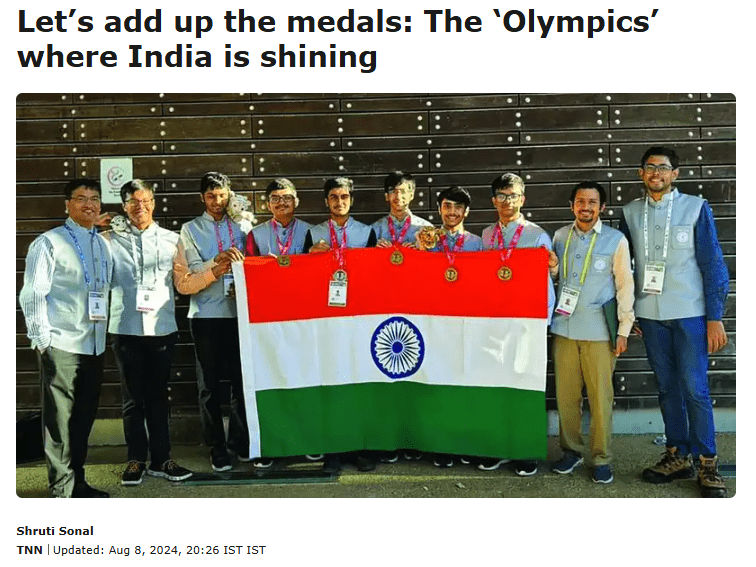
Arjun reached one of the highest school-level math competitions by representing India at the International Mathematical Olympiad (IMO). He won both bronze and gold medal at the IMO, which placed him among the world’s top young mathematicians from India.

Arjun’s love for problem-solving also led him to the Sharygin Geometrical Olympiad 2022, an international contest that focuses on deep geometrical thinking.

In 2025, Arjun achieved another goal by gaining admission to Cambridge University, along with three other Cheenta students who were accepted into Cambridge University.

But Arjun’s talent doesn’t stop at mathematics. He is also an internationally accomplished chess player. In his own words:

“Apart from Math, I love Chess such that I represented India twice in the World Youth Chess Championship category besides winning other Asian and National Chess Competitions.”

His achievements in IMO were recognized widely, including a special feature in the Times of India, celebrating Cheenta students' contributions to the world of Olympiads. Here is the link of the article.

https://timesofindia.indiatimes.com/lets-add-up-the-medals-the-olympics-where-india-is-shining/articleshow/112375379.cms

10 out of 30 INMO qualifiers are from Cheenta

The Indian National Mathematical Olympiad (INMO) is a prestigious mathematics competition in India, serving as the second stage of the Indian Mathematical Olympiad (IMO) selection process. Top performers earn a chance to attend the International Mathematical Olympiad Training Camp (IMOTC) and represent India at the IMO.

In 2025, 10 students from Cheenta (ex-student and current student) qualified INMO out of 30 students all over India. Most of these kids regularly attended the five-days-a-week problem-solving sessions along with concept class, homework class and doubt clearing classes. Here are a few qualifiers:

Aharshi Roy
Pranit Goel
Nandgovind Anurag
Abhinav Khetan
Krishiv Khandelwal
Aratrik Pal
Soham Pednekar
Mann Shah
Harini
Parth Vartak

Watch their stories of success

Key Takeaways of the discussion

In our recent live session, we had the pleasure of hearing from some brilliant students—Nand, Pranit, Harini, Arri, and Maan—as they shared their inspiring journeys through the world of Math Olympiads.

From starting in 6th or even 10th grade, to cracking INMO and aiming for IMO, each story was unique but full of passion, hard work, and clever strategies. 💡

Some focused on solving problems every day, while others relied on books like EGMO, Secrets in Inequalities, and Olympiad Combinatorics.
When stuck, they turned to friends, asked for hints, or explored communities online—reminding us that learning together makes the journey better.

Advice from them? Don’t be afraid to look at hints in the early days. With time, the thinking matures, and one learns to enjoy the challenge of sticking with a tough problem.


At Cheenta, we are proud to walk this path with such talented learners.

14 Cheenta students cracked the Regional Math Olympiad 2023

In 2023, 14 out of 27 students from Cheenta Academy cracked the prestigious Regional Math Olympiad. In this post, we will share some of their success stories and learning strategies.

The Regional Mathematics Olympiad (RMO) and the Indian National Mathematics Olympiad (INMO) are prestigious contests in India for students under 20, aiming to identify exceptional mathematical talent. Participants solve challenging math problems in these stages, with INMO serving as a platform to recognize top problem solvers and offer opportunities for further training and representation in international competitions like the IMO.

Achieving success in the Regional Mathematics Olympiad (RMO) and aiming for the Indian National Mathematics Olympiad (INMO) is a remarkable feat, requiring dedication, strategic preparation, and a strong foundation in mathematical problem-solving. Let's learn about the RMO Success stories from Aharshi Roy and Nandagovind Anurag, students who excelled in RMO, valuable perspectives emerged on their journey, methodologies, and recommended strategies for aspirants.

Aharshi Roy's Experience and Recommendations

Aharshi, an RMO qualifier, shared his journey primarily focused on preparing for INMO. He highlighted the significance of the initial one-year period dedicated to subjective Olympiad training. His advice encompassed the following key points:

Watch the full video to learn more about his experience and RMO Strategies

Nandagovind Anurag's Strategic Insights

Nandagovind's journey, starting just ten months before RMO, showcased the importance of strategic preparation and subject specialization. His key takeaways included:

Watch the full video to learn more about his experience and RMO Strategies.

Final Thoughts

The shared experiences and insights from Aharshi Roy and Nandagovind Anurag offer a comprehensive view of successful RMO strategies. Their emphasis on strategic preparation, resource selection, specialized focus, and diverse problem-solving techniques provides aspiring Olympiad participants with valuable guidance.

In the realm of Olympiad Mathematics, beyond formulas and theorems, lies the art of thinking creatively, exploring diverse approaches, and persistently tackling problems—a fundamental aspect highlighted by these champions.

INMO 2021 Question No. 1 Solution

Suppose $r\geq 2$ is an integer, and let $m_{1},n_{1},m_{2},n_{2} \cdots ,m_{r},n_{r}$ be $2r$ integers such that
$$|m_{i}n_{j}−m_{j}n_{i}|=1$$
for any two integers $i$ and $j$ satisfying $1\leq i <j <r$. Determine the maximum possible value of $r$.

Solution:

Let us consider the case for $r =2$.

Then $|m_{1}n_{2} - m_{2}n_{1}| =1$.......(1)

Let us take $m_{1} =1, n_{2} =1, m_{2} =0, n_{1} =0$. Then, clearly the condition holds for $r =2$.

Now, let us check the case for $r =3$. Then if the conditions were to hold then, we should have, $$i =1, j =2,3$$

$$i =2, j =3$$

Then,

$$| m_{1} n_{2}-m_{2} n_{1}| =1\cdots(2) \\|m_{1} n_{3}-m_{3} n_{1}| =1 \cdots(3) \\ |m_{2} n_{3} - m_{3} n_{2}| =1 \cdots(4)$$ respectively.

Then, let us try to choose the value of $m_{1},n_{1}; m_{2},n_{2}; m_{3},n_{3}$ such that the conditions (2) ,(3) and (4) holds.

Then, let us take $m_{1} =1,n_{2}=1,m_{2}=0,n_{1}=0,m_{3}=1,n_{3}=1,m_{3} =1,n_{3} =0$ respectively.

Therefore the results holds for $r =3$.

Now, let us consider the case where $r\geq 4$

Let $c_{i}$ and $d_{i}$ be the remainders when $m_{i}$ and $n_{i}$ are divided by $2$ respectively, that is,

$c_{i} \equiv m_{i}$ (mod 2), and $d_{i} \equiv n_{i}$ (mod 2)

Therefore $c_{i}, d_{i} \in \{0,1\}$, since these are the only possible remainders when something is divided by $2$.

Now, the parities of both $m_{i}$ and $n_{i}$ cannot be the even , as in that case for any $j$, we have, $$|m_{i} n_{j} - m_{j} n_{i}| \neq 1$$, as it would be clearly even.

therefore, the possible values of the orderes pair $(c_{i},d_{i})$ would be $(0,1), (1,0)$ or $(1,1)$ respectively.

now, we see that if the parity patterns of $(m_{i},n_{i})$ and $(m_{j},n_{j})$ be the same, that is the parities of $m_{i}$ and $m_{j}$ ; $n_{i}$ and $n_{j}$ are the same, then,

$$ |m_{i} n_{j} - m_{j}n_{i}| = \text{ even } \neq 1$$

Therefore , the parity patterns of two pairs cannot be same.

Now, there are $4$ pairs $(m_{1}, n_{1}); (m_{2}, n_{2}) ; (m_{3}, n_{3})$ and $(m_{4}, n_{4})$ respectively.

therefore by pigeon hole principle at last two of these four pairs should have the same parity pattern, leading to a contradiction that we just discussed.

Therefore the conditions are not satisfied for $r =4$.

Therefore the maximum value of $r$ would be $3$.

INMO 2021 - Problems, Solutions and Discussion

This is a work in progress. Please come back soon for more updates. We are adding problems, solutions and discussions on INMO (Indian National Math Olympiad 2021)

INMO 2021, Problem 1

Suppose $r \geq 2$ is an integer, and let $m_{1}, n_{1}, m_{2}, n_{2}, \cdots, m_{r}, n_{r}$ be $2 r$ integers such that

$$
|m_{i} n_{j}-m_{j} n_{i}|=1
$$
for any two integers $i$ and $j$ satisfying $1 \leq i<j<r$. Determine the maximum possible value of $r$.

Solution


INMO 2021, Problem 2

Find all pairs of integers $(a, b)$ so that each of the two cubic polynomials
$$
x^{3}+a x+b \text { and } x^{3}+b x+a
$$
has all the roots to be integers.

INMO 2021, Problem 3

Betal marks 2021 points on the plane such that no three are collinear, and draws all possible line segments joining these. He then chooses any 1011 of these line segments, and marks their midpoints. Finally, he chooses a line segment whose midpoint is not marked yet, and challenges Vikram to construct its midpoint using only a straightedge. Can Vikram always complete this challenge?

Note: A straightedge is an infinitely long ruler without markings, which can only be used to draw the line joining any two given distinct points.

INMO 2021, Problem 4

A Magician and a Detective play a game. The Magician lays down cards numbered from 1 to 52 face-down on a table. On each move, the Detective can point to two cards and inquire if the numbers on them are consecutive. The Magician replies truthfully. After a finite number of moves the Detective points to two cards. She wins if the numbers on these two cards are consecutive, and loses otherwise.

Prove that the Detective can guarantee a win if and only if she is allowed to ask at least 50 questions.

INMO 2021, Problem 5

In a convex quadrilateral $A B C D, \angle A B D=30^{\circ}, \angle B C A=75^{\circ}, \angle A C D=25^{\circ}$ and
$C D=C B$. Extend $C B$ to meet the circumcircle of triangle $D A C$ at $E$. Prove that $C E=B D .$

Solution

INMO 2021, Problem 6

Let $\mathbb{R}[x]$ be the set of all polynomials with real coefficients, and let deg $P$ denote the degree of a nonzero polynomial $P .$ Find all functions $f: \mathbb{R}[x] \rightarrow \mathbb{R}[x]$ satisfying the following conditions:

A trigonometric polynomial ( INMO 2020 Problem 2)

The problem

Suppose $P(x)$ is a polynomial with real coefficients satisfying the condition
$$
P(\cos \theta+\sin \theta)=P(\cos \theta-\sin \theta),
$$
for every real $\theta$. Prove that $P(x)$ can be expressed in the form
$$
P(x)=a_0+a_1\left(1-x^2\right)^2+a_2\left(1-x^2\right)^4+\cdots+a_n\left(1-x^2\right)^{2 n},
$$
for some real numbers $a_0, a_1, a_2, \ldots, a_n$ and nonnegative integer (n).

Hint 1

Using a very standard trigometric identity, we can easily convert the following ,
$$
\begin{aligned}
P(\cos \theta+\sin \theta) & =P(\cos \theta-\sin \theta
\Longrightarrow P\left(\sqrt{2} \sin \left(\frac{\pi}{4}+\theta\right)\right) & =P\left(\sqrt{2} \cos \left(\frac{\pi}{4}+\theta\right)\right) \
\Longrightarrow P(\sqrt{2} \sin x) & =P(\sqrt{2} \cos x)
\end{aligned}
$$
⟹ \(P(\sqrt{2} \sin x)=P(\sqrt{2} \cos x) \quad\)

Assuming,

$\left(\frac{\pi}{4}+\theta\right)=x$ for all reals $x$. So,

$P(-\sqrt{2} \sin (x))=P(\sqrt{2} \sin (-x))=P(\sqrt{2} \cos (-x))=P(\sqrt{2} \cos (x))=P(\sqrt{2} \sin (x))$ for all $x \in \mathbb{R}$. Since $P(x)=P(-x)$ holds for infinitely many $x$, it must hold for all $x$ (since $P(x)$ is a polynomial). so we get that, $P(x)$ is a even polynomial.

Hint 2

$P(\sqrt{2} \cos (x))=P(\sqrt{2} \sin (x))$ implies that
$$
P(t)=P\left(\sqrt{2} \sin \left(\cos ^{-1}(t / \sqrt{2})\right) \text { putting }, x=\cos ^{-1}(t / \sqrt{2})\right.
$$
for infinitely many $t \in[-\sqrt{2}, \sqrt{2}]$.
$$
\sqrt{2} \sin \left(\cos ^{-1}(t / \sqrt{2})\right)=\sqrt{2-t^2} \text { so we get, } P(x)=P\left(\sqrt{2-t^2}\right)
$$

Again as it is a polynomial function we can extend it all $\mathbb{R}$. And we get, $P(x)=P\left(\sqrt{2-x^2}\right)$ for all reals (x)

Hint 3

Since $P(x)$ is even, we can choose an even polynomial $Q(x)$ such that, $Q(x)=P(\sqrt{x+1}) \cdot P(\sqrt{1+x}$=$Q(x)=a_0+a_1 x^2+a_2 x^4+\cdots+a_n x^{2 n}$ now take, $\sqrt{1+x}=y$ and you get the polynomial of required form.

Get Started with Math Olympiad Program

Outstanding mathematics for brilliant school students. Work with great problems from Mathematics Olympiads, Physics, Computer Science, Chemistry Olympiads and I.S.I. C.M.I. Entrance. 

Kites in Geometry | INMO 2020 Problem 1

Understand the problem

Let \( \Gamma_1 \) and \( \Gamma_2 \) be two circles with unequal radii, with centers \(  O_1 \) and \( O_2 \) respectively, in the plane intersecting in two distinct points A and B. Assume that the center of each of the circles \( \Gamma_1 \) and \( \Gamma_2 \) are outside each other. The tangent to \( \Gamma_ 1 \) at B intersects \( \Gamma_2 \) again at C, different from B; the tangent to \(   \Gamma_2 \) at B intersects \(  \Gamma_1 \) again in D different from B. The bisectors of \( \angle DAB \) and \( \angle CAB \) meet \( \Gamma_1 \) and \( \Gamma_2 \) again in X and Y, respectively. different from A. Let P and Q be the circumcenters of the triangles ACD and XAY, respectively. Prove that PQ is perpendicular bisector of the line segment \( O_1 O_2 \). 

Tutorial Problems... try these before watching the video.

1. Suppose \( P O_1 Q O_2 \) be a kite (that is \( PO_1 = PO_2 \)  and \(  QO_1 1 = QO_2 \). Show that PQ is perpendicular bisector of the other diagonal $ O_1 O_2 $.$.

2. Show that for any two circles intersecting each other at two distinct points, the common chord is bisected perpendicularly by the line joining the center.

You may send solutions to support@cheenta.com. Though we usually look into internal students work, we will try to give you some feedback.

Connected Program at Cheenta

Math Olympiad is the greatest and most challenging academic contest for school students. Brilliant school students from over 100 countries participate in it every year.

Cheenta works with small groups of gifted students through an intense training program. It is a deeply personalized journey toward intellectual prowess and technical sophistication.

Now watch the discussion video

Subscribe to Cheenta's youtube channel

INMO 2020 Problems, Solutions and Hints

Problems

This is a work in progress. More discussions will be uploaded soon.

INMO 2020 Problem 4

[et_pb_section fb_built="1" admin_label="Blog Hero" _builder_version="3.22" use_background_color_gradient="on" background_color_gradient_start="rgba(114,114,255,0.24)" background_color_gradient_end="#ffffff" background_blend="multiply" custom_padding="0|0px|0|0px|false|false" animation_style="slide" animation_direction="top" animation_intensity_slide="2%" locked="off"][et_pb_row _builder_version="3.25" background_size="initial" background_position="top_left" background_repeat="repeat" custom_margin="|||" custom_padding="27px|0px|27px|0px" custom_width_px="1280px"][et_pb_column type="4_4" _builder_version="3.25" custom_padding="|||" custom_padding__hover="|||"][et_pb_text _builder_version="3.27.4" text_text_color="#474ab6" text_line_height="1.9em" background_size="initial" background_position="top_left" background_repeat="repeat" text_orientation="center" max_width="540px" module_alignment="center" locked="off"]

Let $latex n\ge 3$ be an integer and $latex a_1,a_2,\cdots a_n$ be real numbers satisfying $latex 1<a_2\le a_2\le a_3\cdots \le a_n$. If $latex \Sigma_ia_i=2n$ then prove that $latex 2+a_1+a_1a_2+a_1a_2a_3+\cdots +a_1a_2\cdots a_{n-1}\le a_1a_2\cdots a_n$.

[/et_pb_text][/et_pb_column][/et_pb_row][/et_pb_section][et_pb_section fb_built="1" admin_label="Blog" _builder_version="3.22" custom_margin="|||" custom_padding="0px|0px|21px|0px|false|false"][et_pb_row _builder_version="3.25" background_size="initial" background_position="top_left" background_repeat="repeat" custom_padding="0|0px|24px|0px|false|false" use_custom_width="on" custom_width_px="960px"][et_pb_column type="4_4" _builder_version="3.25" custom_padding="|||" custom_padding__hover="|||"][et_pb_tabs _builder_version="3.12.2"][et_pb_tab title="Hint 1" _builder_version="3.12.2"]

The conditions hint at inequalities involving an order, such as the rearrangement and Chebychev inequalities. Also note that $latex a_i=2$ for all $latex i$ is an equality case, hence we should try to use inequalities in such a way that matches the equality case.

[/et_pb_tab][et_pb_tab title="Hint 2" _builder_version="3.12.2"]

The RHS can be rewritten as $latex a_1a_2\cdots a_n= a_1a_2\cdots a_n-a_1a_2\cdots a_{n-1}+a_1a_2\cdots a_{n-1}-a_1a_2\cdots a_{n-2}+a_1a_2\cdots a_{n-2}\cdots -a_1+a_1=a_1a_2\cdots a_{n-1}(a_n-1)+a_1a_2\cdots a_{n-2}(a_{n-1}-1)+\cdots+ a_1(a_2-1)+a_1$. That is, $latex a_1a_2\cdots a_n-1= a_1a_2\cdots a_n-a_1a_2\cdots a_{n-1}+a_1a_2\cdots a_{n-1}-a_1a_2\cdots a_{n-2}+a_1a_2\cdots a_{n-2}\cdots -a_1+a_1=a_1a_2\cdots a_{n-1}(a_n-1)+a_1a_2\cdots a_{n-2}(a_{n-1}-1)+\cdots+ a_1(a_2-1)+(a_1-1)$.

[/et_pb_tab][et_pb_tab title="Hint 3" _builder_version="3.12.2"]

Now Chebychev inequality gives $latex \frac{a_1a_2\cdots a_n-1}{n}= \frac{a_1a_2\cdot a_{n-1}(a_n-1)+a_1a_2\cdot a_{n-2}(a_{n-1}-1)+\cdots+ a_1(a_2-1)+(a_1-1)}{n}\ge \frac{1+a_1+a_1a_2+\cdots +a_1a_2\cdots a_{n-1}}{n}\cdot\frac{(a_1-1+a_2-1+\cdots +a_n-1)}{n}=\frac{1+a_1+a_1a_2+\cdots +a_1a_2\cdots a_{n-1}}{n}$. Cancelling the denominators, we get the desired result.

[/et_pb_tab][/et_pb_tabs][/et_pb_column][/et_pb_row][/et_pb_section][et_pb_section fb_built="1" admin_label="Footer" _builder_version="3.22" background_color="#f7f8fc" custom_padding="0px|0px|2px|0px|false|false" animation_style="zoom" animation_direction="bottom" animation_intensity_zoom="6%" animation_starting_opacity="100%" saved_tabs="all"][et_pb_row column_structure="1_2,1_4,1_4" use_custom_gutter="on" gutter_width="2" _builder_version="3.25" background_size="initial" background_position="top_left" background_repeat="repeat" custom_padding="24px|0px|145px|0px|false|false"][et_pb_column type="1_2" _builder_version="3.25" custom_padding="|||" custom_padding__hover="|||"][et_pb_text _builder_version="3.27.4" text_text_color="#7272ff" header_font="|on|||" header_text_color="#7272ff" header_font_size="36px" header_line_height="1.5em" background_size="initial" background_position="top_left" background_repeat="repeat" custom_margin="||20px|" animation_style="slide" animation_direction="bottom" animation_intensity_slide="10%"]

Get Started with Math Olympiad Program

[/et_pb_text][et_pb_text _builder_version="3.27.4" text_text_color="#8585bd" text_font_size="22px" text_line_height="1.9em" background_size="initial" background_position="top_left" background_repeat="repeat" animation_style="fade" locked="off"] Outstanding mathematics for brilliant school students. [/et_pb_text][/et_pb_column][et_pb_column type="1_4" _builder_version="3.25" custom_padding="|||" custom_padding__hover="|||"][et_pb_button button_url="https://cheenta.com/matholympiad/" url_new_window="on" button_text="Learn More" button_alignment="left" _builder_version="3.16" custom_button="on" button_text_size="16px" button_text_color="#ffffff" button_bg_color="#7272ff" button_border_width="10px" button_border_color="#7272ff" button_border_radius="100px" button_letter_spacing="1px" button_font="|on||on|" button_icon="%%36%%" button_on_hover="off" custom_margin="|||" animation_style="zoom" animation_delay="100ms" animation_intensity_zoom="6%" box_shadow_style="preset1" box_shadow_vertical="10px" box_shadow_blur="50px" box_shadow_spread="5px" box_shadow_color="rgba(114,114,255,0.4)" button_letter_spacing_hover="2px" locked="off" button_text_size__hover_enabled="off" button_one_text_size__hover_enabled="off" button_two_text_size__hover_enabled="off" button_text_color__hover_enabled="off" button_one_text_color__hover_enabled="off" button_two_text_color__hover_enabled="off" button_border_width__hover_enabled="off" button_one_border_width__hover_enabled="off" button_two_border_width__hover_enabled="off" button_border_color__hover_enabled="off" button_one_border_color__hover_enabled="off" button_two_border_color__hover_enabled="off" button_border_radius__hover_enabled="off" button_one_border_radius__hover_enabled="off" button_two_border_radius__hover_enabled="off" button_letter_spacing__hover_enabled="on" button_letter_spacing__hover="2px" button_one_letter_spacing__hover_enabled="off" button_two_letter_spacing__hover_enabled="off" button_bg_color__hover_enabled="off" button_one_bg_color__hover_enabled="off" button_two_bg_color__hover_enabled="off"][/et_pb_button][/et_pb_column][et_pb_column type="1_4" _builder_version="3.25" custom_padding="|||" custom_padding__hover="|||"][et_pb_button button_url="https://cheenta.com/contact-us/" url_new_window="on" button_text="Apply for admission" button_alignment="left" _builder_version="3.16" custom_button="on" button_text_size="16px" button_text_color="#7272ff" button_bg_color="#ffffff" button_border_width="10px" button_border_color="#ffffff" button_border_radius="100px" button_letter_spacing="1px" button_font="|on||on|" button_icon="%%36%%" button_on_hover="off" custom_margin="|||" animation_style="zoom" animation_intensity_zoom="6%" box_shadow_style="preset1" box_shadow_vertical="10px" box_shadow_blur="50px" box_shadow_spread="5px" box_shadow_color="rgba(181,181,255,0.38)" button_letter_spacing_hover="2px" locked="off" button_text_size__hover_enabled="off" button_one_text_size__hover_enabled="off" button_two_text_size__hover_enabled="off" button_text_color__hover_enabled="off" button_one_text_color__hover_enabled="off" button_two_text_color__hover_enabled="off" button_border_width__hover_enabled="off" button_one_border_width__hover_enabled="off" button_two_border_width__hover_enabled="off" button_border_color__hover_enabled="off" button_one_border_color__hover_enabled="off" button_two_border_color__hover_enabled="off" button_border_radius__hover_enabled="off" button_one_border_radius__hover_enabled="off" button_two_border_radius__hover_enabled="off" button_letter_spacing__hover_enabled="on" button_letter_spacing__hover="2px" button_one_letter_spacing__hover_enabled="off" button_two_letter_spacing__hover_enabled="off" button_bg_color__hover_enabled="off" button_one_bg_color__hover_enabled="off" button_two_bg_color__hover_enabled="off"][/et_pb_button][/et_pb_column][/et_pb_row][et_pb_row column_structure="1_2,1_2" _builder_version="3.25" background_size="initial" background_position="top_left" background_repeat="repeat" custom_padding="0px|0px|100px|0px"][et_pb_column type="1_2" _builder_version="3.25" custom_padding="|||" custom_padding__hover="|||"][et_pb_blurb title="Pre RMO 2018" url="#" image="https://cheenta.com/wp-content/uploads/2018/08/coding-icon_2-1.jpg" icon_placement="left" image_max_width="64px" content_max_width="1100px" _builder_version="3.0.82" header_font="|on|||" header_text_color="#7272ff" header_line_height="1.5em" body_text_color="#8585bd" body_line_height="1.9em" background_color="#ffffff" custom_margin="-80px|||" custom_padding="30px|40px|30px|40px" animation_style="zoom" animation_direction="bottom" animation_intensity_zoom="20%" animation_starting_opacity="100%" box_shadow_style="preset2" box_shadow_horizontal="0px" box_shadow_vertical="0px" box_shadow_blur="60px" box_shadow_color="rgba(71,74,182,0.12)" locked="off"] Pre - RMO problems, discussions and other resources. Go Back [/et_pb_blurb][/et_pb_column][et_pb_column type="1_2" _builder_version="3.25" custom_padding="|||" custom_padding__hover="|||"][et_pb_blurb title="Problem Garden" url="#" image="https://cheenta.com/wp-content/uploads/2018/08/coding-icon_8-1.jpg" icon_placement="left" image_max_width="64px" content_max_width="1100px" _builder_version="3.0.82" header_font="|on|||" header_text_color="#7272ff" header_line_height="1.5em" body_text_color="#8585bd" body_line_height="1.9em" background_color="#ffffff" custom_margin="-80px|||" custom_margin_tablet="0px|||" custom_margin_phone="" custom_margin_last_edited="on|phone" custom_padding="30px|40px|30px|40px" animation_style="zoom" animation_direction="bottom" animation_delay="100ms" animation_intensity_zoom="20%" animation_starting_opacity="100%" box_shadow_style="preset2" box_shadow_horizontal="0px" box_shadow_vertical="0px" box_shadow_blur="60px" box_shadow_color="rgba(71,74,182,0.12)" locked="off"] Work with great problems from Mathematics Olympiads, Physics, Computer Science, Chemistry Olympiads and I.S.I. C.M.I. Entrance. Click Here [/et_pb_blurb][/et_pb_column][/et_pb_row][/et_pb_section]