Indian National Mathematical Olympiad (INMO) 2025 Problem and Solution

The Indian National Mathematical Olympiad (INMO) is the third level of Math Olympiad in India.

Problem 1

Consider the sequence defined by $a_1=2, a_2=3$, and

$$ a_{2 k+2}=2+a_k+a_{k+1} \quad $$

$$ and \quad a_{2 k+1}=2+2 a_k $$

for all integers $k \geqslant 1$. Determine all positive integers $n$ such that $\frac{a_n}{n}$ is an integer.

Problem 2

Let $n \geq 2$ be a positive integer. The integers $1,2, \cdots, n$ are written on a board. In a move, Alice can pick two integers written on the board $a \neq b$ such that $a+b$ is an even number, erase both $a$ and $b$ from the board and write the number $\frac{a+b}{2}$ on the board instead. Find all $n$ for which Alice can make a sequence of moves so that she ends up with only one number remaining on the board.
Note. When $n=3$, Alice changes $(1,2,3)$ to $(2,2)$ and can't make any further moves.

Problem 3

Euclid has a tool called splitter which can only do the following two types of operations:

Suppose Euclid is only given three non-collinear marked points $A, B, C$ in the plane. Prove that Euclid can use the splitter several times to draw the centre of the circle passing through $A, B$, and $C$.

Problem 4

Let $n \geqslant 3$ be a positive integer. Find the largest real number $t_n$ as a function of $n$ such that the inequality

$$
\max \left(\left|a_1+a_2\right|,\left|a_2+a_3\right|, \ldots,\left|a_{n-1}+a_n\right|,\left|a_n+a_1\right|\right)$$

$$ \geqslant t_n \cdot \max \left(\left|a_1\right|,\left|a_2\right|, \cdots,\left|a_n\right|\right)
$$

holds for all real numbers $a_1, a_2, \cdots, a_n$.

Problem 5

Greedy goblin Griphook has a regular 2000 -gon, whose every vertex has a single coin. In a move, he chooses a vertex, removes one coin each from the two adjacent vertices, and adds one coin to the chosen vertex, keeping the remaining coin for himself. He can only make such a move if both adjacent vertices have at least one coin. Griphook stops only when he cannot make any more moves. What is the maximum and minimum number of coins that he could have collected?

Problem 6

Let $b \geqslant 2$ be a positive integer. Anu has an infinite collection of notes with exactly $b-1$ copies of a note worth $b^k-1$ rupees, for every integer $k \geqslant 1$. A positive integer $n$ is called payable if Anu can pay exactly $n^2+1$ rupees by using some collection of her notes. Prove that if there is a payable number, there are infinitely many payable numbers.

Exploring Number Theory: Understand Euclidean Algorithm with IMO 1959 Problem 1

Number Theory is one of the most fascinating and ancient branches of mathematics. In this post, we'll delve into a classic problem from the International Mathematical Olympiad (IMO) 1959, exploring fundamental concepts such as divisibility, greatest common divisors (gcd), and the Euclidean algorithm. This will serve as a strong foundation for understanding more advanced topics in Number Theory.

The Problem: Prove Irreducibility of a Fraction

The problem asks us to prove that the fraction:

$\frac{21 n+4}{14 n+3}$

is irreducible for every natural number $n$. In other words, we need to show that the greatest common divisor (gcd) of the numerator $21 n+4$ and the denominator $14 n+3$ is always 1, meaning these two terms share no common factors for any natural number $n$.

What Does "Irreducible" Mean?

A fraction is irreducible if its numerator and denominator share no common factors other than 1. For example, the fraction $\frac{10}{14}$ is reducible because both 10 and 14 share the factor 2. After dividing both by their gcd (2), we get $\frac{5}{7}$, which is the irreducible form of $\frac{10}{14}$.
In this problem, we're asked to show that no matter which $n$ is chosen, the fraction $\frac{21 n+4}{14 n+3}$ cannot be reduced, meaning the gcd of $21 n+4$ and $14 n+3$ is 1 for all $n$.

Watch the Video

Key Idea: GCD and the Euclidean Algorithm

To solve this, we can use the Euclidean algorithm, a systematic method for finding the gcd of two numbers by repeatedly applying the division lemma. Let's walk through the key steps to understand the solution.

Step 1: Division Lemma

The division lemma states that for any two integers $a$ and $b$, there exist integers $q$ and $r$ such that:

$$
b=a q+r
$$

where $r$ is the remainder when $b$ is divided by $a$. This allows us to express any number as a multiple of another, plus a remainder.

Step 2: Applying the Euclidean Algorithm

We want to compute the gcd of $21 n+4$ and $14 n+3$ by performing successive subtractions, which is at the heart of the Euclidean algorithm.

First, compute the difference between the numerator and the denominator:

$$
(21 n+4)-(14 n+3)=7 n+1
$$

So, we now need to find the gcd of $14 n+3$ and $7 n+1$. Applying the Euclidean algorithm again:

$$
(14 n+3)-2(7 n+1)=1
$$

Now, we see that the gcd of $7 n+1$ and 1 is clearly 1 . Hence, the gcd of $21 n+4$ and $14 n+3$ is also 1 . This confirms that the fraction is irreducible for any $n$.

Why This Problem Matters

This problem provides a beautiful introduction to Number Theory by illustrating how simple concepts like gcd, divisibility, and the Euclidean algorithm can be used to solve complex problems. It opens the door to deeper explorations into prime numbers, modular arithmetic, and advanced number-theoretic functions.

The Power of Number Theory

The IMO 1959 problem showcases the elegance and depth of Number Theory. By understanding the fundamental ideas of gcd and using the Euclidean algorithm, we can solve challenging problems and gain a deeper appreciation for the mathematical structures that govern numbers.

For those interested in diving deeper, there are excellent resources and courses available online to further explore Number Theory. Whether you're preparing for mathematical competitions or simply want to expand your knowledge, mastering these basic ideas will provide a strong foundation for future mathematical adventures.

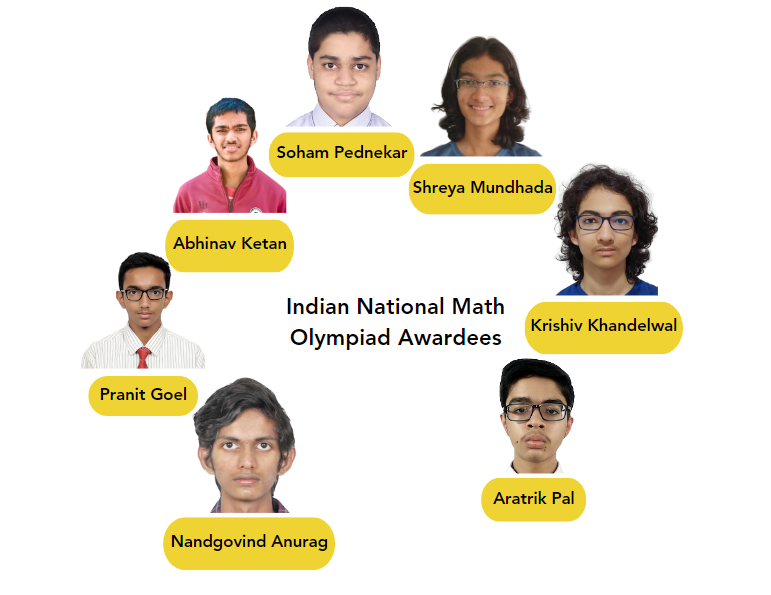
7 out of 78 INMO Awardees are from Cheenta

Watch the videos

7 out of 78 INMO Awardees are from Cheenta
In Conversation with the INMO Awardees - Part 1
In Conversation with the INMO Awardees - Part 2

Math Olympiad Programs at Cheenta

Start with a Trial Class

We are creating success since 2010... Here are some reviews...

Mayur ranked within All India 100 in Chennai Mathematical Institute's entrance in 2022.

The courses offered at Cheenta are really helpful for math olympiads and ISI-CMI entrances, and more importantly they motivate you to take up research. One on one classes are the best here, as you can utilise it as an opportunity to express yourself mathematically. Attending problem solving classes, gives you exposure to many problems, and about the regular homework problems, you try them on your own, and that's going to increase your confidence.

~ Mayur Sastry.

(Participated in ISI-CMI Entrance Program)

Aryan ranked within All India 70 in Indian National Math Olympiad.

Team Cheenta has played the most pivotal role in the journey of Aryan ‘s Math Olympiad preparation. The structured program where every topic, Number Theory, Algebra, Geometry, Combinatorics was dealt with by the faculty members of Cheenta, benefitted Aryan immensely and kept the passion or fire burning in him to learn more and more intricate and complex concepts of his favourite subject, MATHEMATICS.

It's not that Aryan always had it easy going, especially when it came to the homework problems assigned by the teachers. In fact there were days when Aryan was really down, struggling to get the idea to prove and thus solve certain problems. But thinking and thinking really hard, keeping the problems at the back of your mind even when you are doing some other subjects, helped Aryan very well . The faculty members, Raghunath Sir and Sricharan Sir really guided, supported and encouraged him to give his best. We were really blessed to have a wonderful team of teachers at Cheenta who honed his geometry skills, a special mention of Aritro Sir and Saumik Sir, who guided him to give his best at IOQM, 2021-22. Team Cheenta ably captained by Ashani Sir and the helpful team of administrators, is recommended by us for all mathematics olympiad aspirants.

Also Aryan was blessed to be a part of a batch which had the best of students, with their valuable contributions and innovative ideas.

All in all, it was a fantastic experience and a great journey for Aryan at Cheenta. Deepest Gratitude to Team Cheenta.

~ Aryan Prakash.

(Participated in Math Olympiad Program)

Shravani ranked within All India 100 in Chennai Mathematical Institute's entrance in 2022.

I have been enrolled in Cheenta since 2 years. The problem solving classes helped me a lot. They have a very structured program for ISI CMI as well as for olympiads. The one on one classes help you to clear your doubts. The most interesting thing about the conceptual classes is that concepts are taught through problems. If you want to prepare for any of these aforementioned exams then surely go for Cheenta.

~ Shravani Parulekar.

(Participated in ISI-CMI Entrance Program)

Ryan ranked within All India 100 in Chennai Mathematical Institute's entrance in 2022

Even before joining Cheenta, my son was dead set on his goal of learning mathematics. Instead of flailing about in the wilderness, I thought it would be better for both he and I to gain some guidance on how to achieve this goal. Cheenta was successful in doing that, along with much more. They provided an accessible yet almost all-encompassing course structure that made learning goals clear and easy to fulfil. Their teachers provided an educationally nourishing, firmly handled learning environment that still managed to include a familial love and care. I was quasi-regularly updated with in-depth assessments that guaranteed a peace of mind in this new world of which knew and still know little. These assessments included his understanding, the details of his weaknesses and application ability, which would help me understand when it was time move on to a higher level of their tiered course structure. Through special arrangements, he could also find coaches who gave him more time than provided by default, helping him combat his particular weaknesses. This made it so that he always had an optimal selection of study material, homework, and coaches. As he travelled through the system, he found much happiness in a newly found circle of friends who he could share his ideas and worries with, as he had met only a handful in person who could understand his personality. Above all else, he was provided with problems that could challenge and impact him profoundly, inciting an utter joy which I seldom see in him.

~ Ryan Hota.

(Participated in ISI-CMI Entrance Program)

Akshaj ranked in American Math Competition and USAJMO. He went to MIT for further studies

Our experience with Cheenta has been excellent. Even though my son started in Middle School, they understood his Math level and took personal interest in developing a long term plan considering his strengths and weakness areas. Through out the semester courses they have nourished him with challenging problems and necessary homework. His guidance has helped my son to perform well at competitions including USAJMO and others. He has grown more confident in his math abilities over the past year and half and is hoping to do well in the future. I am impressed with their quality and professionalism. We are very thankful to Cheenta and hope to benefit from them in the coming years. I would strongly recommend them to any student who wants to learn Math by doing challenging problems, specially if they are looking for Math than what their school can offer.

~ Murali Kadaveru.

(Father of Akshaj Kadaveru, Virginia, USA)

Sambuddha went for further studies in University of Edinburgh

We contacted Cheenta because our son, Sambuddha (a.k.a. Sam), seemed to have something of a gift in mathematical/logical thinking, and his school curriculum math was way too easy and boring for him. We were overjoyed when Mr. Ashani Dasgupta administered an admission test and accepted Sam as a one-to-one student at Cheenta. Ever since it has been an excellent experience and we have nothing but praise for Mr. Dasgupta. His enthusiasm for mathematics is infectious, and admirable is the amount of energy and thought he puts into each lesson. He covers a wide range of mathematical topics, and every lesson is packed with insights and methods. We are extremely pleased with the difference he has been making. Under his tutelage, Sam has secured several gold awards from the UK Mathematics Trust (UKMT) and Scottish Mathematical Council (SMC). Recently Sam received a book award from the UKMT and got invited to masterclass sessions also organised by the UKMT. Mr. Dasgupta’s tutoring was crucial for these achievements. We think Cheenta is rendering an excellent service to humanity by identifying young mathematical minds and nurturing them towards becoming inspired mathematicians of the future.

~ Jayanta Majumdar.

(Father of Sambuddha Majumdar, Glasgow, Scotland)

Here are some more...

INMO 2009 Question Paper | Math Olympiad Problems

This post contains the problems from Indian National Mathematics Olympiad, INMO 2009 Question Paper. Do try to find their solutions.

Indian National Mathematics Olympiad (INMO) 2009 Question Paper:

  1. Let ABC be a triangle and P be a interior point such that $ \angle BPC $=$ 90^0 $, $ \angle BAP $ = $ \angle BCP $ . Let M,N be the mid-points of AC, BC respectively. Suppose BP=2PM. Prove A,P,N are collinear.
  2. Define a sequence $ (a_n)_{n=1}^{\infty} $as follows:
    1. $ a_{n}=0 $if the number of positive divisors of n is odd.
    2. $ a_{n}=1 $ if the number of positive divisors of n is even. (The positive divisors of n include 1 as well as n.) Let $ x_n=0.a_1a_2a_3... $ be real number whose decimal expansion contains $ a_n $ in the n-th place, $ n ge 1 $. Determine with proof, whether $ x $ is rational or irrational.
  3. Find all real number x such that $ [x^2+2x]=[x]^2+2[x] $. (Here [] denotes the largest integer not exceeding x.)
  4. All the points in the plane are coloured using three colours. Prove that there exists a triangle with vertices having the same colour such that either it is isosceles or its angles are in geometric progression.
  5. Let ABC be an acute-angled triangle and let H be its orthocentre. Let $ h_{\max} $ denotes the largest altitude of the triangle ABC. Prove that $ AH+BH+CH \le 2h_{\max} $.
  6. Let a,b,c be positive real numbers such that. Prove that $ a^2+b^2-c^2 > 6(c-a)(c-b) $.

Some useful Links:

INMO 2020 Problems, Solutions and Hints

INMO 2018 Problem 6 Part 1 - Video

INMO 2013 Question No. 4 Solution

 4.   Let N be an integer greater than 1 and let $ (T_n)$ be the number of non empty subsets S of ({1,2,.....,n}) with the property that the average of the elements of S is an integer. Prove that $(T_n - n)$ is always even.
Sketch of the Proof:

$ (T_n )$ = number of nonempty subsets of $ ({1, 2, 3, \dots , n})$ whose average is an integer. Call these subsets int-avg subset (just a name)

Note that one element subsets are by default int-avg subsets. They are n in number. Removing those elements from $(T_n)$ we are left with int-avg subsets with two or more element. We want to show that the number of such subsets is even.

Let X be the collection of all int-avg subsets S such that the average of S is contained in S
Y be the set of all int-avg subsets S such that the average of S is not contained in S.

Adding or deleting the average of a set to or from that set does not change the average.
This operation sets up a one-to-one correspondence between X and Y, so X and Y have the same cardinality. Since $latex (X\cap Y =\emptyset)$, the number of elements in $(X\cup Y)$ is even and hence the number of subsets of two or more elements that have an integer average is even.

Comment

What is the cardinality of $ (T_n)$?

INMO 2013 Question No. 3 Solution

3     Let $ (a,b,c,d \in \mathbb{N})$ such that $ (a \ge b \ge c \ge d)$. Show that the equation $ (x^4 - ax^3 - bx^2 - cx -d = 0)$ has no integer solution.

Sketch of the Solution:

Claim 1: There cannot be a negative integer solution. Suppose other wise. If possible $x= -k$ (k positive) be a solution.

Then we have $ (k^4 + ak^3 +ck = bk^2 +d)$. Clearly this is impossible as $ (a\ge b , k^3 \ge k^2 )$ and $ (c \ge d )$.

Claim 2: 0 is not a solution (why?)

Claim 3: There cannot be a positive integer solution. Suppose other wise. If possible x=k (k positive) be a solution.

Then we have $ (k^4 = a k^3 + b k^2 + c k + d)$
This implies that the right hand side is divisible by k which again implies that d is divisible by k (why?).
Let $d=d'k$
Now $(c\ge d) \implies (c \ge d'k) \implies (c \ge k)$.
Thus $(a \ge c \ge k ) \implies (a \cdot k^3 \ge k \cdot k^3 )$.
Hence the equality $ (k^4 = a k^3 + b k^2 + c k + d)$ is impossible.

INMO 2013 Question No. 1 Solution

1.   Let $(\Gamma_1)$ and $(\Gamma_2)$ be two circles touching each other externally at R. Let $(O_1)$ and $(O_2)$ be the centres of $(\Gamma_1)$ and $(\Gamma_2)$, respectively. Let $(\ell_1)$ be a line which is tangent to $(\Gamma_2)$ at P and passing through $(O_1)$, and let $(\ell_2)$ be the line tangent to $(\Gamma_1)$ at Q and passing through $(O_2)$. Let $(K=\ell_1\cap \ell_2)$. If KP=KQ then prove that the triangle PQR is equilateral.

Discussion:

We note that $(O_1 R O_2 )$ is a straight line (why?)
Also $ (\Delta O_1 Q O_2 , \Delta O_1 P O_2 )$ are right angled triangles with right angles at point Q and P respectively.
Hence $ (\Delta O_1 Q K , \Delta O_2 P K )$ are similar (vertically opposite angles and right angles)
Thus $ ( \frac{KP}{KQ} = \frac{O_2 P} {O_1 Q} = 1)$ as KP =KQ.
Hence the radii of the two circles are equal..
This implies R is the midpoint of $ (O_1 O_2)$ hence the midpoint of hypotenuse of  $ (\Delta O_1 Q O_2)$
$ (O_1 R = RQ = R O_2)$ since all are circum-radii of $ (\Delta O_1 Q O_2)$.
Hence  $ (\Delta O_1 Q R)$ is equilateral, similarly $ (\Delta O_2 P R)$ is also equilateral.
Thus $ (\angle PRQ)$ is $ (60^o)$ also \( RQ = O_1 R = O_2 R = RP \).
Hence triangle PQR is equilateral.